What Is a Data Matrix 2D Barcode? A Technical Guide for 2026
Quick Summary
- If you’ve ever looked closely at a tiny electroni
- If you’ve ever looked closely at a tiny electronic component, a pharmaceutical package, or an aerospace part, you might have spotted a small square pattern of black and white cells.
- Understanding the Data Matrix 2D Barcode: Definition and Core Principles
Editorial Process
Reviewed by SectoJoy and published on April 18, 2026. This article is refreshed when product details, examples, or tool guidance change. Last updated May 15, 2026.
SectoJoy
I'm an indie hacker building iOS and web applications, with a focus on creating practical SaaS products. I specialize in AI SEO, constantly exploring how intelligent technologies can drive sustainable growth and efficiency.
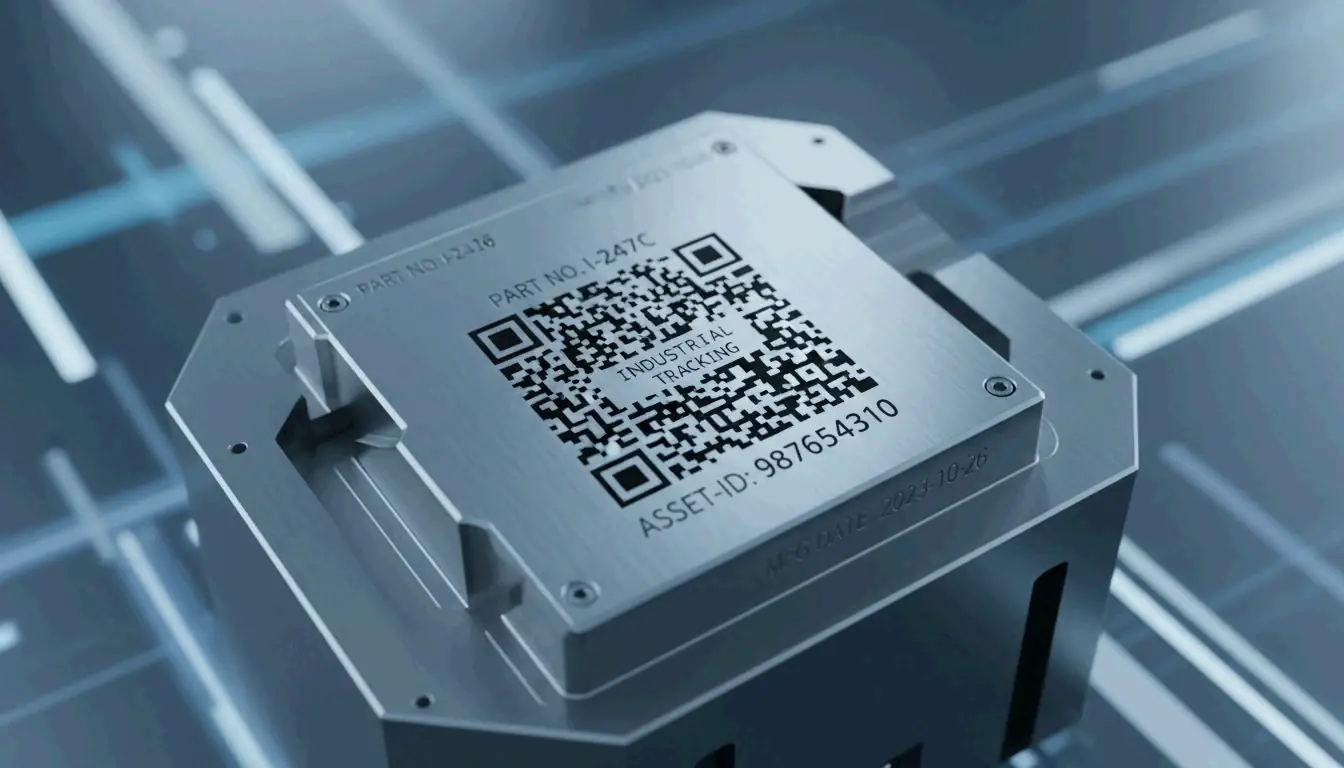
If you’ve ever looked closely at a tiny electronic component, a pharmaceutical package, or an aerospace part, you might have spotted a small square pattern of black and white cells. That’s a Data Matrix 2D barcode — and unlike the QR codes you scan with your phone, this one is built for the industrial world.
Defined by ISO/IEC 16022 and using ECC200 error correction, Data Matrix is the go-to standard for tracking small items across global supply chains. As of 2026, it’s the required format for pharmaceutical serialization and Direct Part Marking on metal and plastic components.
This guide covers how Data Matrix works, when to choose it over a QR code, what the GS1 Sunrise 2027 deadline means for your business, and even how to generate one programmatically.
Understanding the Data Matrix 2D Barcode: Definition and Core Principles
A Data Matrix is a grid of black and white “cells” (modules) arranged in a square or rectangle. Unlike traditional 1D barcodes that store data in a single horizontal line, Data Matrix encodes information in both dimensions — horizontally and vertically. This 2D approach lets it pack significantly more data into a much smaller footprint.
According to Wikipedia, a single Data Matrix symbol can hold:
– Up to 2,335 alphanumeric characters
– Up to 3,116 numeric digits
The technology is governed by the ISO/IEC 16022 standard, which is in the public domain — meaning anyone can implement it without licensing fees. Its ability to encode complex data into a space smaller than 1 mm² has made it indispensable in electronics manufacturing, aerospace, and medical device tracking.
The Anatomy of a Data Matrix Symbol
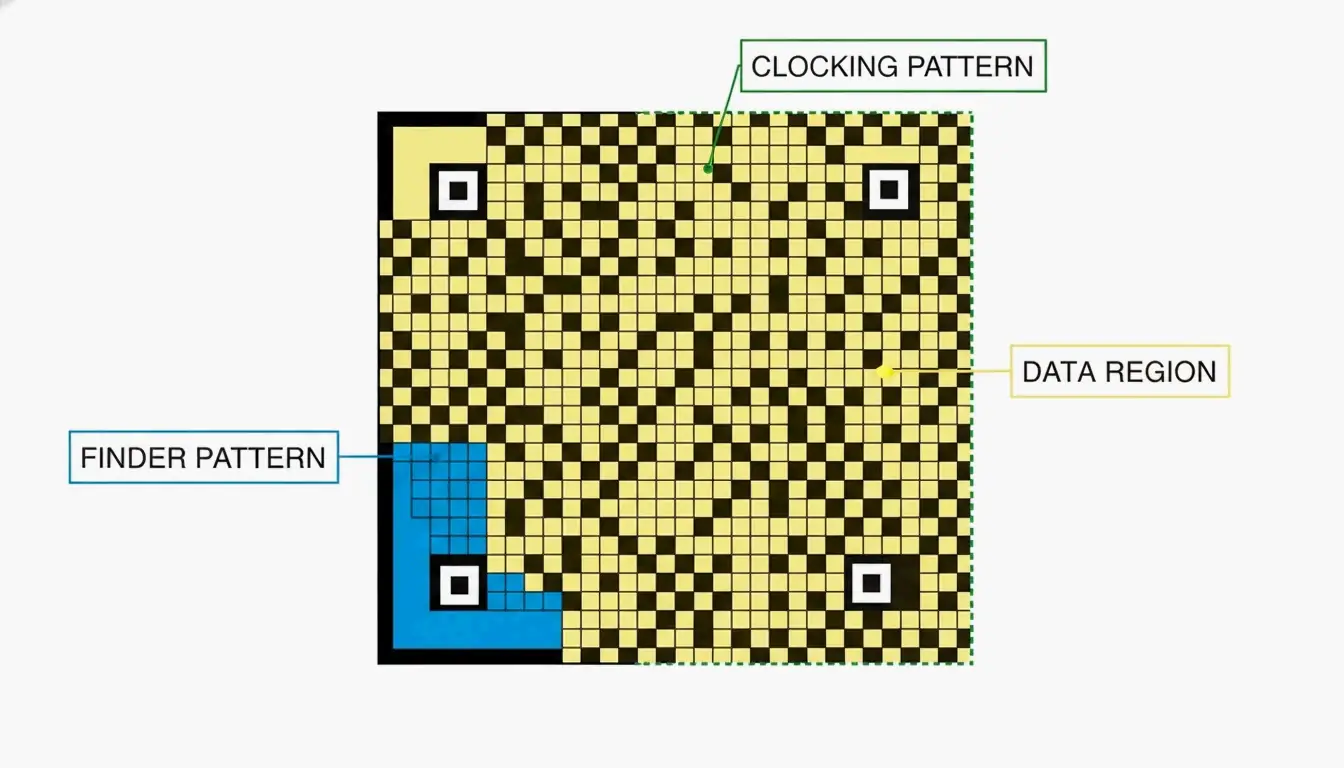
Every Data Matrix code has three structural components that tell a scanner how to read it:
| Component | What It Does |
|---|---|
| Finder Pattern | An “L” shape formed by two solid borders. Helps the scanner locate the code and determine its orientation. |
| Clocking Pattern | The two borders opposite the “L,” made of alternating dark and light cells. Tells the reader the grid’s row/column count. |
| Data Region | The interior area where actual information is stored. The grid grows as more data is added (10×10 up to 144×144 modules). |
Why ECC200 Is the Industry Standard for Error Correction
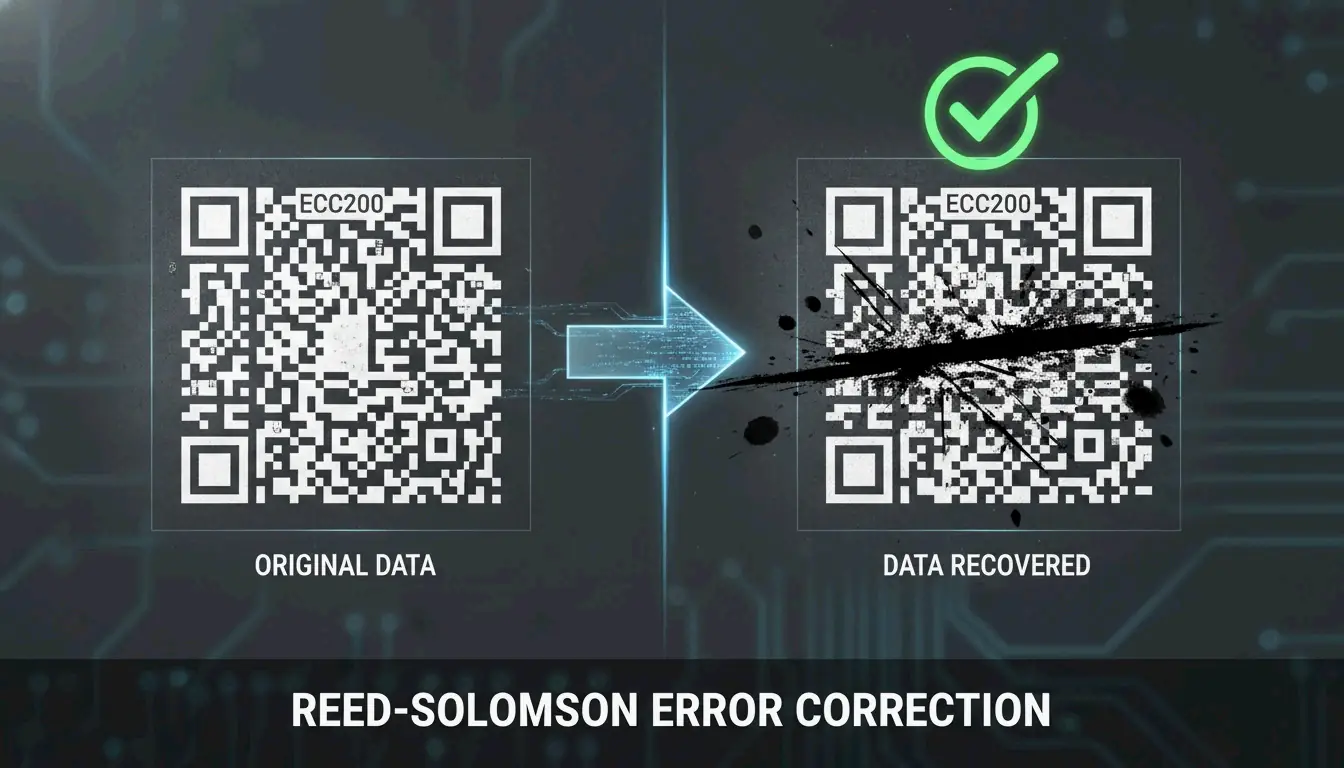
The reliability of modern Data Matrix codes comes from ECC200, which uses Reed-Solomon error correction to add redundant data to each symbol. This backup information allows a scanner to reconstruct the original message even when the code is partially damaged.
How much damage can it survive? Wikipedia notes that ECC200 can typically be read even when up to 30% of the symbol is damaged — as long as the “L” finder pattern remains intact.
This is a significant upgrade over older error correction versions (ECC000–ECC140), which are now largely retired and only appear in “closed” systems where the same organization handles both printing and scanning.
| Feature | ECC200 (Current) | ECC000–140 (Legacy) |
|---|---|---|
| Error tolerance | Up to 30% damage | Varies, generally lower |
| Standard today | Yes — global standard | Only in closed systems |
| Data capacity | Up to 3,116 digits | Lower |
Data Matrix vs. QR Code: Which 2D Symbology Should You Choose?
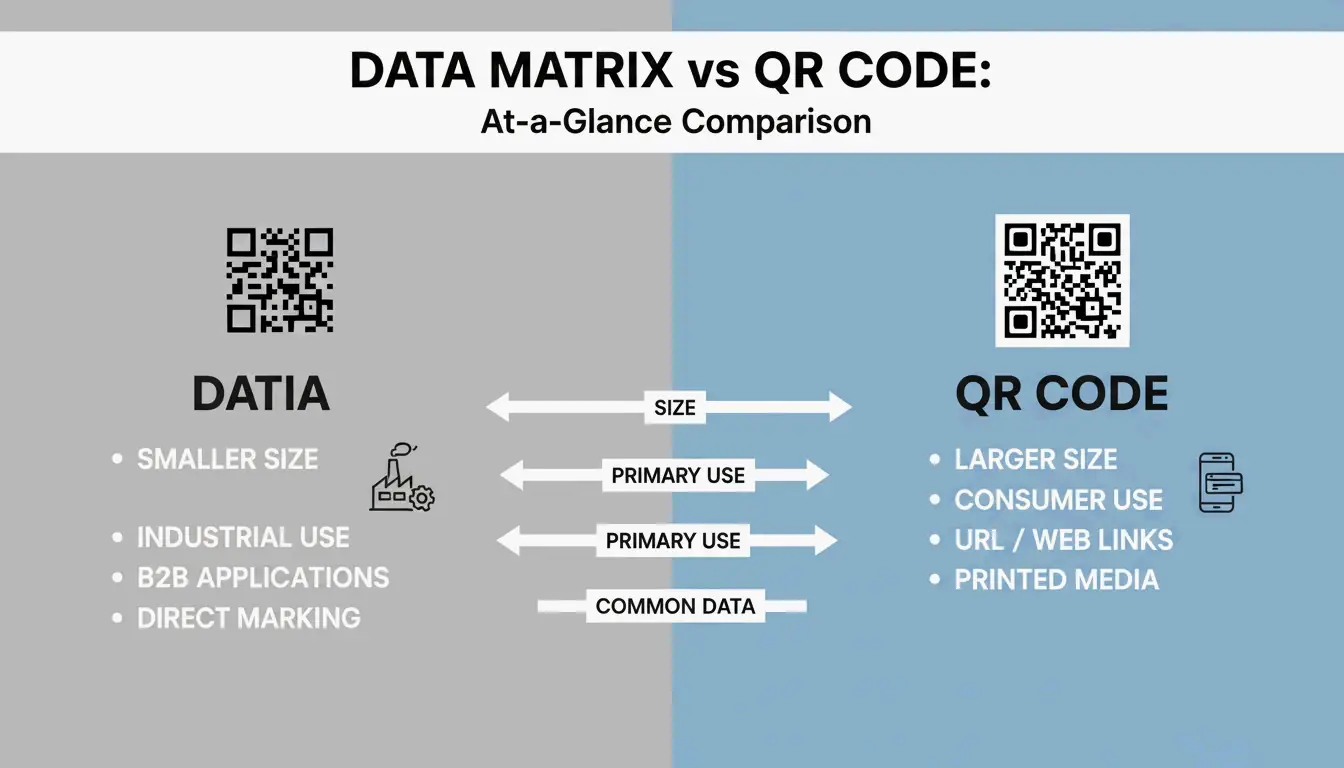
Both are 2D barcodes, but they’re built for different purposes. Data Matrix serves industrial B2B applications; QR Codes are designed for consumer-facing marketing and engagement.
When Data Matrix Is the Right Choice
- Small parts and tight spaces — Data Matrix modules can be as small as 0.1 mm, making the overall code much smaller than a QR Code carrying the same data (Alsace Techniques Etiquetage).
- Pharmaceutical serialization — Legally required for drug tracking in many markets.
- Direct Part Marking (DPM) — Etched directly onto metal or plastic parts for permanent identification.
When QR Codes Make More Sense
- Consumer engagement — Almost any smartphone (iOS 11+ and Android 8+) can scan QR codes natively, no special app required.
- URLs and marketing — QR Codes support branding elements like logos in the center.
- General public use — While Data Matrix can technically hold a URL, most consumers don’t have software that reads it.
2026 Update: GS1 DataMatrix and the Sunrise 2027 Deadline
If you work in logistics or healthcare, GS1 DataMatrix is likely already on your radar. It’s important to understand that a standard Data Matrix and a GS1 DataMatrix aren’t identical — the GS1 version embeds a hidden “Function 1” (FNC1) character at the start to signal that the data follows GS1 global standards.
Two major regulatory forces are driving adoption:
- DSCSA (Drug Supply Chain Security Act) — In the U.S., GS1 DataMatrix is required for pharmaceutical tracking.
- GS1 Sunrise 2027 — A global initiative to ensure all Point of Sale (POS) systems can scan 2D barcodes by 2027 (GS1 Sweden).
Sunrise 2027 Preparation Checklist
- Hardware audit — Verify your scanners are imagers, not older laser models. Laser scanners cannot read 2D codes.
- Software update — Ensure your inventory systems recognize GS1-specific fields like Expiration Dates and Batch Numbers.
- Label redesign — Begin transitioning from 1D UPC barcodes to GS1 DataMatrix or GS1 QR Codes to carry richer product data.
Industrial Implementation: Direct Part Marking (DPM) and Verification
For parts that need to be tracked for years — or decades — companies use Direct Part Marking (DPM). Instead of printing a label, the Data Matrix is etched directly into the metal or plastic surface using lasers or chemical etching. The mark survives heat, chemicals, abrasion, and heavy wear.
The accuracy is remarkable. BarcodeFactory reports that barcode scanners make a substitution error roughly once in every 15,000 to 36 trillion characters — making Data Matrix one of the most reliable identification methods available.
To maintain this accuracy in production, businesses use ISO/IEC 15415 verification, which grades codes on a scale from A (best) to F (fail). For most industrial applications, a grade of C or better is required to ensure the code can be read reliably by different scanners across the supply chain.
Developer’s Corner: Generating Data Matrix in C#/.NET
If you’re building barcode generation into your own software, libraries like IronBarcode make it straightforward. Iron Software demonstrates that creating a compliant ECC200 symbol takes just a few lines:
using IronBarCode;

// Generate a Data Matrix barcode
var myBarcode = BarcodeWriter.CreateBarcode(
    "GS1-GTIN-12345",
    BarcodeWriterEncoding.DataMatrix
);

// Customize size and save
myBarcode.ResizeTo(250, 250);
myBarcode.SaveAsPng("datamatrix-label.png");
Tip for 2026: Always leave a Quiet Zone (blank border) of at least 1–2 module widths around your code. Without it, scanners may misread the edges.
Conclusion
The Data Matrix 2D barcode is the workhorse of industrial and healthcare identification — small enough to fit on a pill bottle, durable enough to survive laser etching onto metal, and reliable enough to remain readable even when 30% damaged.
With the GS1 Sunrise 2027 deadline approaching, now is the time to audit your scanning hardware, update your software to handle GS1 fields, and start transitioning your labels. Whether you’re a supply chain manager or a developer building the next barcode tool, understanding Data Matrix is no longer optional — it’s a competitive advantage.
FAQ
Can a standard smartphone camera app read a Data Matrix code?
Most iPhone and Android cameras default to QR code scanning. For Data Matrix, you’ll typically need a third-party app or a specific “business mode.” For professional or industrial environments, dedicated scanning hardware or specialized apps are strongly recommended.
What is the maximum data capacity of a Data Matrix ECC200 symbol?
An ECC200 symbol can hold up to 3,116 numeric digits or 2,335 alphanumeric characters. The physical size of the code grows as you add more data, reaching a maximum grid of 144×144 modules.
What is the difference between a standard Data Matrix and a GS1 DataMatrix?
A GS1 DataMatrix begins with a hidden “Function 1” (FNC1) character that tells the scanner the data follows GS1 standards — using specific Application Identifiers for fields like Expiration Date, Batch Number, or GTIN. This is required for pharmaceutical and food safety regulations in most markets.
Frequently Asked Questions
Data Matrix vs. QR Code: Which 2D Symbology Should You Choose?
Both are 2D barcodes, but they’re built for different purposes. Data Matrix serves industrial B2B applications; QR Codes are designed for consumer-facing marketing and engagement.
Can a standard smartphone camera app read a Data Matrix code?
Most iPhone and Android cameras default to QR code scanning. For Data Matrix, you’ll typically need a third-party app or a specific “business mode.” For professional or industrial environments, dedicated scanning hardware or specialized apps are strongly recommended.
What is the maximum data capacity of a Data Matrix ECC200 symbol?
An ECC200 symbol can hold up to 3,116 numeric digits or 2,335 alphanumeric characters. The physical size of the code grows as you add more data, reaching a maximum grid of 144×144 modules.
What is the difference between a standard Data Matrix and a GS1 DataMatrix?
A GS1 DataMatrix begins with a hidden “Function 1” (FNC1) character that tells the scanner the data follows GS1 standards — using specific Application Identifiers for fields like Expiration Date, Batch Number, or GTIN. This is required for pharmaceutical and food safety regulations in most markets.
Related Posts
Font Generator: The Complete Map of Styled Text in 2026
Aesthetic Font Generator: The Ultimate Guide to Stylish Unicode Text
Calligraphy Font Generator: Free Online Tool for Elegant Text Styles