History of the Barcode: From Morse Code in the Sand to GS1 Sunrise 2027
Quick Summary
- The barcode started in 1948 when Norman Joseph Woodland
- The barcode started in 1948 when Norman Joseph Woodland sketched Morse code-inspired lines in Florida sand, was patented in 1952, and became the global retail standard when IBM’s UPC launched in 1973.
- The 2027 Sunrise: Why Retailers Are Switching to 2D Codes Now
Editorial Process
Reviewed by SectoJoy and published on May 7, 2026. This article is refreshed when product details, examples, or tool guidance change. Last updated May 15, 2026.
SectoJoy
I'm an indie hacker building iOS and web applications, with a focus on creating practical SaaS products. I specialize in AI SEO, constantly exploring how intelligent technologies can drive sustainable growth and efficiency.
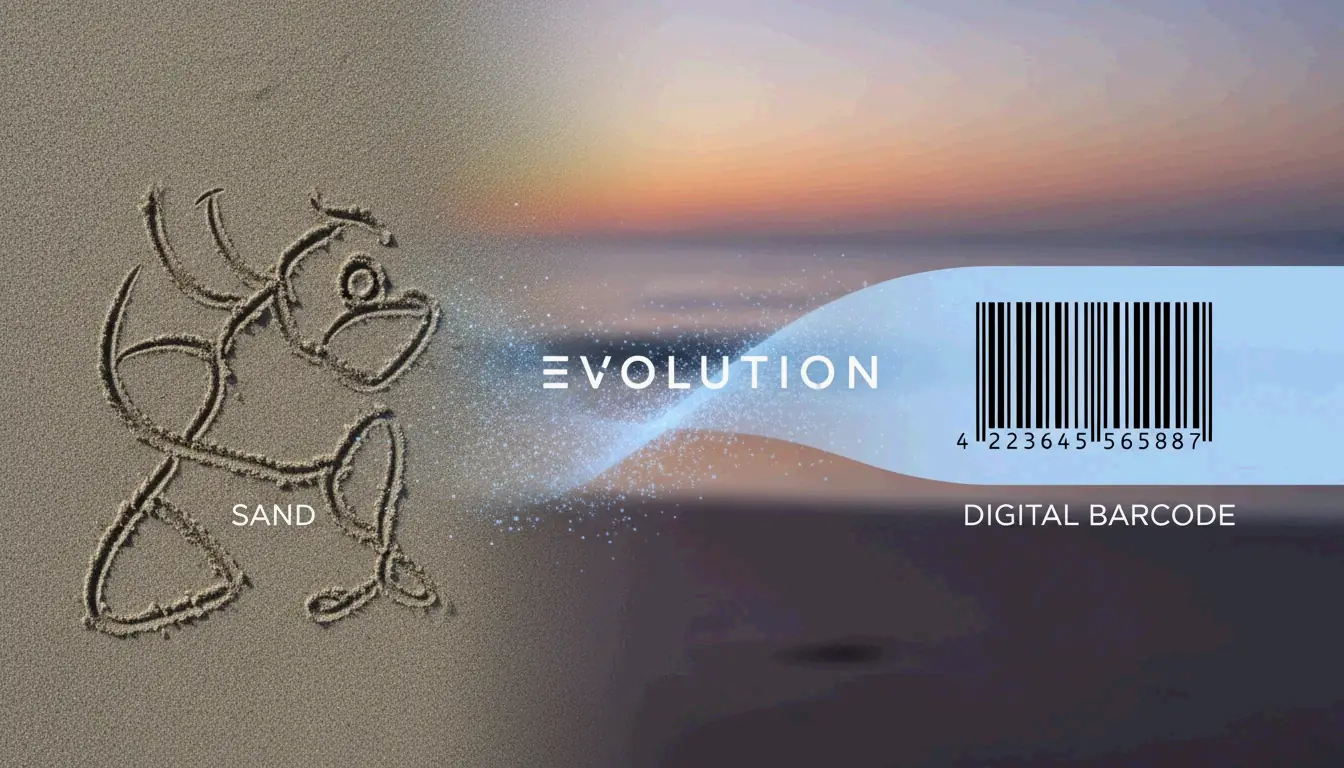
The barcode started in 1948 when Norman Joseph Woodland sketched Morse code-inspired lines in Florida sand, was patented in 1952, and became the global retail standard when IBM’s UPC launched in 1973. Today, with over 10 billion scans per day worldwide, the industry is racing toward GS1 Sunrise 2027 — a full transition from 1D barcodes to 2D QR codes.
Here is the full story, from that beach in Miami to the scanners at Tesco.
The 2027 Sunrise: Why Retailers Are Switching to 2D Codes Now
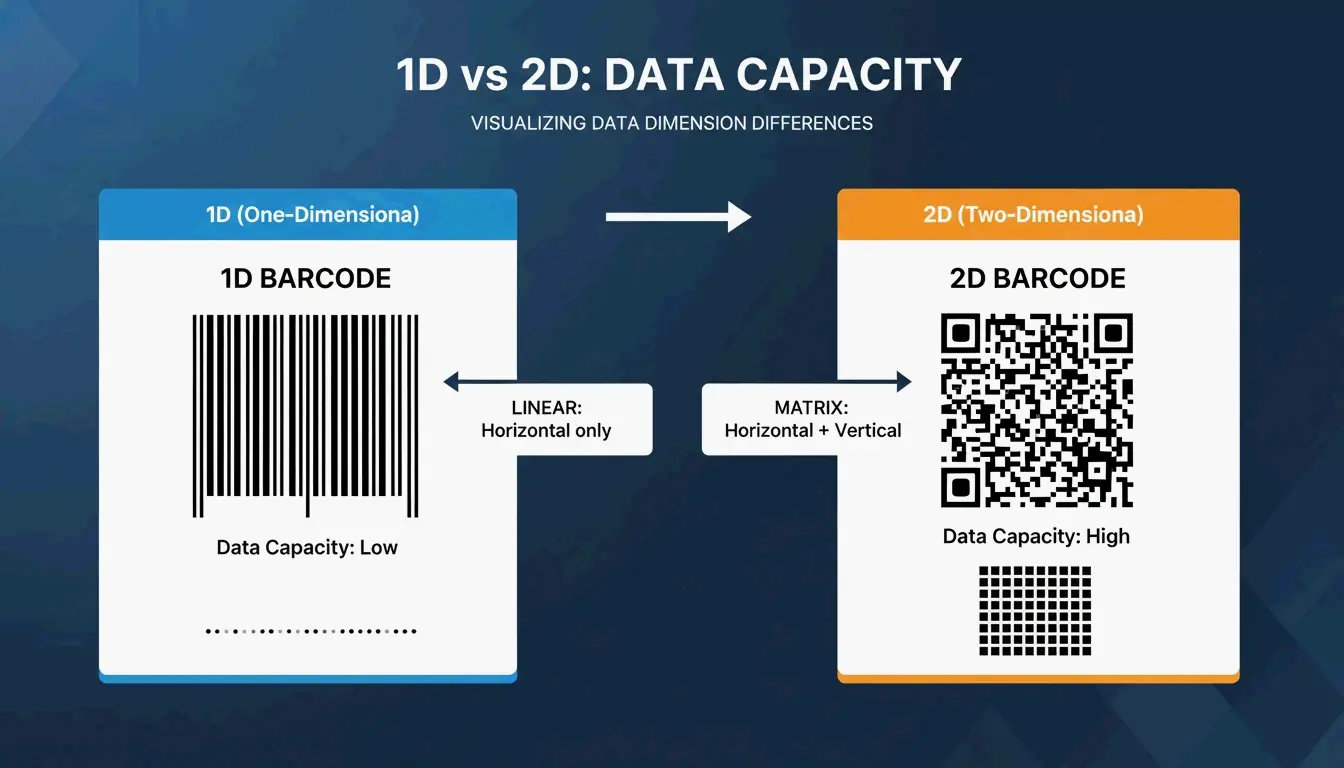
The biggest shift since the 1970s is underway. Classic 1D barcodes identify a product and its manufacturer. Modern 2D QR codes can store expiration dates, batch numbers, allergen info, and web links — all in the same scan.
| Feature | 1D Barcode (UPC) | 2D QR Code |
|---|---|---|
| Data capacity | 20–80 numeric characters | Up to 4,000 characters |
| Content types | Product ID + manufacturer | URLs, batch numbers, dates, images |
| Error correction | Minimal | Up to 30% damage tolerance |
| Smartphone scannable | Limited | Native support on all modern phones |
Tesco became the first UK supermarket to make the switch. In April 2026, they began replacing barcodes with QR codes on own-brand sausages and fresh produce. Shoppers can scan a pack with their phone to check allergens or find recipes. The store gets better tracking of expiration dates to reduce food waste.
The Origin: Morse Code in the Sand (1948)
The story begins at the Drexel Institute of Technology in Philadelphia. A grocery executive asked a dean to automate checkout. Bernard Silver overheard the conversation and told his friend Norman Joseph Woodland. Woodland became obsessed with solving it.
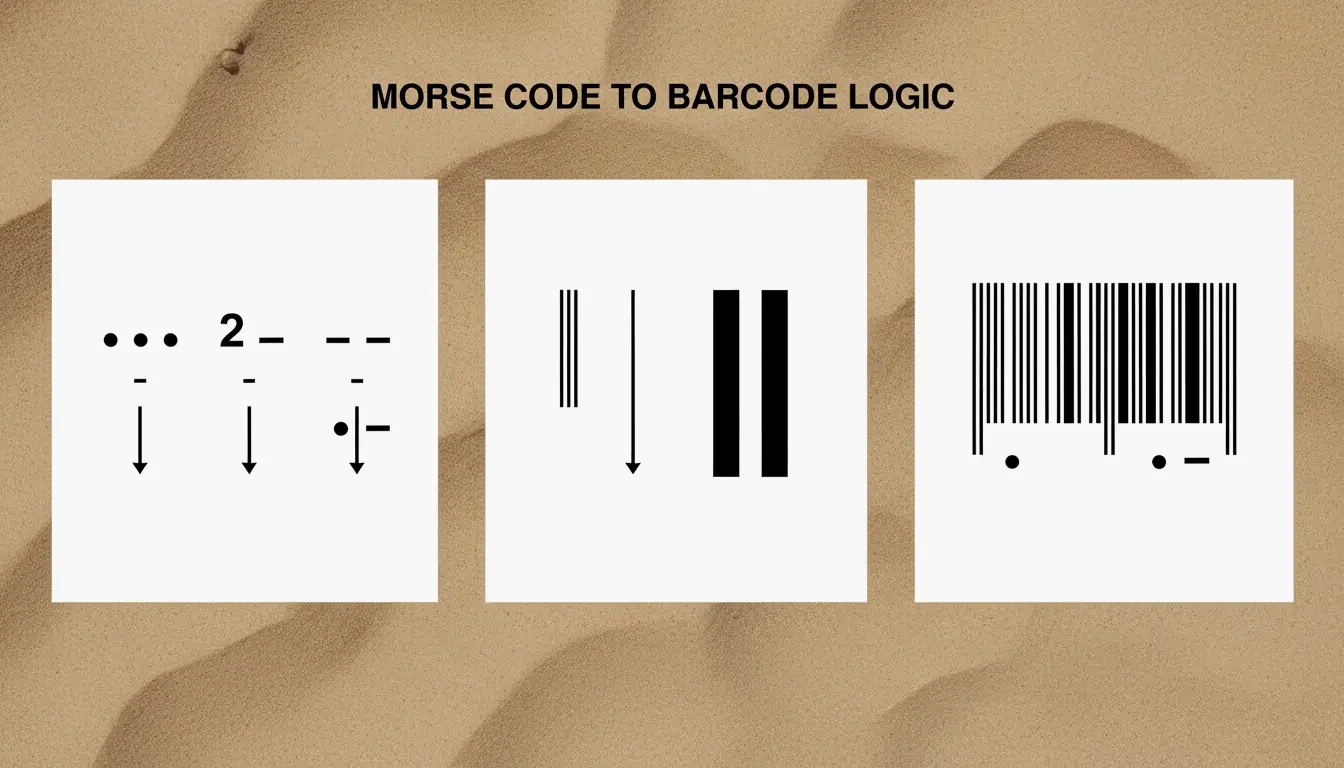
The breakthrough came on a Miami beach. Woodland, a former Boy Scout, was thinking about Morse code. He pressed his fingers into the sand and drew dots and dashes, then pulled them downward to create vertical lines of different widths.
“I just extended the dots and dashes downwards and made narrow lines and wide lines out of them.” — Norman Joseph Woodland, as cited by Wikipedia
The Bullseye Design (1952 Patent)
Woodland and Silver’s 1952 patent (US Patent 2,612,994) used a “bullseye” — concentric circles that could be scanned from any angle. The problem: high-speed printers smeared the ink. A smeared circle became unreadable. A smeared line just got taller, but its data-carrying width stayed the same. Linear designs won.
IBM, George Laurer, and the UPC Standard (1973)
Even with the patent, barcode technology gathered dust for two decades. The lights and computers needed to read codes were too expensive for most stores.
By the early 1970s, the grocery industry formed a committee to pick a standard. RCA pushed the Bullseye. IBM had a different idea — George Laurer, working alongside Woodland at IBM, refined the linear concept into the Universal Product Code (UPC).
On April 3, 1973, the committee chose Laurer’s design. It was easier to print and more reliable in the messy, fast-paced environment of a real supermarket.
The First Scan: June 26, 1974, 8:01 AM
At Marsh Supermarket in Troy, Ohio, cashier Sharon Buchanan scanned a 10-pack of Wrigley’s Juicy Fruit gum. It cost 69 cents. That single beep proved the system could handle small, everyday items — and it changed retail forever. The pack of gum is now in the Smithsonian Institution.
1D vs 2D: Data Capacity and Real-World Impact
The gap between 1D and 2D codes is not subtle.
- 1D barcodes (like UPC) are linear. They hold 20–80 numeric characters — enough for a product ID.
- 2D QR codes, invented by Denso Wave in 1994 for Toyota’s supply chain, use a grid pattern. They store up to 4,000 characters, including URLs and structured data.
QR code usage in the U.S. reached 89 million people by 2022 and continues to climb. As Peter Draper from Tesco explains: “Moving to QR codes will help us reduce food waste, improve stock control and unlock new digital benefits for our customers.”
GS1 and Global Standards in 2026
GS1 manages Global Trade Item Numbers (GTINs) — ensuring a barcode scanned in London means the same thing in New York. This standardization has helped the warehouse tracking market grow toward an estimated $4.5 billion by 2033, according to GS1 data.
In 2026, these standards are solving environmental problems too. Because 2D codes include expiration dates, supermarkets can automatically mark down food that is about to expire, reducing waste. By connecting barcodes with the Internet of Things (IoT), this 75-year-old invention remains the backbone of global trade.
Conclusion
The barcode has traveled from a Morse-code sketch in Florida sand to a system that handles 10 billion scans per day. From Woodland and Silver’s original bullseye patent, through Laurer’s UPC standardization, to the QR code transition driven by GS1 Sunrise 2027 — the technology keeps adapting.
Businesses should audit their scanners and packaging now. The 2027 deadline means every checkout system will need to read 2D codes, and every product will carry a richer digital story.
FAQ
Who scanned the very first barcode in history?
Sharon Buchanan, a cashier at Marsh Supermarket in Troy, Ohio. The event took place on June 26, 1974, at 8:01 AM. She scanned a 10-pack of Wrigley’s Juicy Fruit chewing gum (priced at 69 cents), now displayed at the Smithsonian Institution.
Why is the retail industry switching from 1D barcodes to QR codes by 2027?
The GS1 Sunrise 2027 initiative requires all checkout systems to read 2D barcodes. QR codes hold far more data than 1D codes — expiration dates, batch numbers, sustainability information — which improves food safety, reduces waste, and enables smartphone-based consumer engagement.
How did Morse code influence the original barcode design?
Norman Joseph Woodland, a Boy Scout proficient in Morse code, was sitting on a Miami beach in 1948 contemplating how to represent data visually. He drew dots and dashes in the sand, then pulled them downward to create vertical lines of varying widths. This visual translation of Morse code became the fundamental logic for all linear barcodes.
Frequently Asked Questions
Who scanned the very first barcode in history?
Sharon Buchanan, a cashier at Marsh Supermarket in Troy, Ohio. The event took place on June 26, 1974, at 8:01 AM. She scanned a 10-pack of Wrigley’s Juicy Fruit chewing gum (priced at 69 cents), now displayed at the Smithsonian Institution.
Why is the retail industry switching from 1D barcodes to QR codes by 2027?
The GS1 Sunrise 2027 initiative requires all checkout systems to read 2D barcodes. QR codes hold far more data than 1D codes — expiration dates, batch numbers, sustainability information — which improves food safety, reduces waste, and enables smartphone-based consumer engagement.
How did Morse code influence the original barcode design?
Norman Joseph Woodland, a Boy Scout proficient in Morse code, was sitting on a Miami beach in 1948 contemplating how to represent data visually. He drew dots and dashes in the sand, then pulled them downward to create vertical lines of varying widths. This visual translation of Morse code became the fundamental logic for all linear barcodes.
Related Posts
Font Generator: The Complete Map of Styled Text in 2026
Aesthetic Font Generator: The Ultimate Guide to Stylish Unicode Text
Calligraphy Font Generator: Free Online Tool for Elegant Text Styles