What Is a Data Matrix Barcode? Definition, Specs, and Industrial Uses
Quick Summary
- A Data Matrix is a high-density 2D barcode — a grid of
- A Data Matrix is a high-density 2D barcode — a grid of black and white cells arranged in a square or rectangle — defined by ISO/IEC 16022.
- Technical Definition: What Is a Data Matrix Barcode?
Editorial Process
Reviewed by SectoJoy and published on May 7, 2026. This article is refreshed when product details, examples, or tool guidance change. Last updated May 15, 2026.
SectoJoy
I'm an indie hacker building iOS and web applications, with a focus on creating practical SaaS products. I specialize in AI SEO, constantly exploring how intelligent technologies can drive sustainable growth and efficiency.
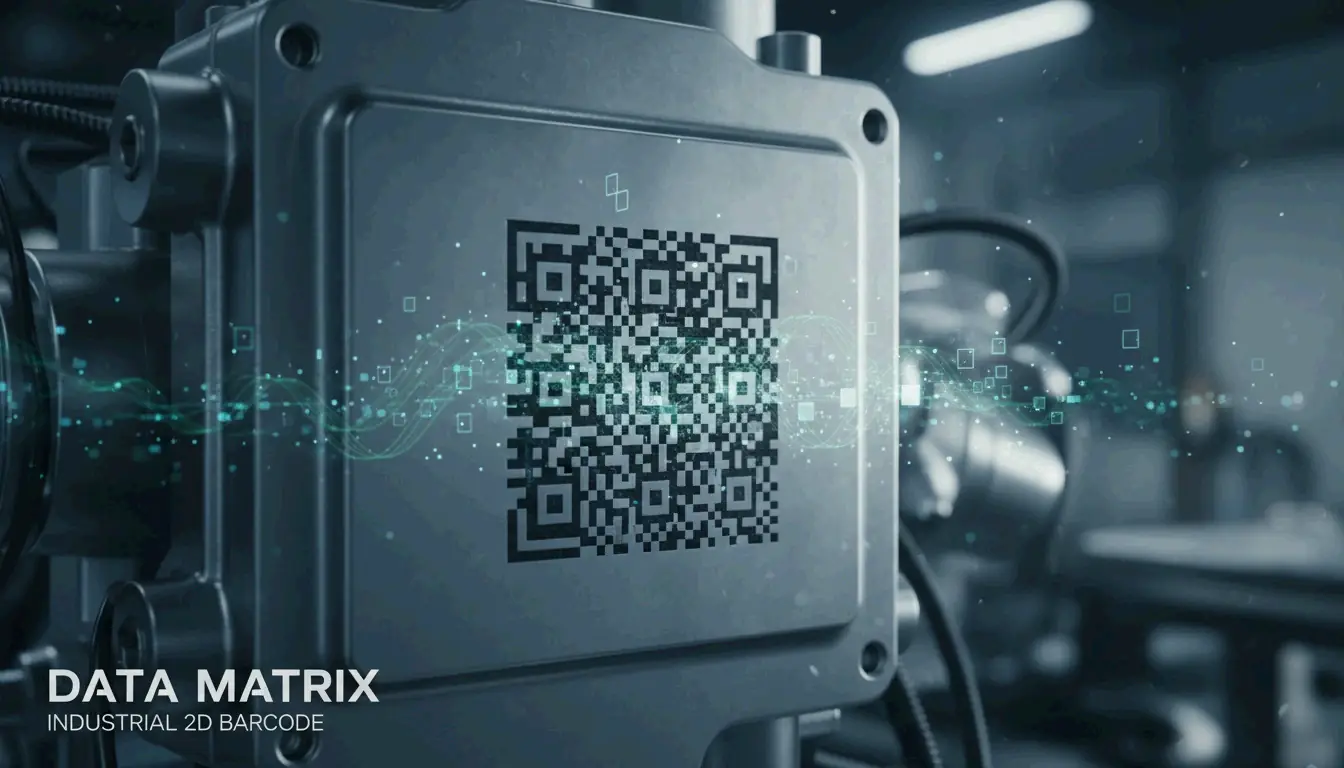
A Data Matrix is a high-density 2D barcode — a grid of black and white cells arranged in a square or rectangle — defined by ISO/IEC 16022. It uses ECC200 (Reed-Solomon) error correction to remain readable even when damaged, and it can store up to 2,335 alphanumeric characters in a space smaller than a fingernail. As of 2026, it’s the global standard for marking small industrial components and regulated pharmaceutical items.
This guide covers what a Data Matrix is, how it works technically, where it’s used in the real world, and how to choose between it and a QR code.
Technical Definition: What Is a Data Matrix Barcode?
Unlike traditional 1D barcodes that encode data in the width and spacing of parallel lines, a Data Matrix encodes information in both dimensions — horizontally and vertically. This 2D approach allows it to pack significantly more data into a much smaller physical footprint.
Every Data Matrix features an L-shaped Finder Pattern — two solid borders that tell the scanner exactly where the symbol is and how it’s oriented, even if the code is upside down or tilted. According to Wikipedia, the current rules are defined by ISO/IEC 16022:2024 (Edition 3). The standard is in the public domain, so anyone can use it without paying royalties.
Anatomy: Cells, Modules, and the Quiet Zone
| Component | Purpose |
|---|---|
| Finder Pattern (“L”) | Two solid borders that help the scanner locate the code and determine orientation |
| Timing Pattern | Alternating dark/light cells opposite the “L” — tells the reader the grid dimensions |
| Data Region | The interior area where actual information is encoded (grows as data increases) |
| Quiet Zone | A mandatory blank margin outside the pattern that prevents nearby text/graphics from confusing the scanner |
The technology is remarkably scalable. Wikipedia notes that you’ll find Data Matrix codes as small as 300 micrometers etched onto silicon chips, and as large as one-meter squares painted on the roofs of train cars.
Why ECC200 and Reed-Solomon Error Correction Matter
Modern Data Matrix reliability comes from ECC200, which uses the Reed-Solomon algorithm to add redundant “backup” data to each symbol. This means the code still works even when part of it is scratched, dirty, or torn.
Wikipedia reports that ECC200 can reconstruct the full data string even with up to 30% damage — as long as the L-shaped finder pattern remains visible. This makes it the top choice for harsh environments where parts face chemicals, heavy friction, or extreme heat.
| Feature | ECC200 (Current Standard) | ECC 000–140 (Legacy) |
|---|---|---|
| Error correction | Reed-Solomon | Older methods |
| Damage tolerance | Up to 30% | Lower |
| Use today | Global standard | Only in closed systems |
| Data capacity | Up to 3,116 digits | Lower |
Error rates are incredibly low. Wikipedia notes that scanners typically report only one error per 15,000 to 36 trillion characters, depending on code quality.
Core Specifications: Capacity, Size, and Data Density
The Data Matrix’s biggest advantage is data density — it holds a massive amount of information relative to its physical size.
| Data Type | Maximum Capacity |
|---|---|
| Alphanumeric characters | 2,335 |
| Numeric digits | 3,116 |
| Binary / byte data | 1,556 bytes |
Grid sizes for ECC200 range from 10×10 up to 144×144 modules. The key measurement for calibration is the X-dimension — the size of a single module (dot or square). Most industrial scanners are calibrated for an X-dimension of at least 10 mil (0.254 mm) to ensure reliable reads.
As Peak Technologies explains, the physical length of the code adjusts based on data content, and a checksum is always required. This flexibility lets manufacturers squeeze serial numbers, lot codes, and expiration dates onto something as small as the head of a screw.
Industrial Uses: From Aerospace to Healthcare Compliance
Data Matrix barcodes are the hidden engine behind global supply chains. Here’s where they show up in the real world.
Pharmaceuticals: FDA Compliance
In the U.S., the GS1 DataMatrix is the official standard for the FDA’s Drug Supply Chain Security Act (DSCSA). Pharmaceutical companies must mark every unit with a unique identifier to prevent counterfeit drugs from entering the market.
Direct Part Marking (DPM) in Automotive and Electronics
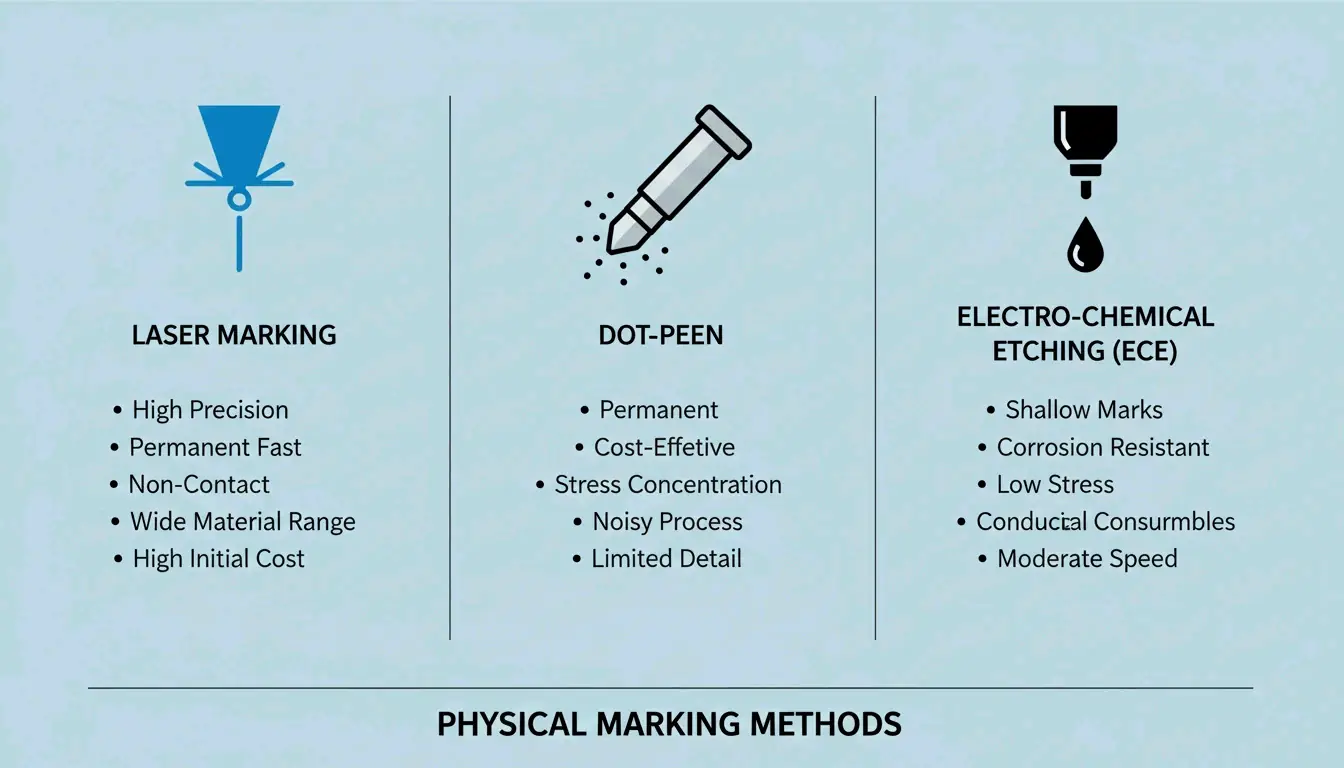
For permanent part identification, Direct Part Marking (DPM) etches the code directly into the material rather than applying a label:
| Method | How It Works | Best For |
|---|---|---|
| Laser marking | Etches the code into metal or plastic with high-precision lasers | Metal parts, plastics |
| Dot-peen marking | A metal stylus punches a grid of round dots into the surface | Hard metals, harsh environments |
| Electrolytic Chemical Etching (ECE) | Chemical process creates a permanent mark on metal | Conductive metals |
Labels vs. Direct Marking: How to Choose
When setting up a marking system, the choice depends on the application:
- Polyimide labels — Cleverence calls these the “gold standard” for circuit boards (PCBs) because they survive reflow ovens and chemical washes.
- Laser etching — The go-to for aerospace parts where labels might peel off, or for tiny silicon chips with no room for a sticker.
- Contrast requirements — No matter the method, Elmed emphasizes that you need sharp contrast between light and dark cells for camera-based scanners to read the code reliably.
Data Matrix vs. QR Code: Which Should You Choose?
Both are 2D barcodes, but they’re designed for different purposes:
| Feature | Data Matrix | QR Code |
|---|---|---|
| Physical size (same data) | Smaller | Larger |
| GS1-approved for healthcare | Yes (only 2D code approved) | No |
| Smartphone scanning | Requires specialized app | Native on most phones |
| Best for | Industrial tracking, small parts, pharma | Consumer marketing, URLs, menus |
| Durability | Excellent (DPM compatible) | Lower (typically printed labels) |
For industrial tracking — where space is tight and environments are harsh — the Data Matrix wins due to its smaller footprint, higher durability, and DPM compatibility. For consumer-facing applications, QR codes are the practical choice because anyone with a smartphone can scan them.
Conclusion
The Data Matrix barcode remains the gold standard for high-density industrial tracking in 2026, backed by the updated ISO/IEC 16022:2024 standards. Its ability to encode thousands of characters into a microscopic footprint — and survive 30% damage through ECC200 error correction — makes it indispensable from factory floors to pharmaceutical supply chains.
When implementing a system:
– Always use ECC200 for global compatibility
– Choose DPM (laser/dot-peen) for parts facing harsh conditions
– Use polyimide labels for PCBs and high-temperature applications
– Ensure strong contrast between light and dark cells for reliable scanning
FAQ
What is the maximum data capacity of a Data Matrix barcode?
Under ISO/IEC 16022, a Data Matrix can store up to 2,335 alphanumeric characters or 3,116 numeric digits. The physical size of the code depends on the X-dimension (module size) chosen for the application and scanner capabilities.
Can a Data Matrix barcode be read if it is partially damaged?
Yes — provided it uses the ECC200 standard. The Reed-Solomon error correction algorithm allows the symbol to remain fully scannable even when up to 30% of the surface area is damaged or obscured. This makes it ideal for parts exposed to chemicals, abrasion, or high heat.
Do I need a license to use Data Matrix barcodes?
No. The Data Matrix symbology is in the public domain. The original patents (held by International Data Matrix, Inc.) have expired. The specifications are now governed by ISO/IEC standards, and any organization can generate and use Data Matrix barcodes freely without paying royalty fees.
Frequently Asked Questions
Technical Definition: What Is a Data Matrix Barcode?
Unlike traditional 1D barcodes that encode data in the width and spacing of parallel lines, a Data Matrix encodes information in both dimensions — horizontally and vertically. This 2D approach allows it to pack significantly more data into a much smaller physical footprint. Every Data Matrix features an L-shaped Finder Pattern — two solid borders that tell the scanner exactly where the symbol is and how it’s oriented, even if the code is upside down or tilted. According to Wikipedia, the current rules are defined by ISO/IEC 16022:2024 (Edition 3). The standard is in the public domain, so anyone can use it without paying royalties.
Data Matrix vs. QR Code: Which Should You Choose?
Both are 2D barcodes, but they’re designed for different purposes: Feature Data Matrix QR Code Physical size (same data) Smaller Larger GS1-approved for healthcare Yes (only 2D code approved) No Smartphone scanning Requires specialized app Native on most phones Best for Industrial tracking, small parts, pharma Consumer marketing, URLs, menus Durability Excellent (DPM compatible) Lower (typically printed labels)
What is the maximum data capacity of a Data Matrix barcode?
Under ISO/IEC 16022, a Data Matrix can store up to 2,335 alphanumeric characters or 3,116 numeric digits. The physical size of the code depends on the X-dimension (module size) chosen for the application and scanner capabilities.
Can a Data Matrix barcode be read if it is partially damaged?
Yes — provided it uses the ECC200 standard. The Reed-Solomon error correction algorithm allows the symbol to remain fully scannable even when up to 30% of the surface area is damaged or obscured. This makes it ideal for parts exposed to chemicals, abrasion, or high heat.
Do I need a license to use Data Matrix barcodes?
No. The Data Matrix symbology is in the public domain. The original patents (held by International Data Matrix, Inc.) have expired. The specifications are now governed by ISO/IEC standards, and any organization can generate and use Data Matrix barcodes freely without paying royalty fees.
Related Posts
Font Generator: The Complete Map of Styled Text in 2026
Aesthetic Font Generator: The Ultimate Guide to Stylish Unicode Text
Calligraphy Font Generator: Free Online Tool for Elegant Text Styles