EAN-13 vs EAN-8: Which Barcode Format Fits Your Product?
Quick Summary
- Pick up any product in a store and you’ll find a
- Pick up any product in a store and you’ll find a barcode somewhere on the packaging. Most of the time, that’s an EAN-13 — 13 digits stretched across a familiar strip of black and white bars.
- EAN-13 vs EAN-8: Key Differences at a Glance
Editorial Process
Reviewed by SectoJoy and published on May 7, 2026. This article is refreshed when product details, examples, or tool guidance change. Last updated May 15, 2026.
SectoJoy
I'm an indie hacker building iOS and web applications, with a focus on creating practical SaaS products. I specialize in AI SEO, constantly exploring how intelligent technologies can drive sustainable growth and efficiency.
Pick up any product in a store and you’ll find a barcode somewhere on the packaging. Most of the time, that’s an EAN-13 — 13 digits stretched across a familiar strip of black and white bars. But occasionally, on something tiny like a pack of gum or a tube of lip balm, you’ll spot a shorter, more compact barcode: EAN-8.
Both formats do the same job — giving each product a unique, scannable ID — but they’re built for different situations. This guide walks through the real differences between EAN-13 and EAN-8, when to use each one, and how they fit into the broader GS1 barcode ecosystem.
EAN-13 vs EAN-8: Key Differences at a Glance
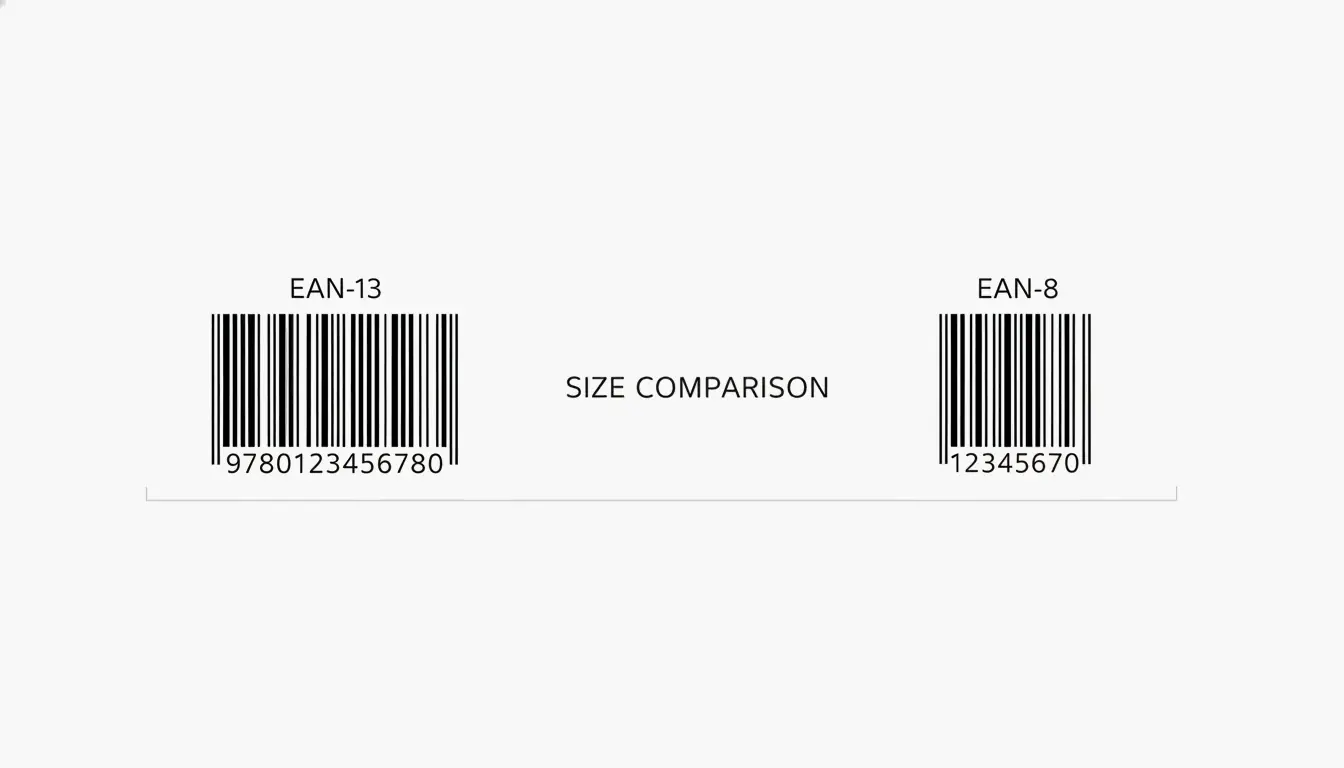
The biggest distinction between these two formats comes down to how many digits they carry and how much physical space they take up on a label.
| Feature | EAN-13 | EAN-8 |
|---|---|---|
| Digits | 13 | 8 |
| Module width | 95 modules | 67 modules |
| Minimum print width | ~1.5 inches (38 mm) | ~1 inch (26 mm) |
| Typical use | Standard retail products | Very small packaging |
| Managed by | GS1 | GS1 |
An EAN-13 barcode encodes 13 digits and is made up of 95 equal-width modules, according to Wikipedia. EAN-8 only encodes 8 digits, which produces a much narrower barcode — roughly two-thirds the width.
How to Choose: A Simple Decision Tree
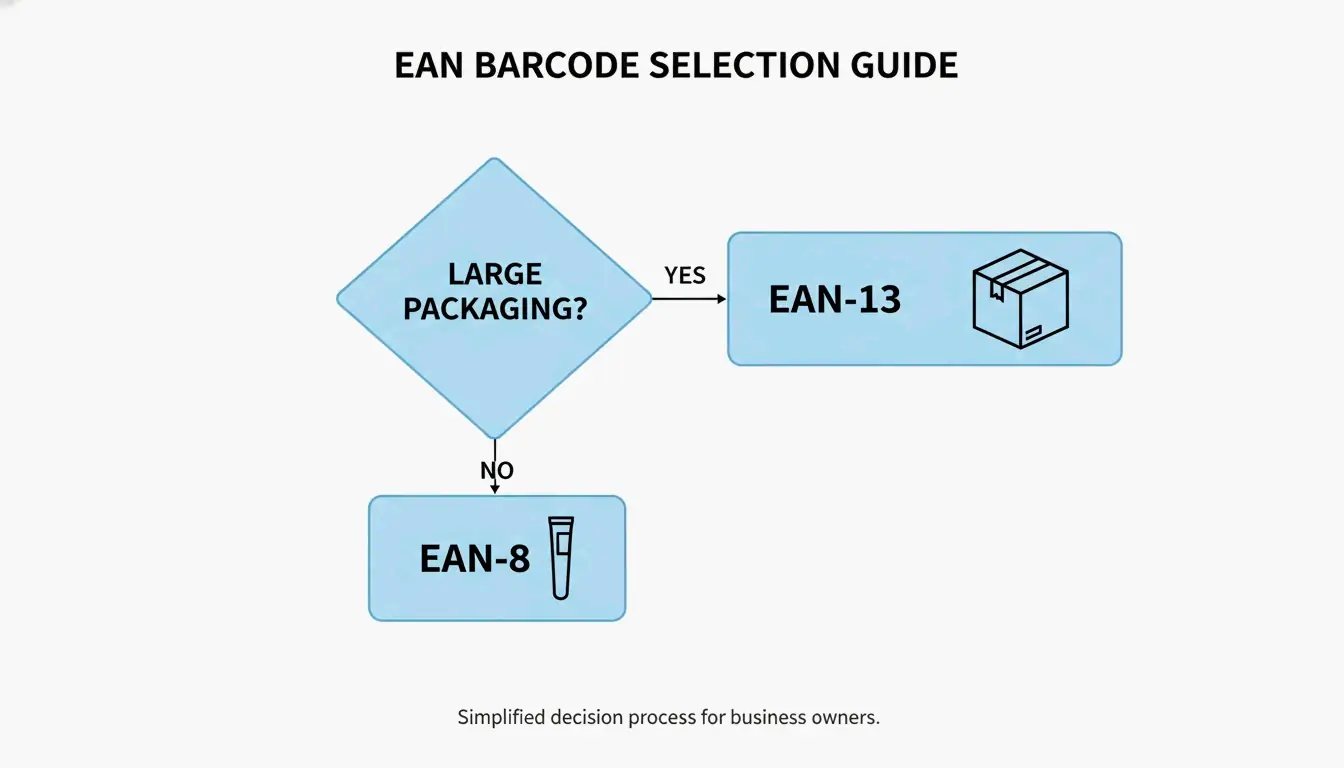
For anyone deciding which format to use, the logic is straightforward:
- Standard products — If your packaging has room for a barcode at least 1.5 inches wide, go with EAN-13. It’s the default requirement for retail worldwide.
- Small items — If the printable area on your product is too tight for EAN-13, you can apply for an EAN-8.
Something people often overlook is the Quiet Zone — the blank white space on both sides of the barcode. According to Wikipedia, EAN-13 barcodes frequently include a right-side > indicator that marks where the Quiet Zone begins. This visual marker helps scanners find the edges of the code so they aren’t confused by nearby graphics or text.
When EAN-8 Is the Right Call: The Surface Area Rule
EAN-8 isn’t a free alternative — it’s a specialized format for products that genuinely can’t fit a standard barcode. As Barcodes South Africa explains, because only 8 digits are available (far fewer unique combinations than 13 digits), GS1 Member Organizations only assign EAN-8 numbers to manufacturers who can demonstrate that their packaging is too small for EAN-13.
In practice, this means you’ll see EAN-8 on items like:
– Individual candy bars or chewing gum packs
– Small cosmetic items (lip balm, mascara)
– Packets of seeds or spices
– Tiny electronics accessories
If your product has enough space, EAN-13 is always the default.
Technical Specifications: How Are EAN Formats Structured?
Behind the bars, EAN formats follow a precise structure that ensures every product gets a globally unique ID through the GS1 (Global Standards 1) system.
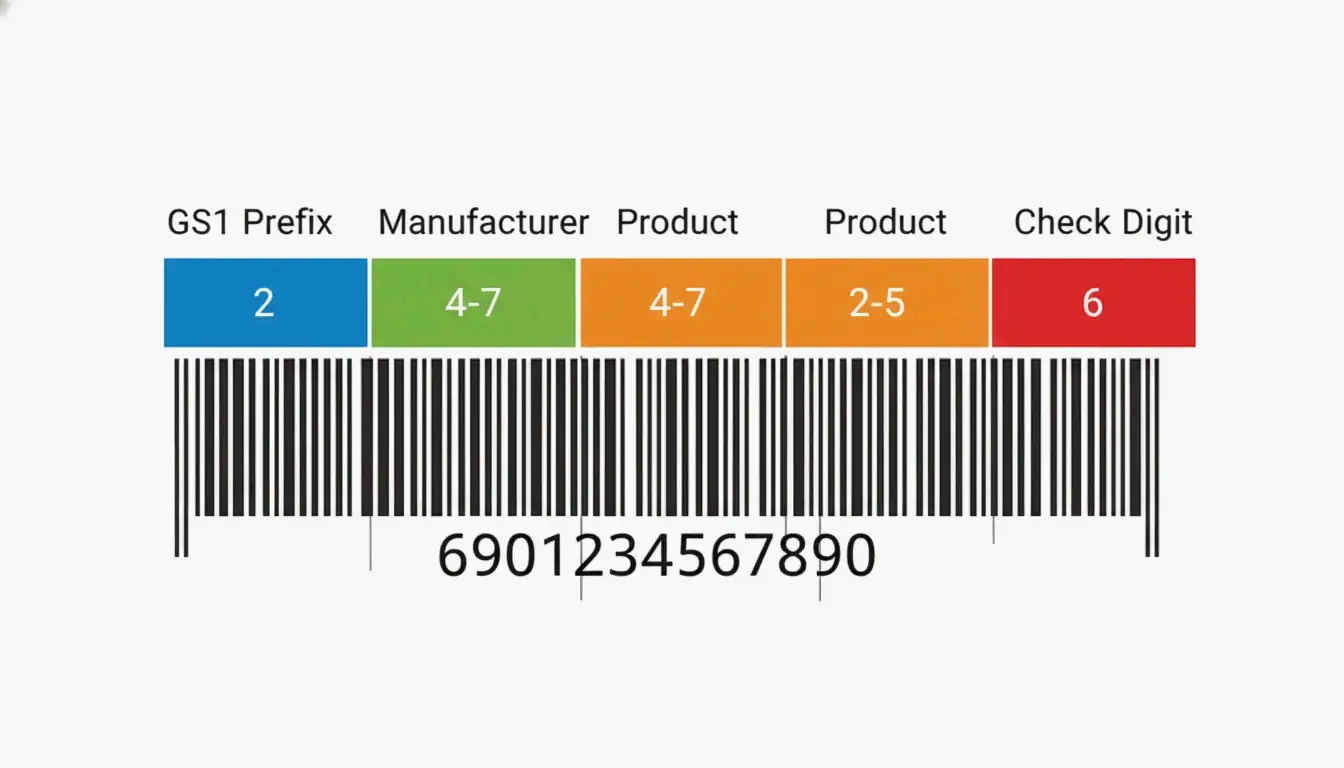
EAN-13 Structure:
- GS1 Prefix (3 digits): Identifies which GS1 Member Organization issued the code. For example,
590is Poland,400–440is Germany. - Manufacturer Code (variable length): The unique identifier assigned to a company.
- Product Code (variable length): The specific number the company assigns to a particular item (essentially the SKU).
- Check Digit (1 digit): The final digit, calculated from all previous digits to catch scanning errors.
EAN-8 Structure:
EAN-8 works differently — there’s no variable-length manufacturer code. The numbering authority assigns product codes directly. According to Oracle, any company can request an EAN-8 even if they already hold an EAN-13 prefix, but the two numbers have no mathematical relationship to each other.
Both formats are remarkably reliable at catching errors. Wikipedia notes that EAN-13 detects 100% of single-digit errors and 90% of transposition errors (where two adjacent digits get swapped). That means if a scanner misreads even one bar, the check digit will almost always flag it.
Is EAN-13 Accepted in the US? Comparing with UPC-A
A common concern for companies selling internationally is whether EAN-13 works in the United States, which historically used its own 12-digit UPC-A format.
The short answer: yes, completely. The “2005 Sunrise” initiative — now long-standing policy — requires every point-of-sale system in the US and Canada to accept both EAN-13 and UPC-A. In fact, EAN-13 is technically a superset of UPC-A. A UPC-A barcode is simply an EAN-13 where the first digit is 0.
What this means in practice:
– If you’re a global brand, you can use EAN-13 everywhere — no separate UPC-A codes needed.
– American retailers can scan your EAN-13 products without any configuration changes.
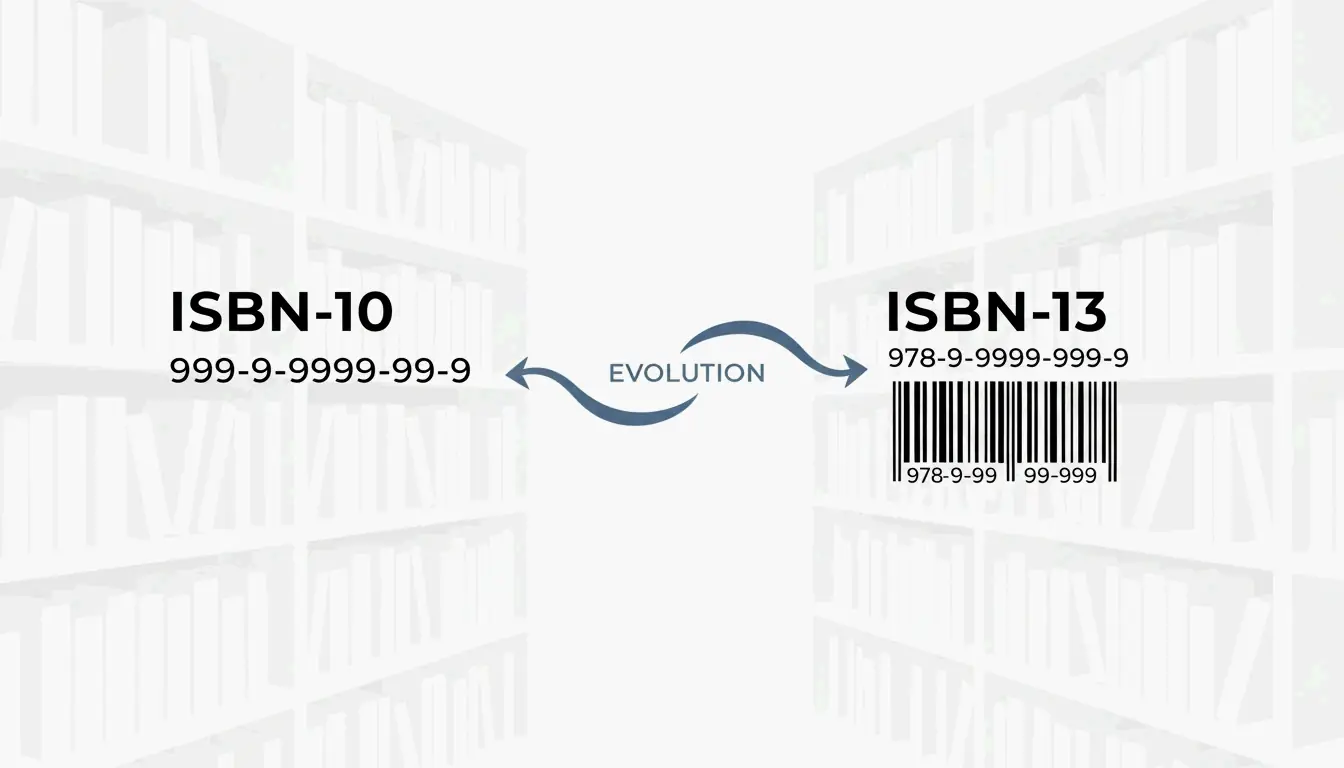
There are also specialized prefixes within the EAN-13 system worth knowing about. The Bookland prefixes (978 and 979) embed ISBNs directly into EAN-13, allowing books to be scanned at any standard retail checkout regardless of where they were published.
GTIN Integration and Database Normalization
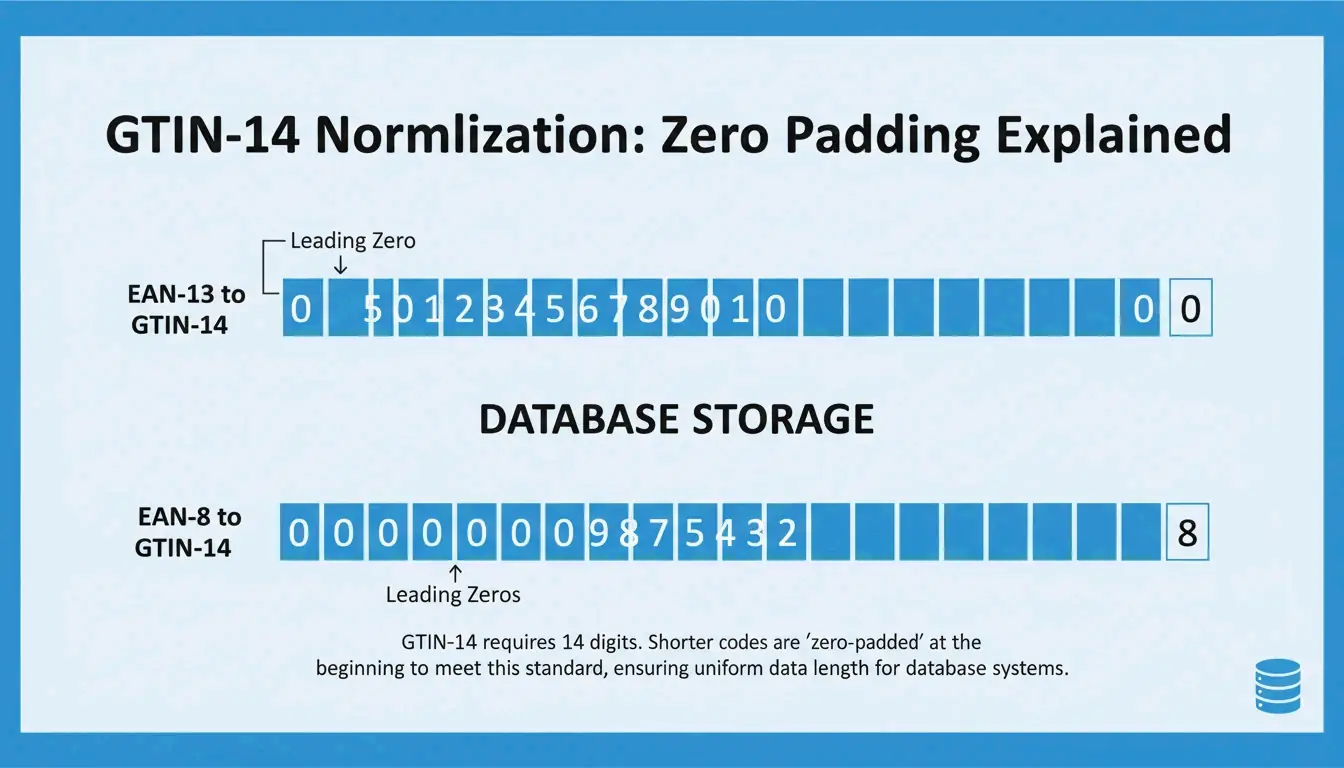
Both EAN-13 and EAN-8 are part of the Global Trade Item Number (GTIN) family. When products with different barcode lengths end up in the same database — say, a warehouse management system — they need a consistent format. That’s where GTIN-14 comes in.
The normalization is straightforward: pad the shorter codes with leading zeros.
| Barcode | GTIN-14 |
|---|---|
EAN-13: 4006381333931 |
04006381333931 (1 leading zero) |
EAN-8: 96385074 |
00000096385074 (6 leading zeros) |
In systems like Oracle WMS, all GTINs are right-aligned and padded to 14 digits so a single database field can handle everything from a tube of lip balm to a full pallet.
How to Calculate the Check Digit (Modulo-10, Step by Step)
The last digit of any EAN barcode isn’t random — it’s calculated using the Modulo-10 algorithm. Modern software handles this automatically, but understanding the math is useful if you’re generating barcodes programmatically or troubleshooting a scanning issue.
Example: verifying the check digit for EAN-13 400638133393?
Step 1 — Starting from the right (excluding the check digit), assign alternating weights of 3 and 1:
| Position | 12 | 11 | 10 | 9 | 8 | 7 | 6 | 5 | 4 | 3 | 2 | 1 |
|---|---|---|---|---|---|---|---|---|---|---|---|---|
| Digit | 4 | 0 | 0 | 6 | 3 | 8 | 1 | 3 | 3 | 3 | 9 | 3 |
| Weight | 1 | 3 | 1 | 3 | 1 | 3 | 1 | 3 | 1 | 3 | 1 | 3 |
| Product | 4 | 0 | 0 | 18 | 3 | 24 | 1 | 9 | 3 | 9 | 9 | 9 |
Step 2 — Add up all products: 4 + 0 + 0 + 18 + 3 + 24 + 1 + 9 + 3 + 9 + 9 + 9 = 89
Step 3 — Find the next multiple of 10 (which is 90). Subtract: 90 − 89 = 1.
The check digit is 1, making the full barcode 4006381333931.
This is a good sanity check to run during label design — catching a wrong check digit before you print thousands of labels saves both money and time.
Conclusion
EAN-13 is the global workhorse of retail barcoding — it’s what you’ll use for the vast majority of products. EAN-8 is the compact alternative, reserved for items where packaging space is genuinely too tight for a standard barcode. Both formats are managed by GS1, both use the same Modulo-10 check digit system, and both are scanned reliably by every modern POS system worldwide — including in the US and Canada.
The decision comes down to surface area. If your packaging can accommodate a barcode at least 1.5 inches wide, use EAN-13. If it can’t, apply for an EAN-8 through your local GS1 office. Either way, your product will scan correctly throughout the entire supply chain.
FAQ
Can I convert an EAN-8 code into an EAN-13 code?
No — they are completely separate identifiers. EAN-8 numbers are assigned directly by GS1 and have no connection to your EAN-13 manufacturer prefix. If you need an EAN-13 code, you’ll need to use a number from your assigned EAN-13 block.
Is EAN-13 accepted in the United States and Canada?
Yes. Since the 2005 Sunrise agreement, every modern POS system in North America scans both UPC-A and EAN-13 without issue. Most global brands now use EAN-13 exclusively to keep things simple across all markets.
What happens if I scan an EAN-8 barcode in a system that expects 14 digits?
The system will zero-pad the 8-digit code by adding six leading zeros to fill the GTIN-14 field (e.g., 000000XXXXXXXX). This is standard practice in systems like Oracle WMS to keep database records consistent across different product sizes.
Frequently Asked Questions
Technical Specifications: How Are EAN Formats Structured?
Behind the bars, EAN formats follow a precise structure that ensures every product gets a globally unique ID through the GS1 (Global Standards 1) system. EAN-13 Structure:
Can I convert an EAN-8 code into an EAN-13 code?
No — they are completely separate identifiers. EAN-8 numbers are assigned directly by GS1 and have no connection to your EAN-13 manufacturer prefix. If you need an EAN-13 code, you’ll need to use a number from your assigned EAN-13 block.
Is EAN-13 accepted in the United States and Canada?
Yes. Since the 2005 Sunrise agreement, every modern POS system in North America scans both UPC-A and EAN-13 without issue. Most global brands now use EAN-13 exclusively to keep things simple across all markets.
What happens if I scan an EAN-8 barcode in a system that expects 14 digits?
The system will zero-pad the 8-digit code by adding six leading zeros to fill the GTIN-14 field (e.g., 000000XXXXXXXX). This is standard practice in systems like Oracle WMS to keep database records consistent across different product sizes.
Related Posts
Invoice Numbers Explained: What They Are & How They Work
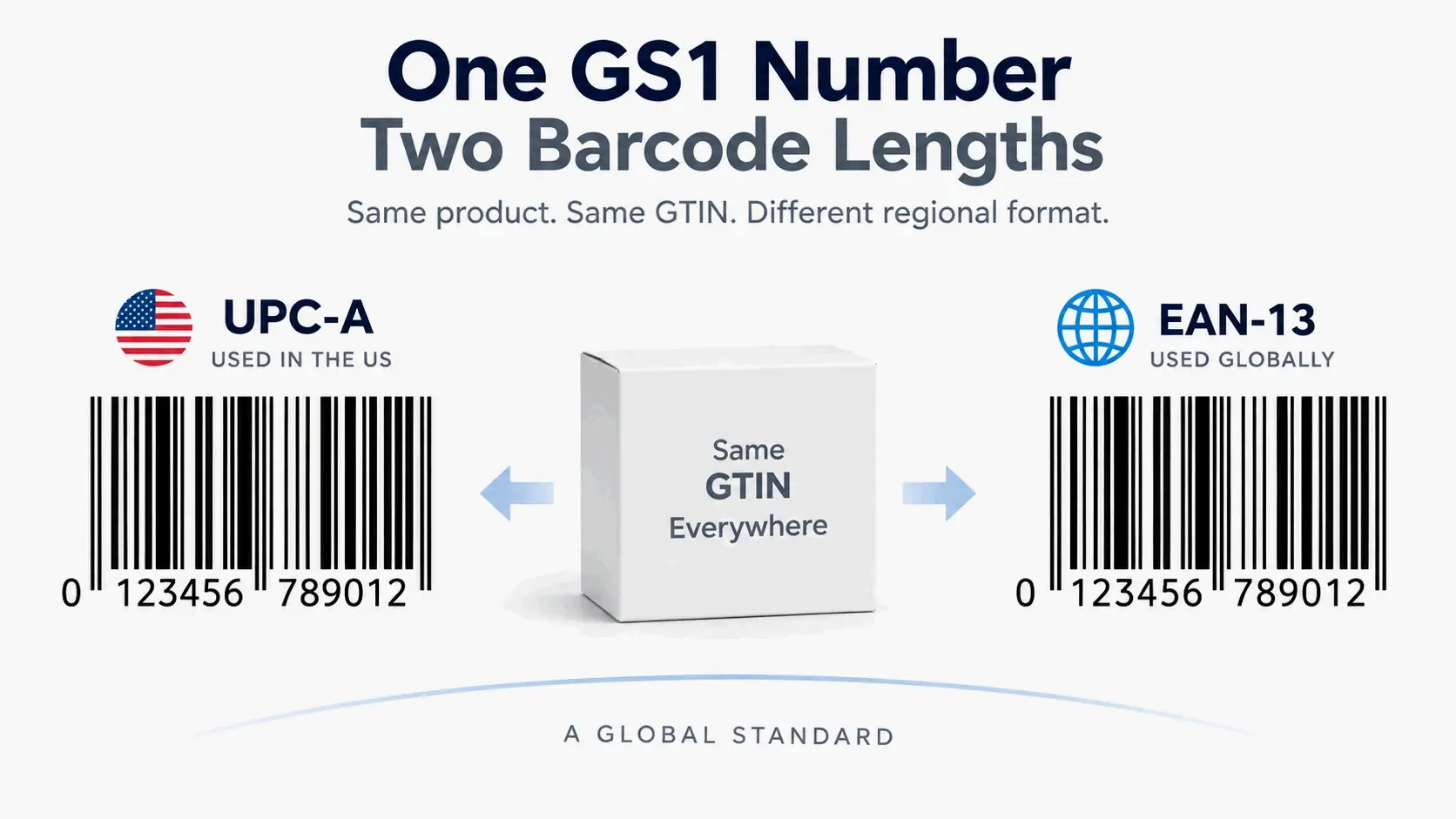
UPC vs EAN-13: Which Barcode Do US Sellers Actually Need?
Code 128 vs Code 39: Barcode Differences Explained (2026)