Code 128 vs Code 39: Barcode Differences Explained (2026)
Quick Summary
- If you work with barcodes — whether in shipping, health
- If you work with barcodes — whether in shipping, healthcare, manufacturing, or retail — you’ve likely encountered both Code 128 and Code 39 .
- Code 128 vs Code 39 at a Glance
Editorial Process
Reviewed by SectoJoy and published on May 7, 2026. This article is refreshed when product details, examples, or tool guidance change. Last updated May 15, 2026.
SectoJoy
I'm an indie hacker building iOS and web applications, with a focus on creating practical SaaS products. I specialize in AI SEO, constantly exploring how intelligent technologies can drive sustainable growth and efficiency.
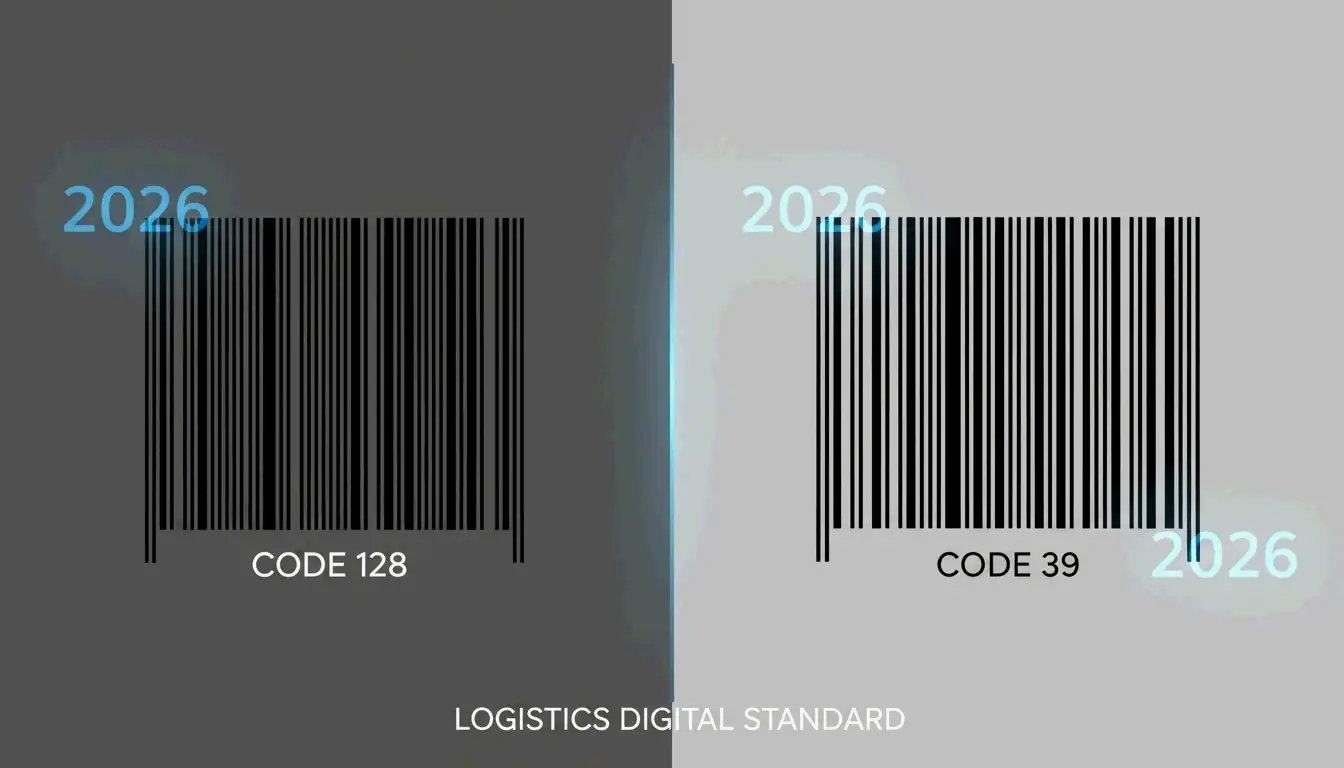
If you work with barcodes — whether in shipping, healthcare, manufacturing, or retail — you’ve likely encountered both Code 128 and Code 39. They’re two of the most common 1D barcode formats, and in 2026, the choice between them comes down to how much data you need to encode and how much label space you have.
Code 128 is the modern standard: high-density, full ASCII support, and a mandatory check digit. Code 39 is the older, simpler alternative that works well for short strings but becomes unwieldy with longer data. This guide breaks down the differences and helps you pick the right one.
Code 128 vs Code 39 at a Glance
| Feature | Code 128 | Code 39 |
|---|---|---|
| Data density | High — fits more data in less space | Low — gets wide quickly |
| Character set | Full 128 ASCII characters | 43 characters (uppercase, digits, few symbols) |
| Lowercase support | Native | Only via “Extended” mode (doubles barcode length) |
| Check digit | Mandatory (Modulo 103) | Optional |
| Bar/space widths | 4 widths (1, 2, 3, 4 units) | 2 widths (narrow and wide) |
| Best for | Logistics, shipping, complex data | Simple internal tracking, legacy systems |
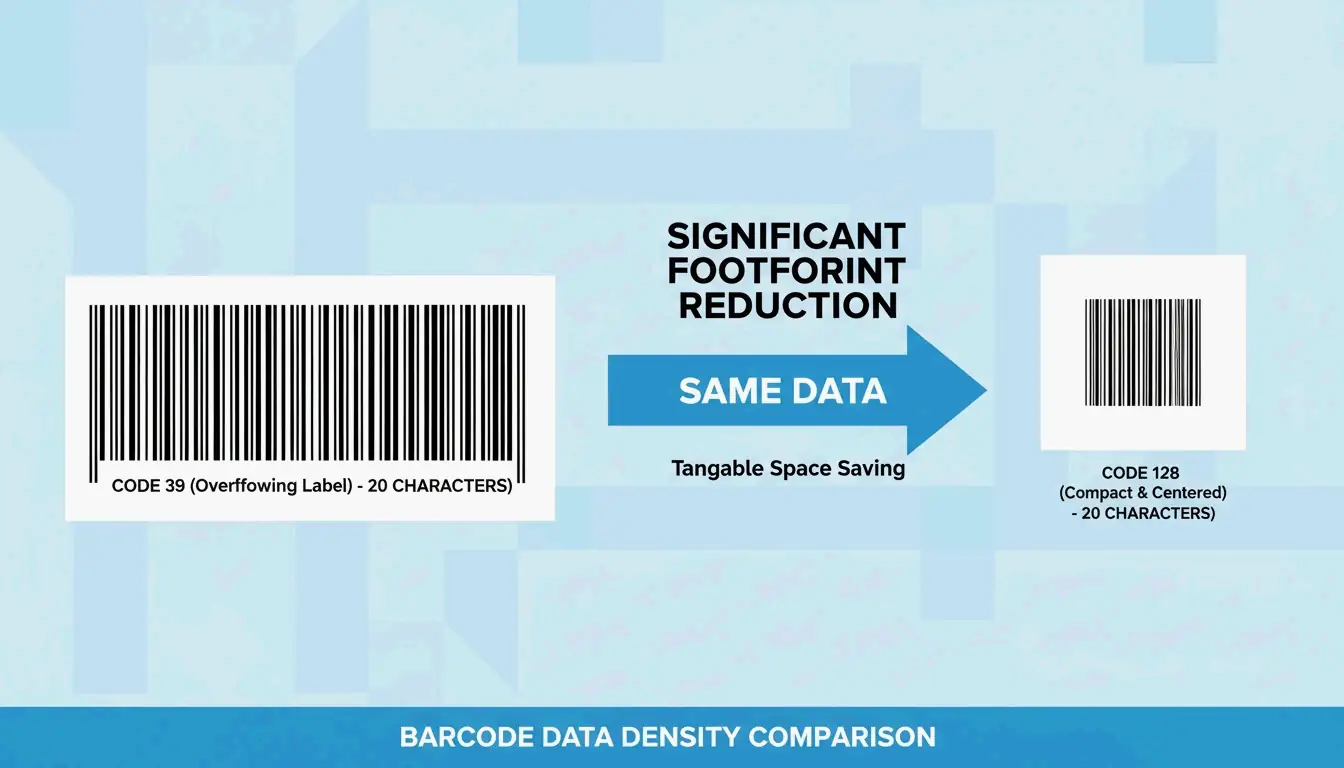
The physical footprint difference is striking. According to Peak Technologies, you should switch from Code 39 to Code 128 if your data string is longer than 15 characters. A 20-character ID in Code 39 might not fit on a standard 2-inch label, while Code 128 keeps it compact.
Modern scanners (area imagers and smartphone apps) read both formats easily. But Code 128 has the edge in reliability because its built-in error detection prevents misreads in high-volume environments.
Data Density: Why It Matters
Data density is how many characters fit into a single inch of barcode. Wikipedia explains that Code 128 uses four different widths for bars and spaces, while Code 39 uses only two. This precision makes Code 128 roughly twice as dense for numeric data — often the only 1D barcode that works for tiny items like medical vials or small electronics.
Character Support
- Code 39 (Standard): 43 characters — uppercase A–Z, digits 0–9, and a handful of symbols (-, ., $, /, +, %, space).
- Code 128: All 128 ASCII characters — uppercase, lowercase, symbols, and even control characters like carriage returns.
- Code 39 Extended: Can encode lowercase via character pairs (e.g., “+A” for lowercase “a”), but as Peak Technologies notes, this is “wasteful of space” and makes the barcode unnecessarily long.
Why Code 128 Is the Modern Logistics Standard
Code 128 powers global shipping through the GS1-128 standard, which uses “Application Identifiers” to structure data like batch numbers, expiration dates, and serial numbers.
Mandatory Check Digit (Modulo 103)
In Code 39, a checksum is optional. In Code 128, it’s built-in — the barcode appends a calculated value that the scanner verifies on every read. This virtually eliminates the risk of a “wrong” scan in busy warehouses.
Optimization Through Code Sets A, B, and C
Code 128 stays compact by switching between three internal modes:
| Code Set | Optimized For | Key Advantage |
|---|---|---|
| A | Uppercase letters + control codes | Industrial applications |
| B | Standard alphanumeric + lowercase | General-purpose text |
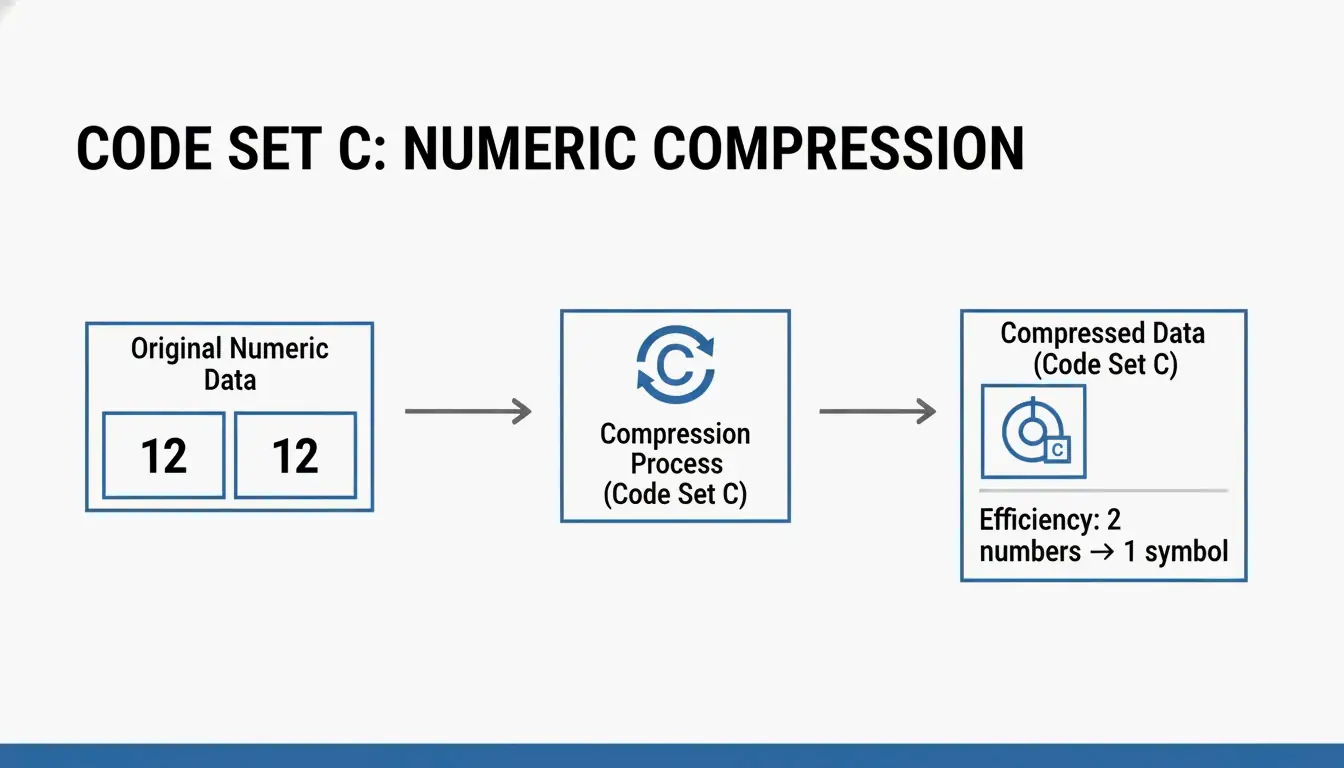
| C | Numeric-only data | Two digits per symbol — most efficient for numbers |
Wikipedia explains that Code Set C packs two digits into a single barcode symbol. For long numeric strings, this is incredibly efficient. Research by Steven Skiena shows that smart Code Set selection can make a barcode 8% smaller on average than using a static setting.
Is Code 39 Still Relevant?
Code 39 still has a place in 2026 because it’s simple and forgiving. It’s “self-checking” — the gaps between characters help isolate errors — which makes it work well with low-resolution printers or older industrial scanners.
You’ll still find Code 39 in:
– US Department of Defense (LOGMARS standard)
– Healthcare internal tracking
– Automotive legacy systems
The problem arises with Code 39 Extended. Encoding a single lowercase “a” requires printing “+A” — doubling the barcode length. If your tracking IDs use mixed-case letters, Code 39 Extended is a poor choice.
Technical Specs: X-Dimension and Quiet Zones
How well a barcode scans depends on the X-dimension — the width of the narrowest bar. According to GS1 2026 standards, the minimum X-dimension for retail checkouts is 0.264 mm (0.0104 inches).
Both formats also need a Quiet Zone — blank white space on both ends of the barcode, at least 10× the width of the narrowest bar. Without it, scanners can’t determine where the barcode starts and stops.
Scanner Compatibility
| Scanner Type | Works Best With | Notes |
|---|---|---|
| Laser scanners | Longer, taller barcodes | Need a clear laser path across all bars |
| Area imagers (2026 standard) | Both formats, including high-density Code 128 | Can read damaged or tilted labels |
| Smartphone cameras | Both | Native support in iOS/Android |
Per Gitnux 2024, the retail sector handles 42% of global daily scans — which is why the industry is moving toward more reliable area imaging standards.
Conclusion
Code 39 is fine for simple, short internal tracking IDs — especially in legacy systems with older scanners. Code 128 is the clear choice for anything else: it’s smaller, supports more characters, includes mandatory error checking, and is the backbone of modern logistics.
Decision rule:
– Data shorter than 10–15 characters, uppercase only → Code 39 is acceptable
– Anything longer, or with mixed case / symbols → Code 128
– GS1-128 compliance required → Code 128 (no other option)
When designing labels, ensure your narrowest bar meets the 0.264 mm GS1 standard to guarantee readability worldwide.
FAQ
Can Code 39 encode lowercase letters?
Standard Code 39 only supports uppercase letters, digits, and a few symbols. To encode lowercase, you need Code 39 Extended, which uses character pairs (e.g., “+A” for “a”). This significantly increases the barcode’s physical length, making it far less efficient than Code 128.
Why is Code 128 more “dense” than Code 39?
Code 128 uses four bar/space widths (vs. Code 39’s two), and its Code Set C encodes two digits per symbol. This makes Code 128 roughly twice as dense as Code 39 for numeric data, saving valuable label space.
Do I need a check digit for Code 39 barcodes?
It’s optional for Code 39 but recommended in high-stakes environments. Code 128 has a mandatory Modulo 103 checksum built into its specification, making it inherently more reliable for high-volume scanning.
Which barcode type is better for small items with limited label space?
Code 128 — its higher density means you can print it at a larger X-dimension (easier for scanners to read) within the same physical space where a Code 39 barcode would be cramped and hard to scan.
Frequently Asked Questions
Is Code 39 Still Relevant?
Code 39 still has a place in 2026 because it’s simple and forgiving. It’s “self-checking” — the gaps between characters help isolate errors — which makes it work well with low-resolution printers or older industrial scanners. You’ll still find Code 39 in: – US Department of Defense (LOGMARS standard) – Healthcare internal tracking – Automotive legacy systems
Can Code 39 encode lowercase letters?
Standard Code 39 only supports uppercase letters, digits, and a few symbols. To encode lowercase, you need Code 39 Extended, which uses character pairs (e.g., “+A” for “a”). This significantly increases the barcode’s physical length, making it far less efficient than Code 128.
Why is Code 128 more “dense” than Code 39?
Code 128 uses four bar/space widths (vs. Code 39’s two), and its Code Set C encodes two digits per symbol. This makes Code 128 roughly twice as dense as Code 39 for numeric data, saving valuable label space.
Do I need a check digit for Code 39 barcodes?
It’s optional for Code 39 but recommended in high-stakes environments. Code 128 has a mandatory Modulo 103 checksum built into its specification, making it inherently more reliable for high-volume scanning.
Which barcode type is better for small items with limited label space?
Code 128 — its higher density means you can print it at a larger X-dimension (easier for scanners to read) within the same physical space where a Code 39 barcode would be cramped and hard to scan.
Related Posts
Invoice Numbers Explained: What They Are & How They Work
UPC vs EAN-13: Which Barcode Do US Sellers Actually Need?
EAN-13 vs EAN-8: Which Barcode Format Fits Your Product?