Guia do código de barras VIN: como localizar, escanear e gerar códigos de barras de veículos
Resumo rápido
- Cada veículo tem uma impressão digital única — um de 17 caracteres
- Cada veículo tem uma impressão digital única — um Número de Identificação do Veículo (VIN) de 17 caracteres que codifica seu fabricante, modelo, tipo de motor e sequência de produção.
- Localizando o seu VIN: onde procurar
Processo editorial
Revisado por SectoJoy e publicado em 13 de junho de 2026. Atualizamos este artigo quando os detalhes do produto, exemplos ou guia da ferramenta mudam. Última atualização: 13 de junho de 2026.
SectoJoy
Sou um desenvolvedor independente que cria aplicativos iOS e web, focado em produtos SaaS práticos. Tenho especialização em SEO com IA, explorando constantemente como tecnologias inteligentes podem impulsionar crescimento sustentável e eficiência.
Cada veículo tem uma impressão digital única — um Número de Identificação do Veículo (VIN) de 17 caracteres que codifica seu fabricante, modelo, tipo de motor e sequência de produção. Esteja você buscando peças, fazendo uma verificação de histórico ou processando a entrada de veículos em uma concessionária, o VIN é a chave que abre tudo.
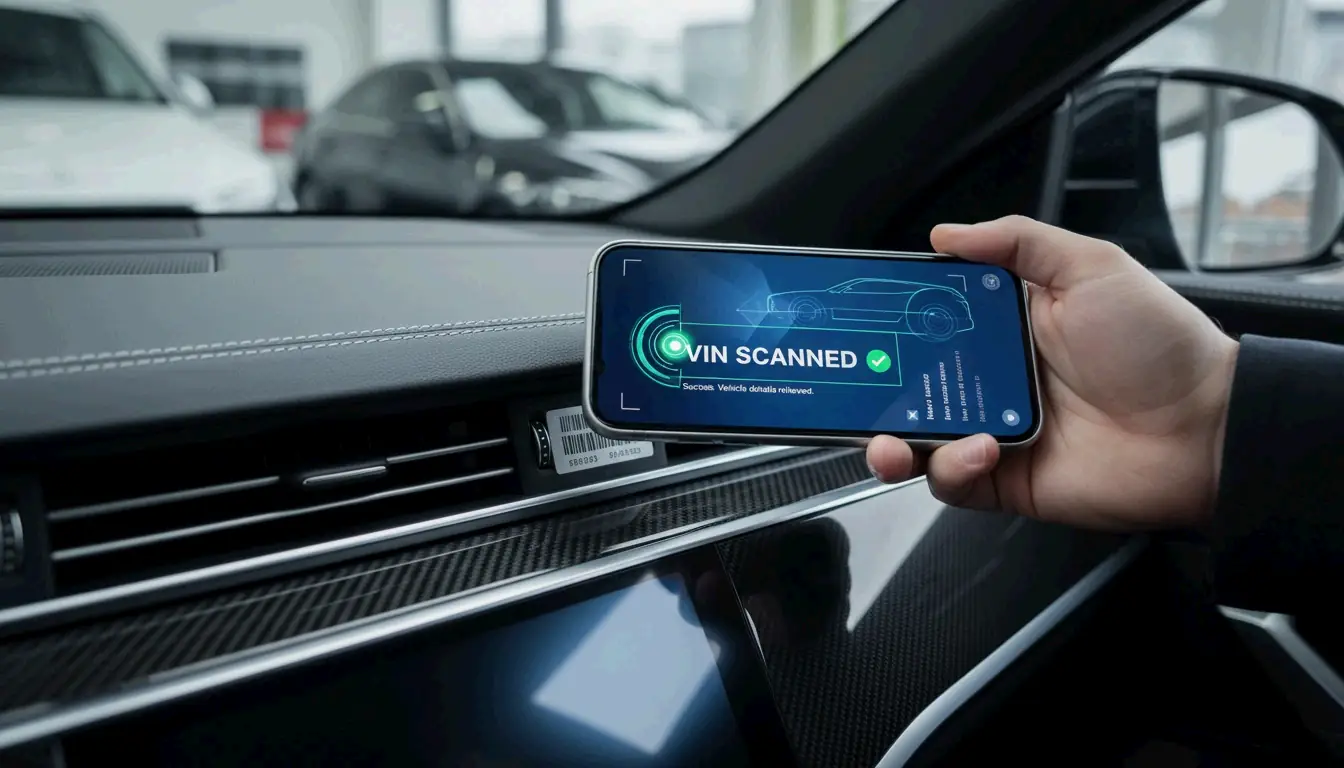
Este guia cobre onde encontrar o código de barras VIN, como escaneá-lo com ferramentas OCR modernas (99,8% de precisão), como gerar códigos de barras conformes e o que está mudando com o Passaporte Digital de Produto da UE de 2026.
Localizando o seu VIN: onde procurar
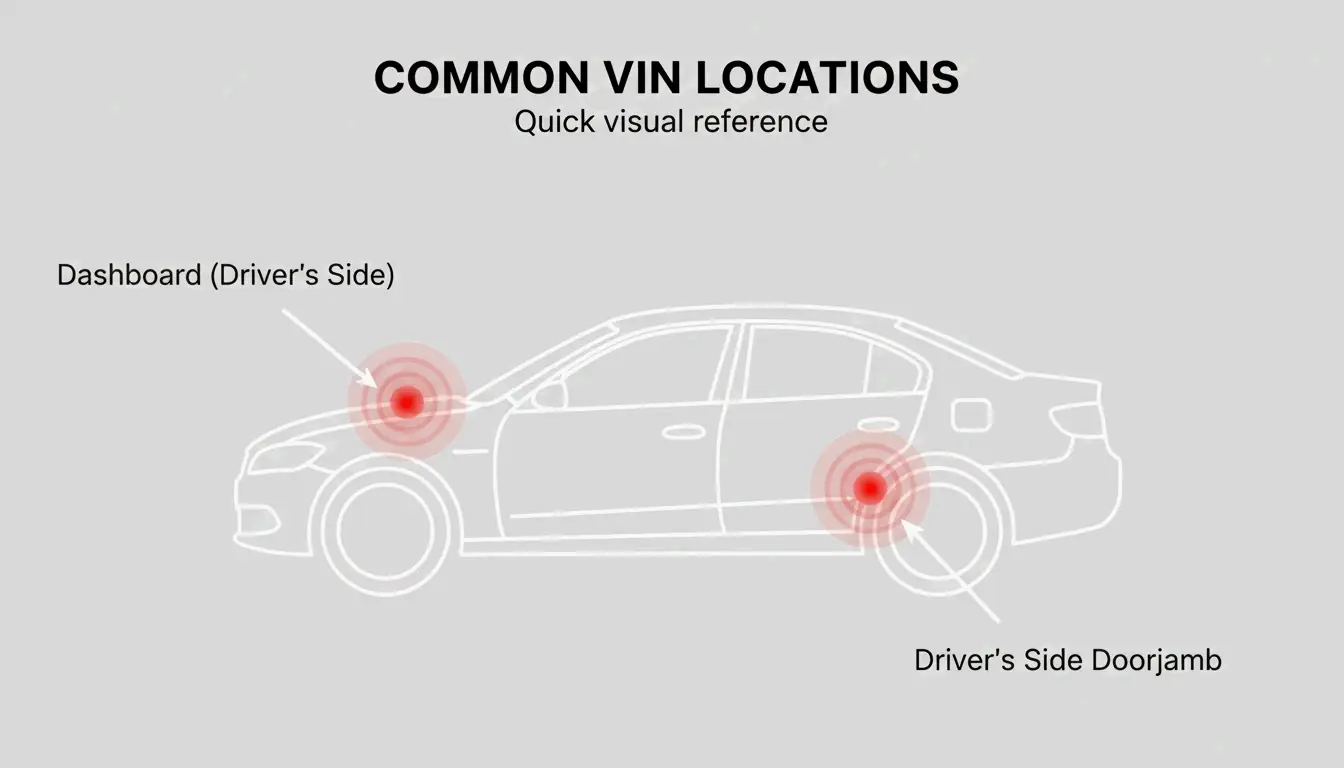
Desde 1981, todos os veículos vendidos nos EUA trazem um VIN padronizado de 17 caracteres. Normalmente você encontrará o código de barras ou a placa estampada em dois locais principais:
| Local | Como encontrá-lo |
|---|---|
| Painel (lado do motorista) | Fique de fora do carro, olhe pelo canto inferior do para-brisa até a placa de metal onde o painel encontra o capô |
| Montante da porta (pilar B) | Abra a porta do motorista, verifique a coluna em busca de um adesivo de conformidade que liste o VIN, a pressão dos pneus e a data de fabricação |
Para veículos onde estes não estão acessíveis:
| Tipo de veículo | Local alternativo |
|---|---|
| Caminhões / SUVs | Longarina dianteira direita |
| Motocicletas | Tubo da coluna de direção |
| Reboques | Língua (área do engate dianteiro) |
Se as etiquetas físicas estiverem faltando ou danificadas, a NHTSA sugere verificar o bloco do motor, o pozo do estepe, ou seu cartão de registro estadual, apólice de seguro ou título do veículo.
Solução de problemas: etiquetas desbotadas ou ausentes
Para chassis enferrujados ou placas danificadas, a FatBoysOffroad recomenda usar uma escova de aço para limpar a sujeira e a ferrugem da gravação do chassi. Se as etiquetas físicas desaparecerem completamente, seu cartão de registro, apólice de seguro ou título do veículo terá o VIN.
Tecnologia de escaneamento: OCR com 99,8% de precisão
Digitar códigos de 17 caracteres manualmente é propenso a erros e lento. O escaneamento moderno usa Reconhecimento Óptico de Caracteres (OCR) para converter uma foto em texto digital. Segundo a Vincario, scanners profissionais em 2026 atingem uma taxa de precisão de 99,8% — eliminando os erros de digitação que levam a pedidos de peças errados ou avaliações incorretas.
Principais ferramentas para 2026
| Ferramenta | Tipo | Ponto forte |
|---|---|---|
| Vincario | Plataforma de negócios | Decodifica VINs e mostra valores de mercado |
| GroupDocs | Scanner online | Enviar fotos ou usar webcam |
| Carketa | API para concessionárias | Integrada com Dealer Management Systems |
A economia de tempo é significativa. A Vincario relata que concessionárias reduzem o tempo de processamento manual em ~48% usando scanners integrados durante a entrada de veículos e leilões.
Dicas para escanear códigos de barras danificados
Escanear através de um para-brisa ou ler um código desbotado pode ser complicado. A GroupDocs usa algoritmos de IA para reconstruir padrões parciais. Para melhores resultados:
- Garanta muita luz, mas sem reflexo direto na superfície
- Se o código de barras não escanear, mude para o modo “texto” para ler os caracteres alfanuméricos impressos ao lado das linhas do código de barras
- Experimente um filtro de alto contraste dentro do app
Como gerar códigos de barras VIN conformes com ISO 3779
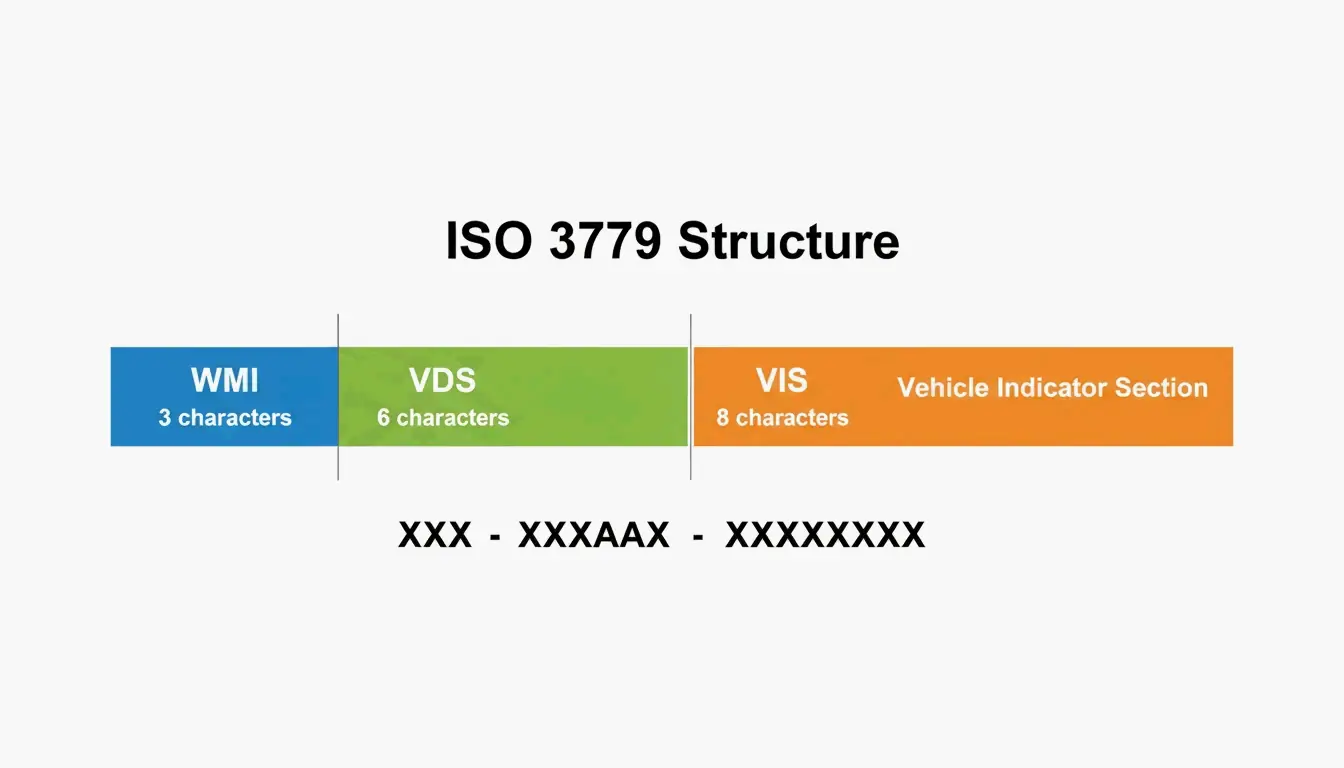
Gerar um código de barras VIN para uso industrial ou oficial exige o cumprimento de padrões internacionais. A ISO 3779 define a estrutura de 17 caracteres:
| Segmento | Caracteres | O que codifica |
|---|---|---|
| WMI (Identificador Mundial do Fabricante) | 1–3 | País e fabricante |
| VDS (Seção do Descritor do Veículo) | 4–9 | Modelo, tipo de motor, estilo da carroceria |
| VIS (Seção do Identificador do Veículo) | 10–17 | Ano do modelo, planta de montagem, número de produção |
Regra crítica: Sem I, O ou Q
A ISO 3779 proíbe as letras I, O e Q para evitar confusão com os números 1 e 0. Isso se aplica esteja você digitando, imprimindo ou escaneando.
Opções de formato de código de barras
| Formato | Melhor para | Notas |
|---|---|---|
| Code 39 | DMV, seguro, trabalho governamental | Padrão da indústria para documentos oficiais |
| Code 128 | Etiquetas pequenas, necessidades de alta densidade | Mais compacto que Code 39 |
Ferramentas como a Abundera podem gerar esses códigos, embora ferramentas baseadas na web normalmente o limitem a 500 códigos por sessão.
O dígito verificador (caractere 9)
O 9.º caractere de um VIN norte-americano é um Dígito Verificador — um número (0–9) ou a letra “X” calculado a partir dos demais caracteres para verificar a precisão. A equipe EAN Check observa que os mercados dos EUA e da China exigem esse dígito verificador para evitar fraude, enquanto fabricantes europeus e japoneses o seguem com menos consistência.
Atualização WMI 2024 da NHTSA
Em uma atualização de 2024, a NHTSA esclareceu que montadoras podem usar WMIs emitidos pelos EUA para veículos construídos fora do país sob certas condições. Alguns Fords construídos no exterior, por exemplo, ainda trazem um WMI dos EUA (começando com 1, 4 ou 5). Para determinar onde um carro foi realmente montado, verifique o 11.º dígito, que identifica a planta de montagem específica.
Aplicações industriais: marcação e passaportes digitais
Marcar permanentemente um VIN em um chassi requer técnicas especializadas:
| Método | Como funciona | Melhor para |
|---|---|---|
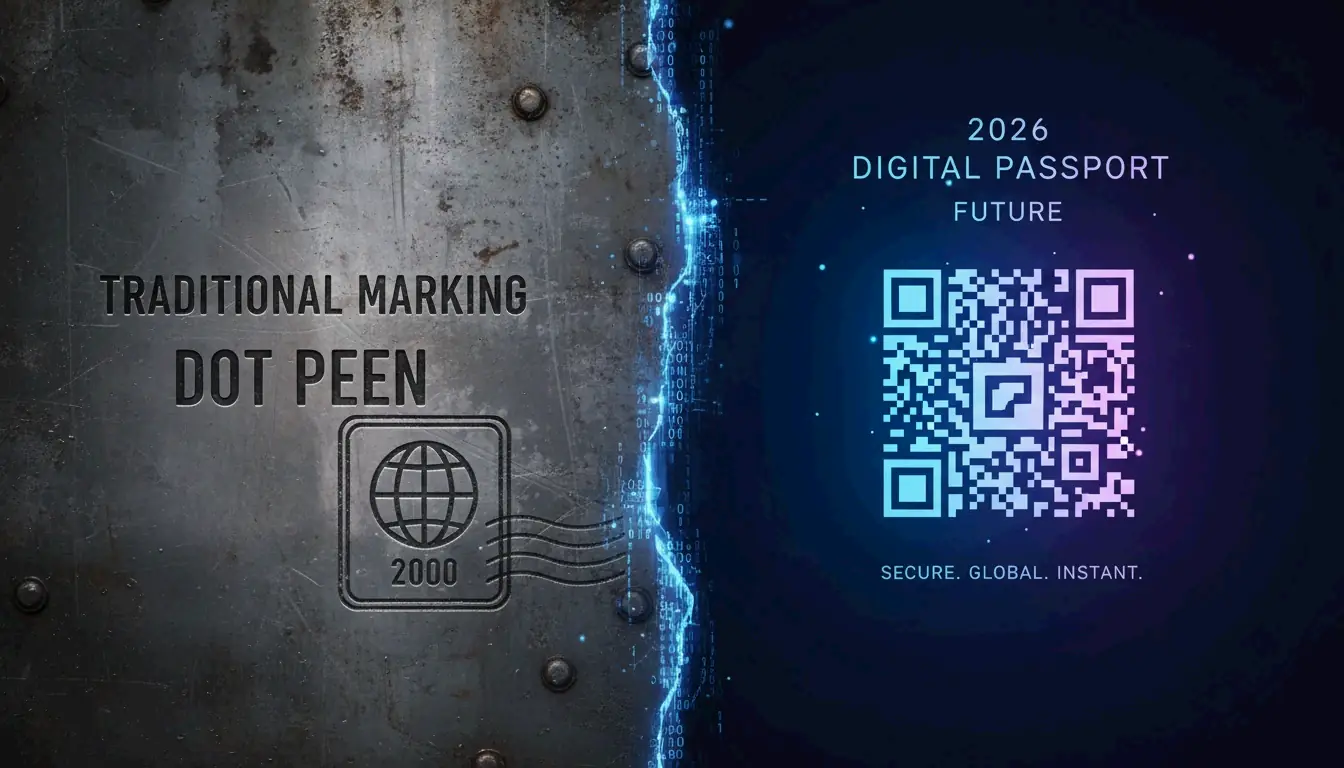
| Marcação por picote | Pino de metal amassa o código no metal | Chassis — sobrevive à pintura e ao powder coating (HeatSign) |
| Gravação a laser | Grava o código na superfície | Placas do painel, peças do motor — acabamento limpo e de alto contraste |
O Passaporte Digital de Produto da UE (2026)
A partir de 19 de julho de 2026, o Passaporte Digital de Produto da UE (DPP) está remodelando os padrões globais. Sob o Regulamento (UE) 2024/1781, peças automotivas vendidas na UE devem trazer um código QR ou Data Matrix escaneável que vincule a dados digitais do produto. A indústria está se movendo em direção a um “Passaporte Digital” para cada veículo.
Etiquetas de papel vs. marcação metálica
| Característica | Etiquetas de papel/vinil | Marcação metálica por picote/Gravação |
|---|---|---|
| Durabilidade | Baixa — pode descascar ou desbotar | Permanente — forjado no metal |
| Local | Montantes de porta, janelas | Chassis, bloco do motor, longarina |
| Caso de uso | Informação ao consumidor, especificações de pneus | Proteção contra retirada não autorizada, identificação legal |
| Tendência 2026 | Movendo-se para QR/DPP | Padrão para uso industrial pesado |
Para desenvolvedores, criar VINs aleatórios para testes é legal e comum. Ferramentas como o Gerador Aleatório de VIN produzem strings conformes com ISO 3779 sem usar dados de veículos reais.
Conclusão
Desde o momento em que um VIN é gerado sob as regras ISO até o dia em que é escaneado por um mecânico ou concessionária, é o dado individual mais importante vinculado a um veículo. Em 2026:
- Uso pessoal — Um bom app de scanner OCR com 99,8% de precisão é sua melhor ferramenta
- Uso comercial — Garanta que suas ferramentas estejam em conformidade com as resoluções da NHTSA de 2024 e os padrões do Passaporte Digital de Produto da UE de 2026
- Geração — Siga a ISO 3779 rigorosamente (sem I/O/Q, valide dígitos verificadores), escolha Code 39 para uso oficial ou Code 128 para etiquetas compactas
Perguntas frequentes
Onde fica o código de barras VIN em uma motocicleta ou reboque?
Motocicletas: Tubo da coluna de direção ou chassi perto da montagem do motor. Reboques: Língua (área do engate dianteiro) ou longarina dianteira esquerda. Se a etiqueta estiver faltando, procure por uma gravação física no chassi de metal.
Por que as letras I, O e Q nunca são usadas em um VIN?
Elas são excluídas pela ISO 3779 para evitar confusão com os números 1 e 0. Remover esses caracteres visualmente semelhantes melhora significativamente a precisão tanto na entrada manual quanto no escaneamento OCR automatizado.
Posso escanear um código de barras VIN danificado com um smartphone?
Sim — apps OCR aprimorados com IA de 2026 podem reconstruir padrões parciais. Garanta boa iluminação sem reflexos e experimente filtros de alto contraste. Se o código de barras estiver ilegível, a maioria dos apps pode usar OCR nos caracteres alfanuméricos impressos ao lado do código.
Perguntas frequentes
Onde fica o código de barras VIN em uma motocicleta ou reboque?
Motocicletas: Tubo da coluna de direção ou chassi perto da montagem do motor. Reboques: Língua (área do engate dianteiro) ou longarina dianteira esquerda. Se a etiqueta estiver faltando, procure por uma gravação física no chassi de metal.
Por que as letras I, O e Q nunca são usadas em um VIN?
Elas são excluídas pela ISO 3779 para evitar confusão com os números 1 e 0. Remover esses caracteres visualmente semelhantes melhora significativamente a precisão tanto na entrada manual quanto no escaneamento OCR automatizado.
Posso escanear um código de barras VIN danificado com um smartphone?
Sim — apps OCR aprimorados com IA de 2026 podem reconstruir padrões parciais. Garanta boa iluminação sem reflexos e experimente filtros de alto contraste. Se o código de barras estiver ilegível, a maioria dos apps pode usar OCR nos caracteres alfanuméricos impressos ao lado do código.
Artigos Relacionados

Gerador de Números de Telefone Aleatórios: Testes, Verificação por SMS & Integração DevOps
Gestão de Estoque para PMEs: Monte um Sistema de Código de Barras para Ativos Fixos com Baixo Custo em 2026
Como são gerados números verdadeiramente aleatórios: TRNG, PRNG e CSPRNG explicados