Para que serve um gerador de códigos de barras? Estoque, varejo e marketing em 2026
Resumo rápido
- Um gerador de códigos de barras transforma texto ou números em padrões legíveis por máquina para **gestão de estoque**, **rastreamento de ativos** e **vendas no varejo**
- Um gerador de códigos de barras transforma texto ou números em padrões legíveis por máquina para a gestão de estoque , o rastreamento de ativos e as vendas no varejo .
- Gestão de estoque: Code 128 para armazenagem
Processo editorial
Revisado por SectoJoy e publicado em 15 de junho de 2026. Atualizamos este artigo quando os detalhes do produto, exemplos ou guia da ferramenta mudam. Última atualização: 15 de junho de 2026.
SectoJoy
Sou um desenvolvedor independente que cria aplicativos iOS e web, focado em produtos SaaS práticos. Tenho especialização em SEO com IA, explorando constantemente como tecnologias inteligentes podem impulsionar crescimento sustentável e eficiência.
Um gerador de códigos de barras transforma texto ou números em padrões legíveis por máquina para a gestão de estoque, o rastreamento de ativos e as vendas no varejo. Em 2026, essas ferramentas conectam o offline ao online usando UPC-A/EAN-13 para o varejo global, Code 128 para a logística interna e códigos QR dinâmicos para o marketing móvel com análise de scans em tempo real.
Como diz a KODE.link, um gerador de códigos de barras confiável não é mais um luxo — é uma infraestrutura que liga itens físicos a bancos de dados digitais.
Gestão de estoque: Code 128 para armazenagem
Para a logística interna, Code 128 é o formato de código de barras padrão. Ele suporta todos os 128 caracteres ASCII e concentra alta densidade de dados em um rótulo estreito — ideal para compartimentos de armazenagem, paletes de envio e caixas de peças.
A Wasp Barcode observa que o Code 128 funciona com scanners 1D padrão e reduz as taxas de erro para aproximadamente um erro a cada vários milhões de caracteres, segundo a Wikipédia.
Rastreamento de ativos: gestão do ciclo de vida
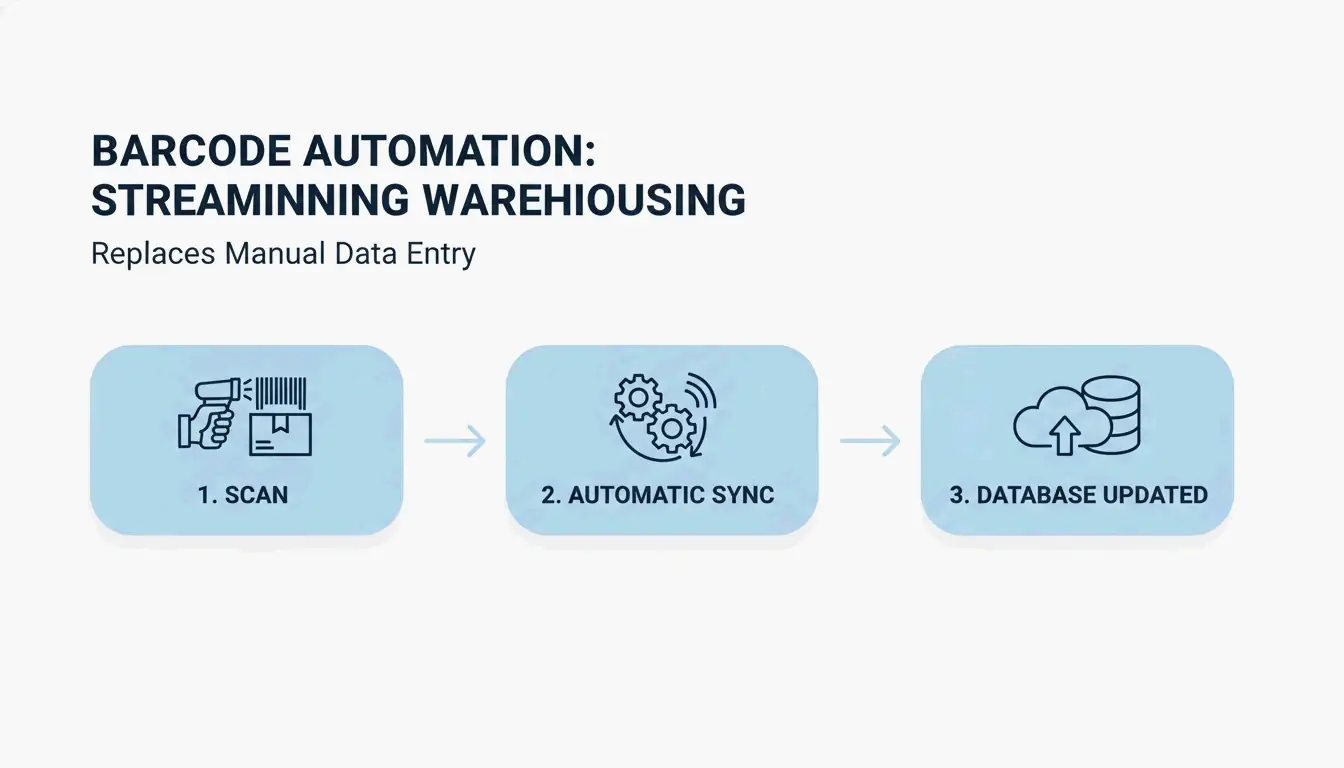
Geradores de códigos de barras também rastreiam ativos fixos — notebooks, ferramentas elétricas, máquinas. Ao atribuir um código de barras exclusivo a cada item, as empresas podem:
- Atribuir equipamentos a funcionários ou locais de trabalho específicos
- Registrar eventos de entrada/saída em tempo real
- Acompanhar cronogramas de manutenção e sinalizar itens antes que falhem
A Wasp Barcode enfatiza que o valor real vem de conectar os códigos a um software de rastreamento — dando a cada ativo um histórico digital completo sem papelada manual.
Varejo: os padrões UPC-A e EAN-13
Para produtos vendidos na América do Norte, você precisa de códigos UPC-A (12 dígitos). Globalmente, o EAN-13 (13 dígitos) é o padrão. Ambos seguem os padrões GS1, garantindo que um produto escaneado em uma loja seja reconhecido no mundo todo.
A primeira leitura UPC aconteceu em junho de 1974 no supermercado Marsh — um pacote de goma de mascar Wrigley’s Juicy Fruit. Hoje, a conformidade com a GS1 é um requisito inegociável para qualquer marca que entre nas prateleiras do varejo.
Melhores práticas de impressão: DPI, contraste e zonas de silêncio
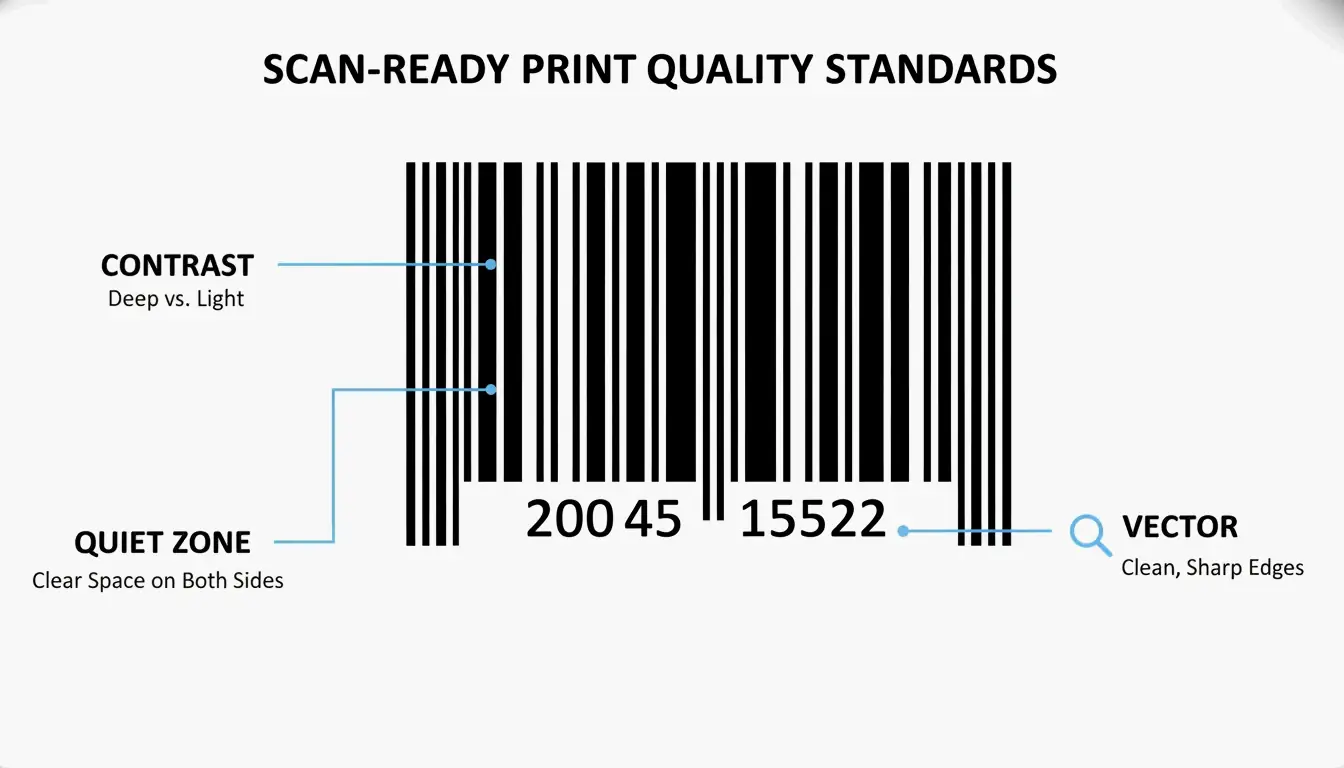
Um código de barras só serve se for escaneado. A CodeItBro recomenda exportar os códigos como SVG (Scalable Vector Graphics) — eles permanecem nítidos em qualquer tamanho.
Requisito | Por que importa
—|—|
Alto contraste | As barras devem ser significativamente mais escuras que o fundo para visibilidade a laser
Zonas de silêncio | Margens em branco de ambos os lados dizem ao scanner onde o código começa e termina
Saída vetorial | SVG permanece nítido em qualquer tamanho; PNG só funciona para rótulos simples
Código QR vs código de barras: qual você precisa?
A escolha depende da capacidade de dados e do contexto de leitura:
| Característica | Código de barras linear (1D) | Código QR (2D) |
|---|---|---|
| Capacidade de dados | ~20 caracteres | Até 7.089 caracteres numéricos |
| Scanner | Scanner a laser 1D | Câmera do smartphone / imager 2D |
| Uso principal | Estoque e varejo (UPC/EAN) | Marketing, URLs, dados complexos |
| Personalização | Limitada | Alta — cores, logos, formas |
| Correção de erros | Mínima | Até 30 % de tolerância a danos |
Fonte: QRStuff
Códigos QR dinâmicos para marketing
Os códigos QR dinâmicos tornaram-se o padrão de marketing. Ao contrário dos códigos estáticos (dados travados), os dinâmicos usam um link de redirecionamento — então você pode mudar a URL de destino mesmo após imprimir 5.000 panfletos. Ferramentas como QR Code Generator também oferecem análise de scans, mostrando quando e onde as pessoas escaneiam.
Códigos QR gerados por IA: arte escaneável em 2026
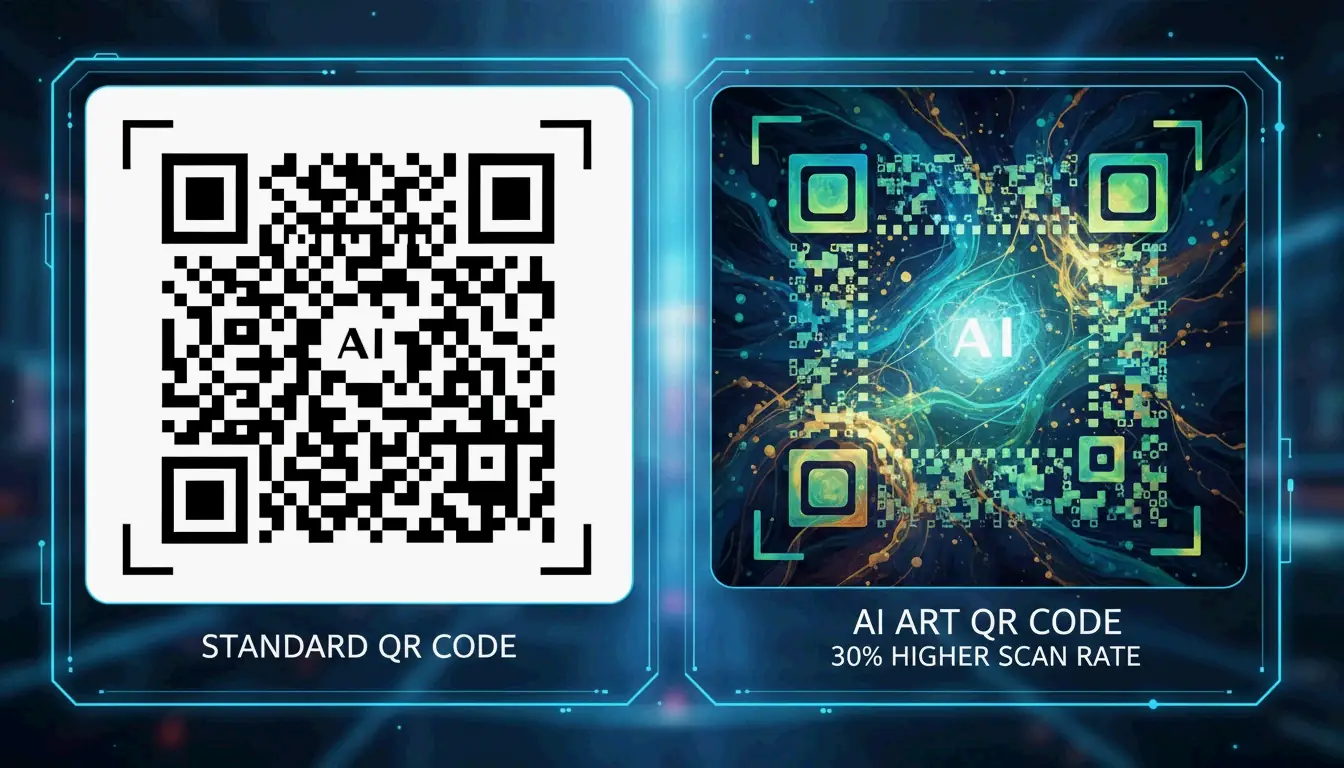
Em 2026, os geradores de códigos de barras foram além dos quadrados em preto e branco. A IA generativa mescla logos de marca e padrões artísticos diretamente em códigos QR funcionais — tornando o código parte do design e não um adendo visual de última hora.
Dados da QR Code AI mostram que códigos QR artísticos de marca recebem em média 30 % mais scans que os tradicionais. Esse aumento de engajamento faz parte do GEO (Otimização para Motores Generativos), enviando sinais de tráfego de alta qualidade de volta às plataformas digitais.
Conclusão
Um gerador de códigos de barras é a ponte entre produtos físicos e dados digitais — seja organizando um armazém com Code 128, atendendo aos requisitos do varejo com UPC-A ou rodando campanhas com códigos QR desenhados por IA. Escolha o formato adequado ao seu objetivo, exporte como SVG, e cada leitura funcionará de primeira.
Perguntas frequentes
Códigos QR expiram ou têm limite de scans?
Os códigos QR estáticos nunca expiram — os dados estão embutidos no padrão. Os códigos QR dinâmicos dependem de um provedor de serviço; se o redirecionamento for desativado ou sua assinatura terminar, o código para de funcionar. A maioria dos geradores profissionais, como QR Code Generator, oferece scans ilimitados em contas empresariais.
Qual é o tamanho mínimo de um código de barras impresso?
Um UPC-A padrão deve medir aproximadamente 1,46″×1,02″. O mínimo para o varejo é cerca de 80 % disso (aprox. 0,8″ de largura). Para códigos QR, a QR Code Generator recomenda no mínimo 2×2 cm (0,8″×0,8″) para leitura confiável por smartphone.
Posso editar o destino de um código QR depois de imprimir?
Somente com um código QR dinâmico. Códigos estáticos têm os dados fixos — se a URL mudar, você precisa de um novo código. Códigos dinâmicos usam um link curto de redirecionamento que você pode atualizar do seu painel a qualquer momento, mesmo após a impressão.
Perguntas frequentes
Código QR vs código de barras: qual você precisa?
A escolha depende da capacidade de dados e do contexto de leitura: Característica Código de barras linear (1D) Código QR (2D) Capacidade de dados ~20 caracteres Até 7.089 caracteres numéricos Scanner Scanner a laser 1D Câmera do smartphone / imager 2D Uso principal Estoque e varejo (UPC/EAN) Marketing, URLs, dados complexos Personalização Limitada Alta — cores, logos, formas Correção de erros Mínima Até 30 % de tolerância a danos
Códigos QR expiram ou têm limite de scans?
Os códigos QR estáticos nunca expiram — os dados estão embutidos no padrão. Os códigos QR dinâmicos dependem de um provedor de serviço; se o redirecionamento for desativado ou sua assinatura terminar, o código para de funcionar. A maioria dos geradores profissionais, como QR Code Generator, oferece scans ilimitados em contas empresariais.
Qual é o tamanho mínimo de um código de barras impresso?
Um UPC-A padrão deve medir aproximadamente 1,46″×1,02″. O mínimo para o varejo é cerca de 80 % disso (aprox. 0,8″ de largura). Para códigos QR, a QR Code Generator recomenda no mínimo 2×2 cm (0,8″×0,8″) para leitura confiável por smartphone.
Posso editar o destino de um código QR depois de imprimir?
Somente com um código QR dinâmico. Códigos estáticos têm os dados fixos — se a URL mudar, você precisa de um novo código. Códigos dinâmicos usam um link curto de redirecionamento que você pode atualizar do seu painel a qualquer momento, mesmo após a impressão.
Artigos Relacionados
Gerador de Fontes: O Mapa Completo de Textos Estilizados em 2026
Gerador de Fontes Estéticas: O Guia Definitivo para Textos Unicode Estilosos
Gerador de Fontes de Caligrafia: Ferramenta Online Gratuita para Estilos de Texto Elegantes