Guide VIN Barcode : comment localiser, scanner et générer des barcode de véhicules
Résumé rapide
- Chaque véhicule possède une empreinte unique — un
- Chaque véhicule possède une empreinte unique — un numéro d’identification du véhicule (VIN) à 17 caractères qui code son fabricant, son modèle, son type de moteur et sa séquence de production.
- Localiser votre VIN : où chercher
Processus éditorial
Relu par SectoJoy et publié le 13 juin 2026. Cet article est mis à jour lorsque les détails du produit, les exemples ou les consignes d'utilisation évoluent. Dernière mise à jour : 13 juin 2026.
SectoJoy
Je suis un développeur indépendant créant des applications iOS et web, avec un focus sur les produits SaaS pratiques. Je me spécialise en SEO basé sur l'IA, en explorant constamment comment les technologies intelligentes peuvent stimuler la croissance durable et l'efficacité.
Chaque véhicule possède une empreinte unique — un numéro d’identification du véhicule (VIN) à 17 caractères qui code son fabricant, son modèle, son type de moteur et sa séquence de production. Que vous achetiez des pièces, lanciez une vérification d’historique ou procédiez à la réception d’un véhicule dans une concession, le VIN est la clé qui ouvre tout.
Ce guide couvre où trouver le barcode VIN, comment le scanner avec des outils OCR modernes (99,8 % de précision), comment générer des barcode conformes, et ce qui change avec le Digital Product Passport de l’UE en 2026.
Localiser votre VIN : où chercher
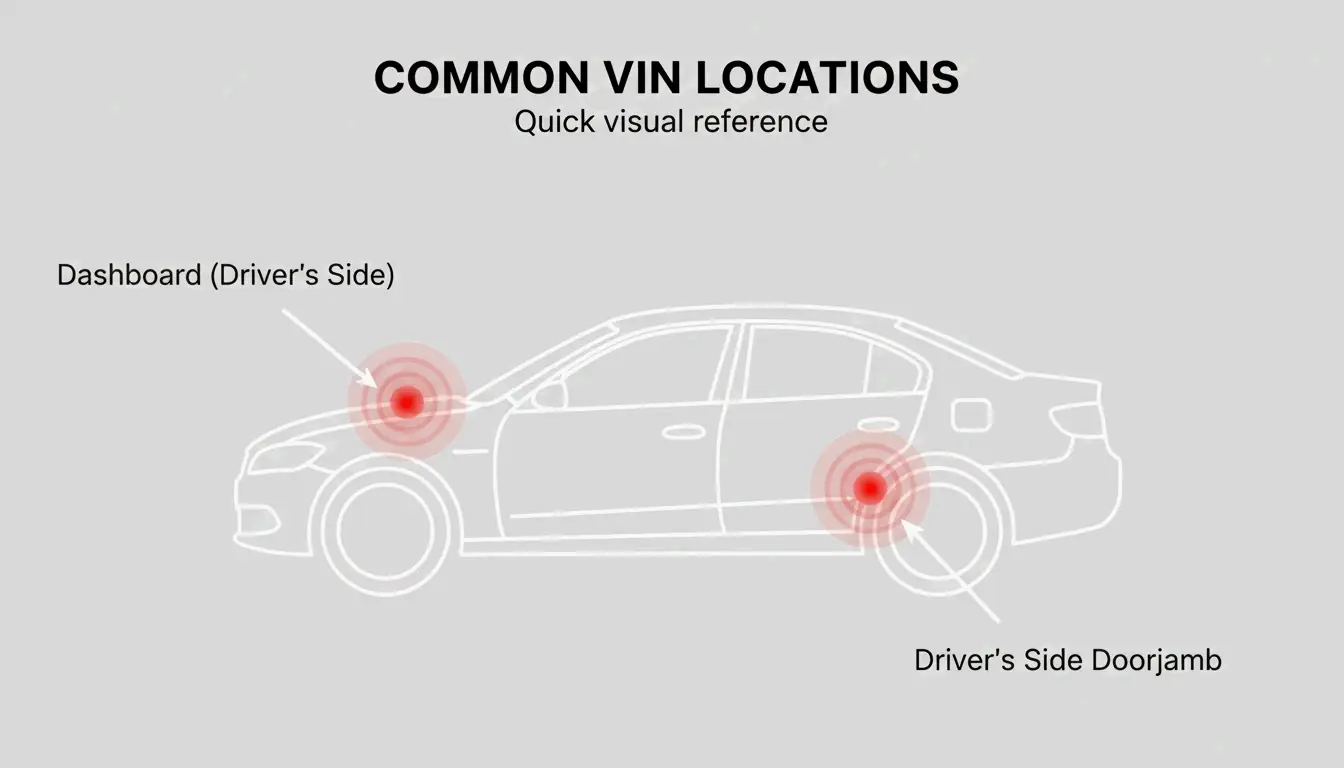
Depuis 1981, chaque véhicule vendu aux États-Unis porte un VIN standardisé à 17 caractères. Vous trouverez généralement le barcode ou la plaque estampillée à deux endroits principaux :
| Emplacement | Comment le trouver |
|---|---|
| Tableau de bord (côté conducteur) | Tenez-vous à l’extérieur de la voiture, regardez à travers le coin inférieur du pare-brise vers la plaque métallique là où le tableau de bord rejoint le capot |
| Montant central (jambe de porte) | Ouvrez la porte du conducteur, vérifiez le montant pour une étiquette de conformité indiquant le VIN, la pression des pneus et la date de fabrication |
Pour les véhicules où ces emplacements ne sont pas accessibles :
| Type de véhicule | Emplacement alternatif |
|---|---|
| Camions / SUV | Longeron de châssis avant droit |
| Motos | Tube de colonne de direction |
| Remorques | Flèche (zone d’attelage avant) |
Si les étiquettes physiques sont manquantes ou endommagées, la NHTSA suggère de vérifier le bloc moteur, le puits de la roue de secours, ou votre carte d’immatriculation d’État, police d’assurance ou titre du véhicule.
Dépannage : étiquettes fanées ou manquantes
Pour les châssis rouillés ou les plaques endommagées, FatBoysOffroad recommande d’utiliser une brosse métallique pour nettoyer la crasse et la rouille de l’estampillage du châssis. Si les étiquettes physiques ont complètement disparu, votre carte d’immatriculation, votre police d’assurance ou le titre du véhicule contiendront le VIN.
Technologie de numérisation : OCR à 99,8 % de précision
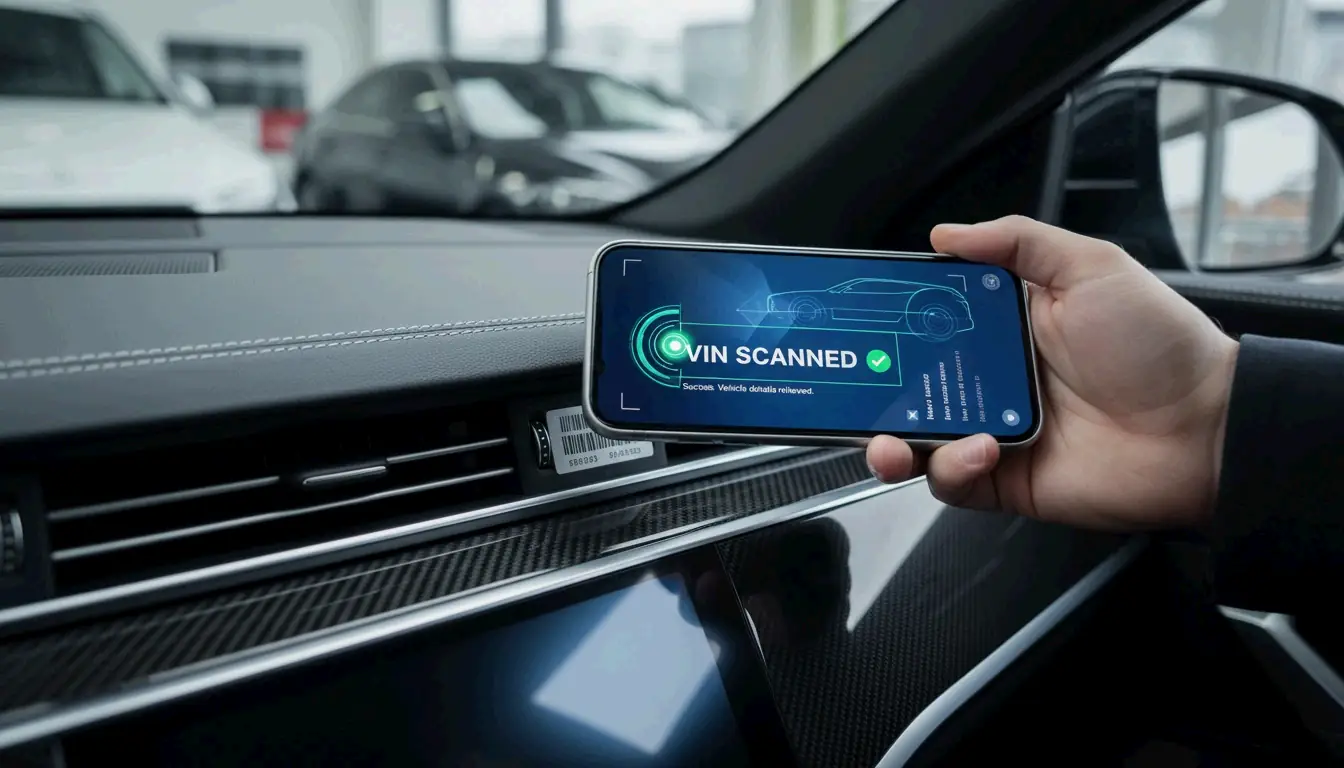
Saisir à la main des codes à 17 caractères est source d’erreurs et lent. La numérisation moderne utilise la reconnaissance optique de caractères (OCR) pour convertir une photo en texte numérique. Selon Vincario, les scanners professionnels en 2026 atteignent un taux de précision de 99,8 % — éliminant les fautes de frappe qui entraînent de mauvaises commandes de pièces ou des évaluations incorrectes.
Meilleurs outils pour 2026
| Outil | Type | Point fort |
|---|---|---|
| Vincario | Plateforme professionnelle | Décode les VIN + affiche les valeurs marchandes |
| GroupDocs | Scanner en ligne | Téléchargez des photos ou utilisez la webcam |
| Carketa | API pour concessionnaires | Intégré aux systèmes de gestion de concession |
Les gains de temps sont significatifs. Vincario rapporte que les concessions réduisent le temps de traitement manuel d’environ 48 % en utilisant des scanners intégrés lors de la réception des véhicules et des enchères.
Conseils pour numériser des barcode endommagés
Numériser à travers un pare-brise ou lire un code fané peut s’avérer délicat. GroupDocs utilise des algorithmes d’IA pour reconstruire des motifs partiels. Pour de meilleurs résultats :
- Assurez-vous d’avoir beaucoup de lumière mais sans reflet direct sur la surface
- Si le barcode ne se numérise pas, passez en mode “texte” pour lire les caractères alphanumériques imprimés à côté des lignes du barcode
- Essayez un filtre à contraste élevé dans l’application
Comment générer des barcode VIN conformes à la norme ISO 3779
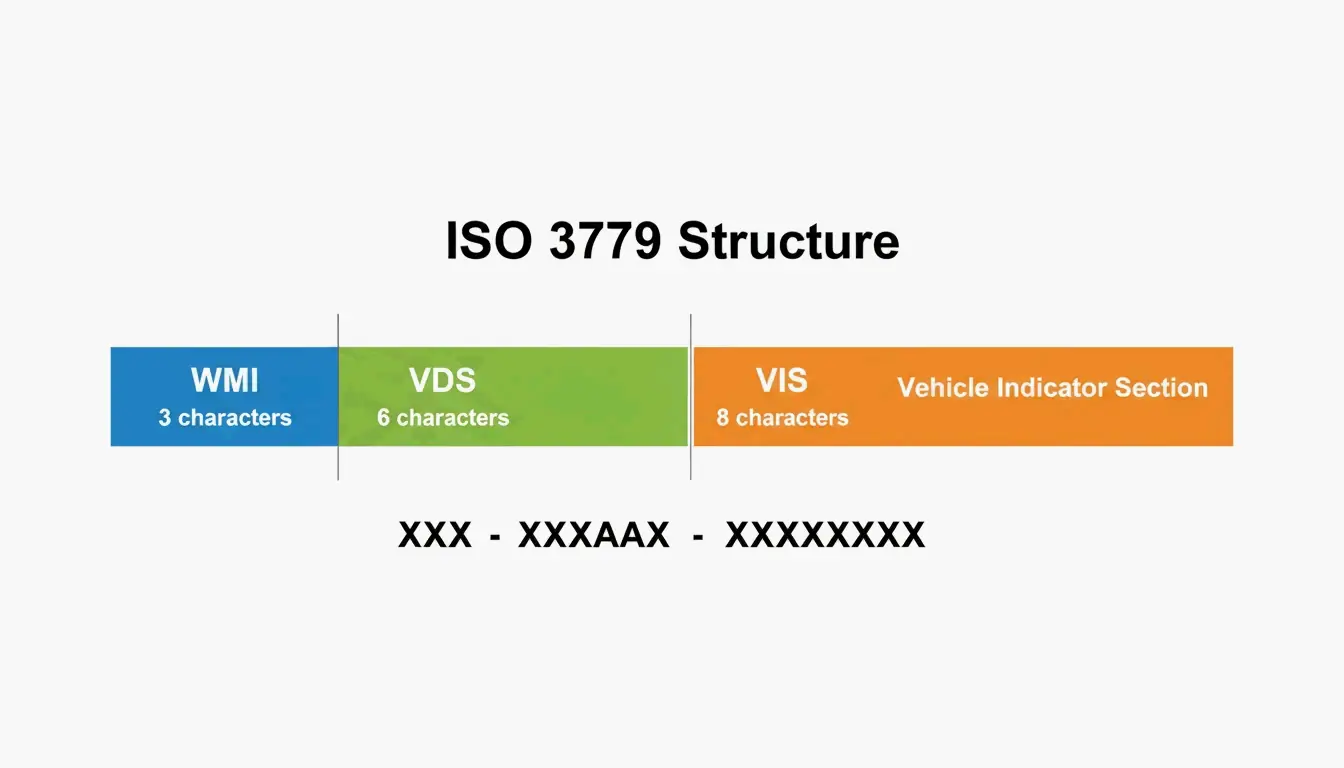
Générer un barcode VIN pour un usage industriel ou officiel nécessite de respecter des normes internationales. La norme ISO 3779 définit la structure à 17 caractères :
| Segment | Caractères | Ce qu’il code |
|---|---|---|
| WMI (identifiant mondial du fabricant) | 1–3 | Pays et fabricant |
| VDS (section de descripteur du véhicule) | 4–9 | Modèle, type de moteur, style de carrosserie |
| VIS (section d’identification du véhicule) | 10–17 | Année du modèle, usine d’assemblage, numéro de production |
Règle critique : pas de I, O ou Q
La norme ISO 3779 interdit les lettres I, O et Q pour éviter toute confusion avec les chiffres 1 et 0. Cela s’applique que vous tapiez, imprimiez ou numérisiez.
Options de format de barcode
| Format | Idéal pour | Notes |
|---|---|---|
| Code 39 | DMV, assurance, documents officiels | Norme industrielle pour les documents officiels |
| Code 128 | Petites étiquettes, besoins à haute densité | Plus compact que le Code 39 |
Des outils comme Abundera peuvent générer ces codes, bien que les outils en ligne vous limitent généralement à 500 codes par session.
Le chiffre de contrôle (caractère 9)
Le 9e caractère d’un VIN nord-américain est un chiffre de contrôle — un nombre (0–9) ou la lettre “X” calculé à partir des autres caractères pour vérifier l’exactitude. L’équipe EAN Check note que les marchés américain et chinois exigent ce chiffre de contrôle pour prévenir la fraude, tandis que les fabricants européens et japonais le respectent moins systématiquement.
Mise à jour WMI 2024 de la NHTSA
Dans une mise à jour de 2024, la NHTSA a précisé que les constructeurs automobiles peuvent utiliser des WMI délivrés par les États-Unis pour les véhicules construits en dehors des États-Unis dans certaines conditions. Certaines Ford construites à l’étranger, par exemple, portent encore un WMI américain (commençant par 1, 4 ou 5). Pour déterminer où une voiture a réellement été assemblée, vérifiez le 11e chiffre, qui identifie l’usine d’assemblage spécifique.
Applications industrielles : marquage et passeports numériques
Le marquage permanent d’un VIN sur un châssis nécessite des techniques spécialisées :
| Méthode | Comment ça marche | Idéale pour |
|---|---|---|
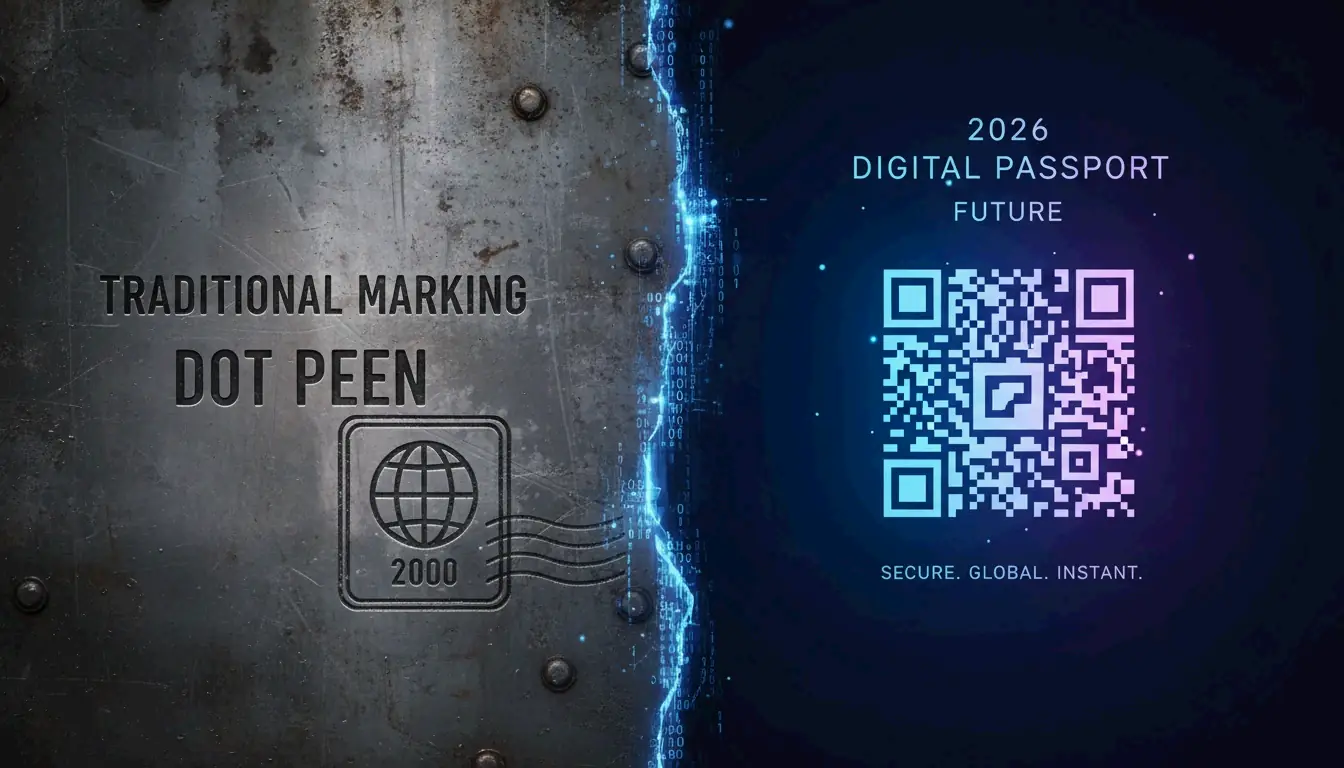
| Marquage par pointage | Une pointe métallique enfonce le code dans le métal | Châssis — survit à la peinture et au thermolaquage (HeatSign) |
| Gravure laser | Grave le code sur la surface | Plaques de tableau de bord, pièces moteur — finition propre et à contraste élevé |
Le Digital Product Passport de l’UE (2026)
À compter du 19 juillet 2026, le Digital Product Passport (DPP) de l’UE redéfinit les normes mondiales. En vertu du règlement (UE) 2024/1781, les pièces automobiles vendues dans l’UE doivent porter un code QR ou Data Matrix numérisable lié aux données numériques du produit. L’industrie se dirige vers un “passeport numérique” pour chaque véhicule.
Étiquettes papier vs. marquage métallique
| Caractéristique | Étiquettes papier / vinyle | Marquage métallique par pointage / gravure |
|---|---|---|
| Durabilité | Faible — peut se décoller ou se faner | Permanent — forgé dans le métal |
| Emplacement | Jambes de porte, fenêtres | Châssis, bloc moteur, cadre |
| Cas d’usage | Informations consommateur, spécifications de pneus | Protection contre le vol, identification légale |
| Tendance 2026 | Passage au QR / DPP | Norme pour un usage industriel lourd |
Pour les développeurs, créer des VIN aléatoires à des fins de test est légal et courant. Des outils comme le Random VIN Generator produisent des chaînes conformes à la norme ISO 3779 sans utiliser de données réelles de véhicules.
Conclusion
Dès le moment où un VIN est généré selon les règles ISO jusqu’au jour où il est numérisé par un mécanicien ou une concession, c’est la donnée la plus importante attachée à un véhicule. En 2026 :
- Usage personnel — une bonne application de scanner OCR avec 99,8 % de précision est votre meilleur outil
- Usage professionnel — assurez-vous que vos outils sont conformes aux décisions NHTSA de 2024 et aux normes du Digital Product Passport de l’UE 2026
- Génération — suivez strictement la norme ISO 3779 (pas de I / O / Q, validez les chiffres de contrôle), choisissez le Code 39 pour un usage officiel ou le Code 128 pour des étiquettes compactes
FAQ
Où se trouve le barcode VIN sur une moto ou une remorque ?
Motos : tube de colonne de direction ou cadre près du support moteur. Remorques : flèche (zone d’attelage avant) ou longeron de châssis avant gauche. Si l’étiquette manque, cherchez un estampillage physique sur le châssis métallique.
Pourquoi les lettres I, O et Q ne sont-elles jamais utilisées dans un VIN ?
Elles sont exclues par la norme ISO 3779 pour éviter toute confusion avec les chiffres 1 et 0. La suppression de ces caractères visuellement similaires améliore considérablement la précision lors de la saisie manuelle comme de la numérisation OCR automatisée.
Puis-je numériser un barcode VIN endommagé avec un smartphone ?
Oui — les applications OCR améliorées par IA de 2026 peuvent reconstruire des motifs partiels. Assurez-vous d’avoir un bon éclairage sans reflet et essayez les filtres à contraste élevé. Si le barcode est illisible, la plupart des applications peuvent utiliser l’OCR sur les caractères alphanumériques imprimés à côté du code.
Questions fréquentes
Où se trouve le barcode VIN sur une moto ou une remorque ?
Motos : tube de colonne de direction ou cadre près du support moteur. Remorques : flèche (zone d’attelage avant) ou longeron de châssis avant gauche. Si l’étiquette manque, cherchez un estampillage physique sur le châssis métallique.
Pourquoi les lettres I, O et Q ne sont-elles jamais utilisées dans un VIN ?
Elles sont exclues par la norme ISO 3779 pour éviter toute confusion avec les chiffres 1 et 0. La suppression de ces caractères visuellement similaires améliore considérablement la précision lors de la saisie manuelle comme de la numérisation OCR automatisée.
Puis-je numériser un barcode VIN endommagé avec un smartphone ?
Oui — les applications OCR améliorées par IA de 2026 peuvent reconstruire des motifs partiels. Assurez-vous d’avoir un bon éclairage sans reflet et essayez les filtres à contraste élevé. Si le barcode est illisible, la plupart des applications peuvent utiliser l’OCR sur les caractères alphanumériques imprimés à côté du code.
Articles associés

Générateur de Numéros de Téléphone Aléatoires : Tests, Vérification SMS & Intégration DevOps
Gestion des stocks PME : créez un système de codes-barres pour immobilisations à moindre coût en 2026
Comment sont vraiment générés les nombres aléatoires : TRNG, PRNG et CSPRNG expliqués