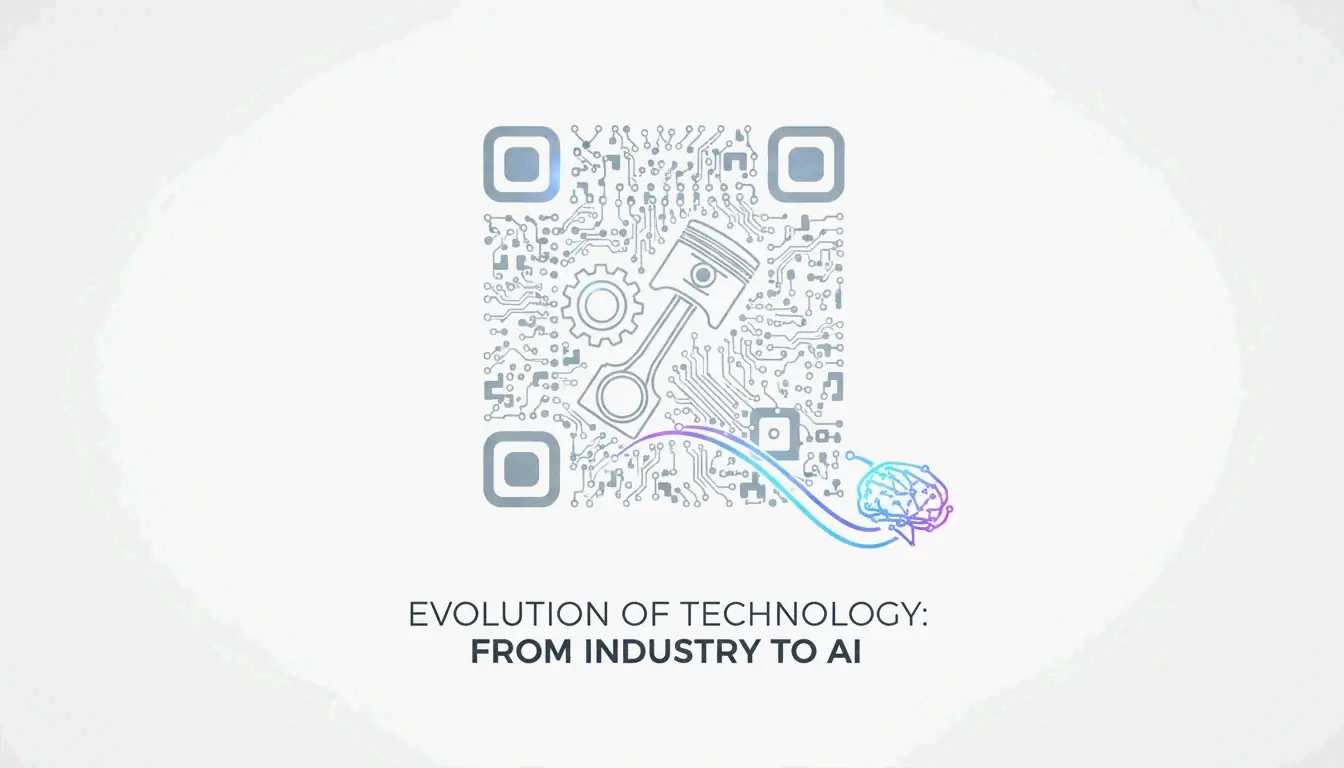
L’histoire des codes QR : des chaînes de montage Toyota à une industrie de 33 milliards de dollars
Résumé rapide
- L”histoire des codes QR a commencé en 1994, lorsque Masahiro Hara de Denso Wave a inventé un code-barres matriciel 2D pour suivre les pièces automobiles Toyota
- L’ histoire des codes QR a commencé en 1994, lorsque Masahiro Hara, chez Denso Wave, a inventé un code-barres matriciel 2D pour suivre les pièces automobiles Toyota.
- Qu’est-ce qu’un code QR ? Les fondations techniques
Processus éditorial
Relu par SectoJoy et publié le 14 juin 2026. Cet article est mis à jour lorsque les détails du produit, les exemples ou les consignes d'utilisation évoluent. Dernière mise à jour : 14 juin 2026.
SectoJoy
Je suis un développeur indépendant créant des applications iOS et web, avec un focus sur les produits SaaS pratiques. Je me spécialise en SEO basé sur l'IA, en explorant constamment comment les technologies intelligentes peuvent stimuler la croissance durable et l'efficacité.
L’histoire des codes QR a commencé en 1994, lorsque Masahiro Hara, chez Denso Wave, a inventé un code-barres matriciel 2D pour suivre les pièces automobiles Toyota. Inspirée par le jeu de Go, la technologie est passée des chaînes de montage à une ubiquité mondiale après l’intégration native dans l’appareil photo d’Apple en 2017 et l’essor sans contact lié à la COVID-19. En 2026, le marché des codes QR est évalué à 13,04 milliards de dollars et devrait atteindre 33,14 milliards de dollars d’ici 2031, selon Mordor Intelligence.
Qu’est-ce qu’un code QR ? Les fondations techniques
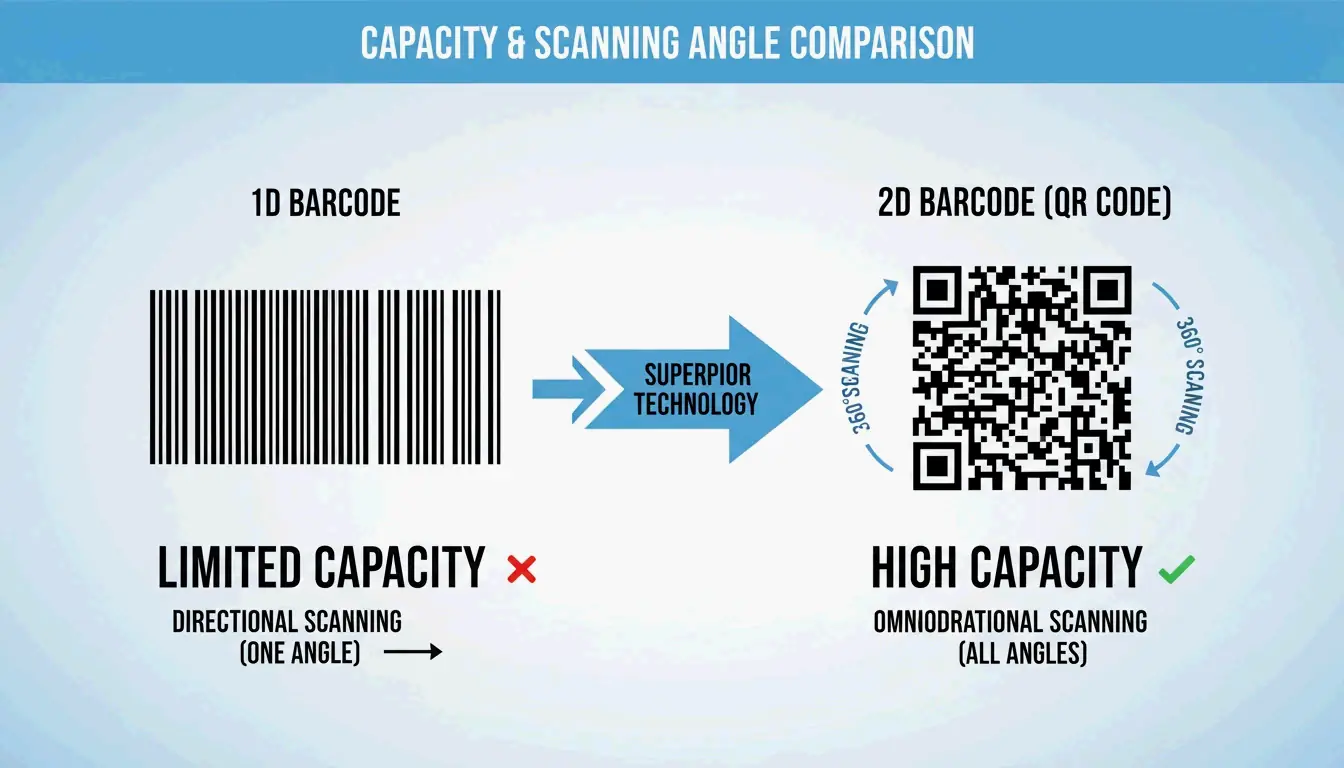
Un code QR (Quick Response) est un code-barres matriciel bidimensionnel qui stocke des données à la fois horizontalement et verticalement. Contrairement à un code-barres 1D (ces lignes parallèles sur les produits d’épicerie), un code QR utilise une grille de carrés noirs et blancs — embarquant bien plus d’informations dans le même espace physique.
| Propriété | Code-barres 1D (UPC) | Code QR (2D) |
|---|---|---|
| Capacité de données | 20–85 caractères | Jusqu’à 7 089 chiffres / 4 296 alphanumériques |
| Direction de lecture | Horizontal uniquement | Omnirectionnel à 360° |
| Modes d’encodage | Numérique uniquement | Numérique, alphanumérique, octet/binaire, kanji |
| Correction d’erreurs | Minimale | Jusqu’à 30 % de tolérance aux dégâts |
La norme est régie par ISO/IEC 18004, garantissant qu’un code généré à Tokyo se lit correctement à New York.
1994 : Masahiro Hara, Denso Wave et l’inspiration du jeu de Go
Le code QR est né d’un casse-tête d’atelier. Au début des années 1990, les ouvriers de Denso Wave (filiale de Toyota) devaient scanner jusqu’à dix codes-barres distincts sur une seule boîte de pièces pour capturer toutes les données de suivi. C’était lent et propice aux erreurs. Masahiro Hara a été chargé de concevoir quelque chose de plus rapide.
La percée est survenue pendant une pause déjeuner. Comme le rapporte BGR, Hara observait une partie de Go — ce jeu de plateau antique aux pierres noires et blanches sur une grille. Il a réalisé que le motif de la grille pouvait porter des données complexes dans un carré compact.
Le ratio 1:1:3:1:1 : concevoir une détection instantanée
Pour que les scanners trouvent le code instantanément, l’équipe de Hara a conçu les trois motifs de détection de position (les grands carrés dans les coins) avec un ratio de largeur précis de 1:1:3:1:1. Denso Wave explique que l’équipe a étudié de façon exhaustive les supports imprimés afin de trouver un motif géométrique qui n’apparaîtrait jamais par accident dans un environnement d’atelier. Cela évitait que les scanners ne confondent d’autres formes avec le code QR.
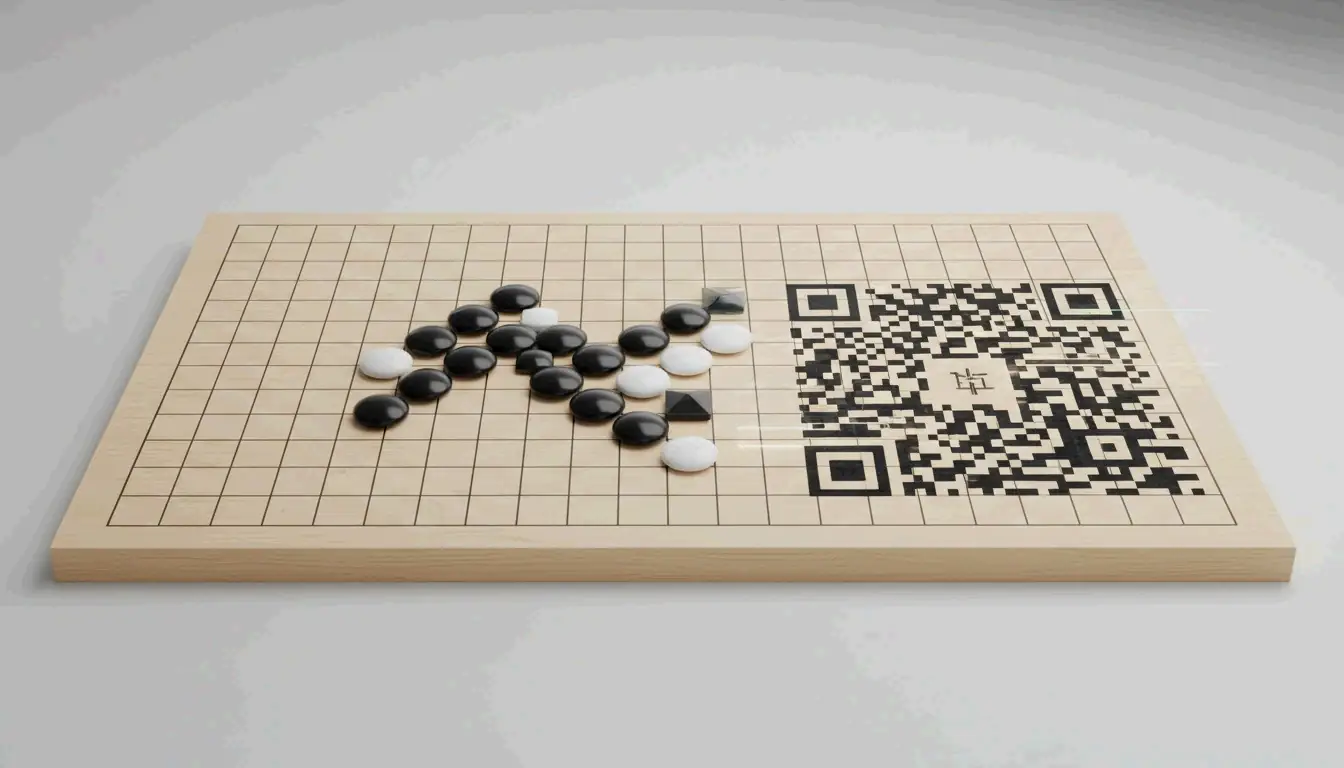
Denso Wave a rendu le code QR sans brevet et ouvert en 1994 — une décision stratégique qui a permis la normalisation mondiale et l’adoption universelle.
La correction d’erreurs Reed-Solomon : pourquoi les codes QR survivent aux dommages
Un code QR reste lisible même si 30 % de sa surface est endommagée, grâce à la correction d’erreurs Reed-Solomon. Cet algorithme mathématique reconstruit les données manquantes à partir des informations redondantes encodées avec la charge utile principale.
| Niveau | Capacité de récupération | Cas d’usage typique |
|---|---|---|
| L (Faible) | 7 % | Marketing — maximise la capacité de données |
| M (Moyen) | 15 % | URL et liens à usage général |
| Q (Quartile) | 25 % | Environnements industriels |
| H (Élevé) | 30 % | Chaînes de montage avec graisse, rayures et poussière |
Les usines utilisent le niveau H. Les marketeurs utilisent le niveau L ou M pour garder les carrés assez grands pour les longues URL. La mise à jour ISO/IEC 18004:2024 affine ces règles pour une lecture plus rapide dans des environnements numériques denses.
L’explosion mondiale : iOS 11, la COVID-19 et le Super Bowl
Pendant des années, les codes QR sont restés un outil de niche en Occident parce que le scan nécessitait une application distincte. Trois événements ont tout changé :
- 2017 — iOS 11 : Apple a intégré un lecteur QR directement dans l’appareil photo de l’iPhone. Visez et scannez. Sans application.
- 2020–2021 — COVID-19 : Les menus et paiements sans contact sont devenus grand public. QR Tiger rapporte que les interactions QR aux États-Unis ont bondi de 94 % durant cette période. Des systèmes comme BharatQR sont devenus la norme pour les paiements sans contact.
- 2022 — Publicité Coinbase au Super Bowl : Un code QR bondissant sur un écran noir pendant 60 secondes. 20 millions de personnes l’ont scanné en une minute, faisant brièvement tomber le site. C’est le code QR le plus scanné de l’histoire.
En 2026, QR Tiger fait état d’un bond de 211,5 % des scans depuis 2024.
2026 : l’intégration de l’IA et ISO/IEC 18004:2024
L’IA a donné une nouvelle dimension à la « réponse rapide ». Les modèles de vision par IA utilisent désormais les codes QR comme des ancres spatiales pour naviguer dans des environnements physiques. Comme l’explique Webiano : l’IA est douée pour deviner le contexte, mais les codes QR fournissent des données exactes et sans ambiguïté.
La norme ISO/IEC 18004:2024 a été conçue pour ces flux de vision par machine. Les entreprises utilisent l’IA pour analyser les schémas de scan et prédire le comportement des clients en temps réel.
Sunrise 2027 : la transition vers le GS1 Digital Link
Le prochain chapitre est Sunrise 2027 — une initiative pilotée par GS1 visant à remplacer les codes-barres 1D par des codes 2D à chaque caque de vente au détail d’ici fin 2027. Le guide de transition GS1 explique que le GS1 Digital Link permet à un seul code de jouer trois rôles :
- Caissier : Scanne le prix, comme un code-barres classique.
- Client : Renvoie vers les informations nutritionnelles, les données de durabilité ou les programmes de fidélité.
- Entrepôt : Suit les dates de péremption et les numéros de lot pour des rappels de sécurité plus rapides.
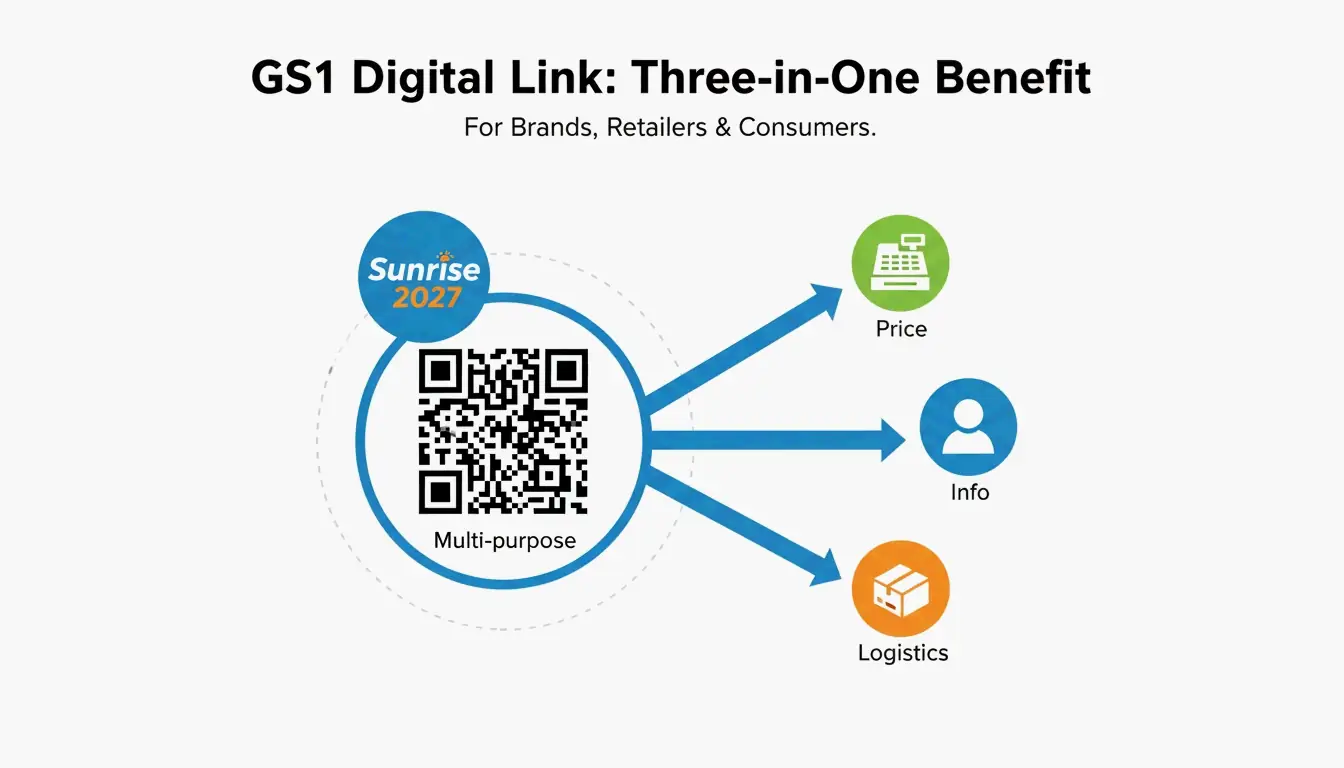
Les distributeurs auditent actuellement leur matériel pour respecter cette échéance de 2027.
Conclusion
D’un croquis sur plateau de Go en 1994 à une industrie mondiale de 13 milliards de dollars en 2026, le code QR est passé d’un outil de suivi industriel à la colonne vertébrale de l’économie sans contact. Avec l’intégration de l’IA, les normes ISO/IEC 18004:2024 et la transition Sunrise 2027 vers le GS1 Digital Link, les codes QR deviennent le pont universel entre les produits physiques et les données numériques.
Pour les entreprises : Auditez dès maintenant votre matériel de scan et vos emballages. L’échéance de 2027 signifie que chaque système de point de vente devra lire les codes 2D — et chaque produit portera une histoire numérique plus riche.
FAQ
Qui a inventé le code QR et pourquoi ?
Masahiro Hara et son équipe chez Denso Wave (filiale de Toyota) ont inventé le code QR en 1994. L’objectif était de dépasser les limites de stockage des codes-barres 1D, incapables de contenir assez de données pour suivre les milliers de pièces automobiles du processus de fabrication de Toyota.
Si les codes QR sont brevetés, pourquoi sont-ils gratuits ?
Denso Wave détient le brevet mais a pris en 1994 une décision stratégique : maintenir le code QR ouvert et sans redevance. En n’exerçant pas ses droits de brevet, elle a encouragé la normalisation mondiale et l’adoption universelle, par les industries comme par les consommateurs.
Qu’est-ce que la directive Sunrise 2027 ?
Sunrise 2027 est une initiative mondiale pilotée par GS1 exigeant que tous les systèmes de point de vente au détail lisent les codes-barres 2D (comme les codes QR) d’ici fin 2027. Un seul code GS1 Digital Link gérera la lecture des prix, l’engagement consommateur (nutrition, durabilité) et le suivi de la chaîne d’approvisionnement (numéros de lot, dates de péremption).
Questions fréquentes
Qui a inventé le code QR et pourquoi ?
Masahiro Hara et son équipe chez Denso Wave (filiale de Toyota) ont inventé le code QR en 1994. L’objectif était de dépasser les limites de stockage des codes-barres 1D, incapables de contenir assez de données pour suivre les milliers de pièces automobiles du processus de fabrication de Toyota.
Si les codes QR sont brevetés, pourquoi sont-ils gratuits ?
Denso Wave détient le brevet mais a pris en 1994 une décision stratégique : maintenir le code QR ouvert et sans redevance. En n’exerçant pas ses droits de brevet, elle a encouragé la normalisation mondiale et l’adoption universelle, par les industries comme par les consommateurs.
Qu’est-ce que la directive Sunrise 2027 ?
Sunrise 2027 est une initiative mondiale pilotée par GS1 exigeant que tous les systèmes de point de vente au détail lisent les codes-barres 2D (comme les codes QR) d’ici fin 2027. Un seul code GS1 Digital Link gérera la lecture des prix, l’engagement consommateur (nutrition, durabilité) et le suivi de la chaîne d’approvisionnement (numéros de lot, dates de péremption).
Articles associés
Générateur de polices : la carte complète du texte stylé en 2026
Générateur de polices esthétiques : le guide ultime du texte Unicode stylé
Générateur de polices calligraphiques : outil en ligne gratuit pour des styles de texte élégants