The History of QR Codes: From Toyota Factory Floors to a $33B Industry
Quick Summary
- The history of QR codes started in 1994 when Masahiro H
- The history of QR codes started in 1994 when Masahiro Hara of Denso Wave invented a 2D matrix barcode to track Toyota automotive parts.
- What Is a QR Code? The Technical Foundation
Editorial Process
Reviewed by SectoJoy and published on May 7, 2026. This article is refreshed when product details, examples, or tool guidance change. Last updated May 15, 2026.
SectoJoy
I'm an indie hacker building iOS and web applications, with a focus on creating practical SaaS products. I specialize in AI SEO, constantly exploring how intelligent technologies can drive sustainable growth and efficiency.
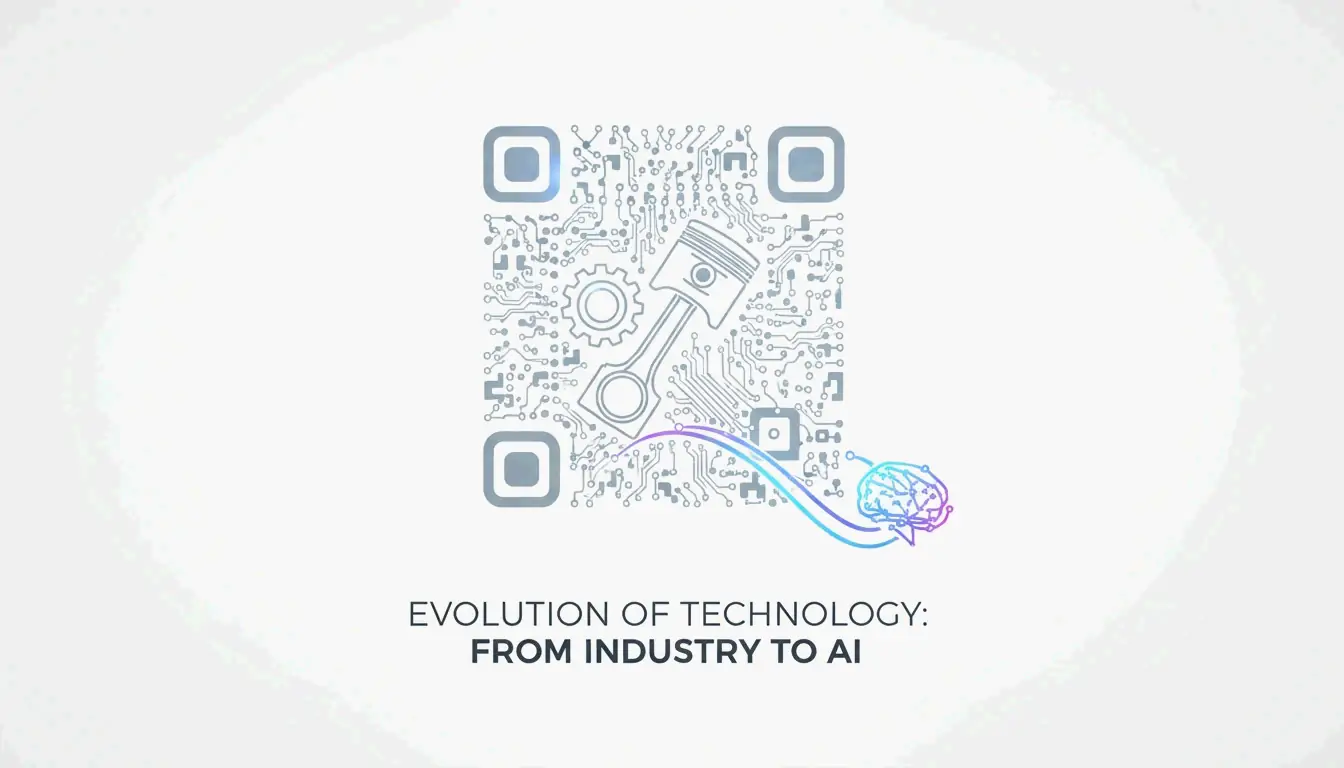
The history of QR codes started in 1994 when Masahiro Hara of Denso Wave invented a 2D matrix barcode to track Toyota automotive parts. Inspired by the board game Go, the technology expanded from factory floors to global ubiquity after Apple’s 2017 native camera integration and the COVID-19 contactless boom. In 2026, the QR code market is valued at $13.04 billion and projected to reach $33.14 billion by 2031, according to Mordor Intelligence.
What Is a QR Code? The Technical Foundation
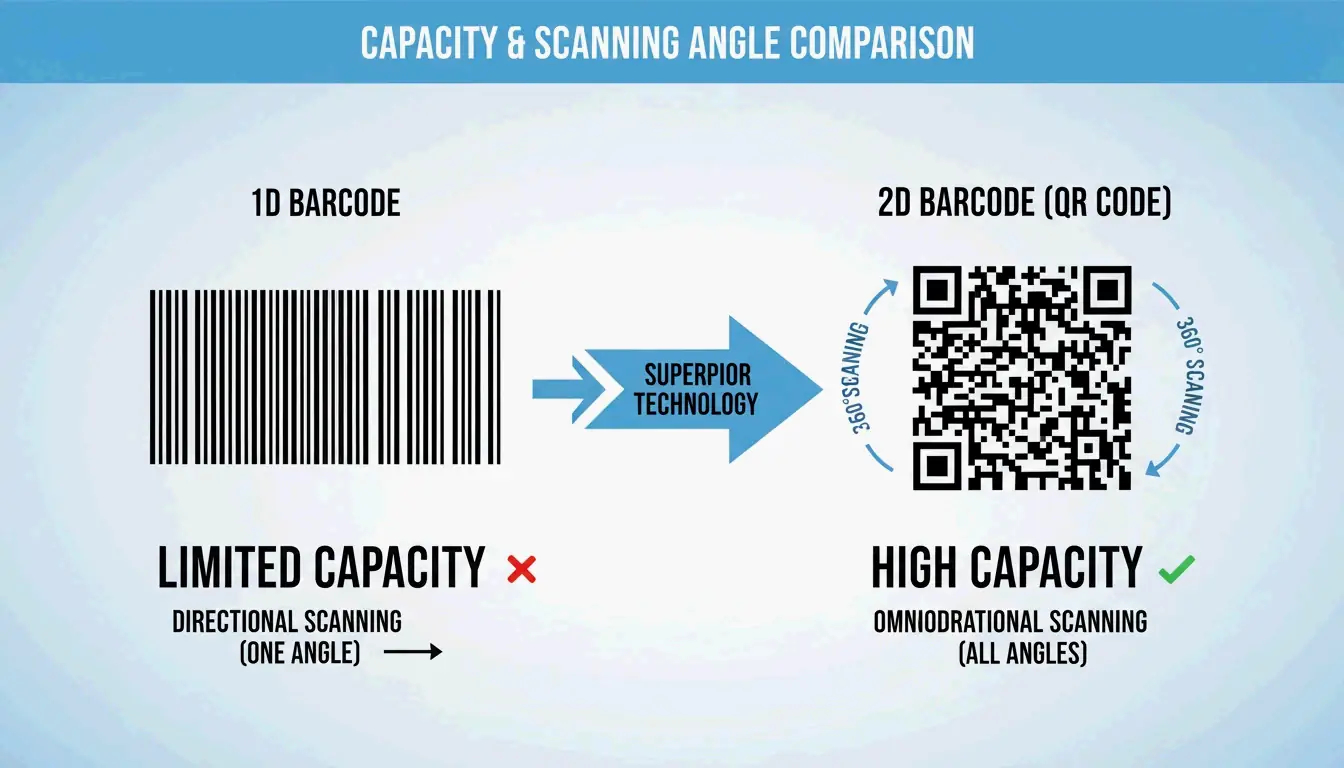
A Quick Response (QR) code is a two-dimensional matrix barcode that stores data both horizontally and vertically. Unlike a 1D barcode (those parallel lines on grocery items), a QR code uses a grid of black and white squares — packing in dramatically more information in the same physical space.
| Property | 1D Barcode (UPC) | QR Code (2D) |
|---|---|---|
| Data capacity | 20–85 characters | Up to 7,089 numeric / 4,296 alphanumeric |
| Scan direction | Horizontal only | 360-degree omnidirectional |
| Encoding modes | Numeric only | Numeric, alphanumeric, byte/binary, kanji |
| Error correction | Minimal | Up to 30% damage tolerance |
The standard is governed by ISO/IEC 18004, ensuring a code generated in Tokyo scans correctly in New York.
1994: Masahiro Hara, Denso Wave, and the Go Board Inspiration
The QR code was born from a factory-floor headache. In the early 1990s, workers at Denso Wave (a Toyota subsidiary) had to scan up to ten separate barcodes on a single box of parts to capture all tracking data. It was slow and error-prone. Masahiro Hara was assigned to build something faster.
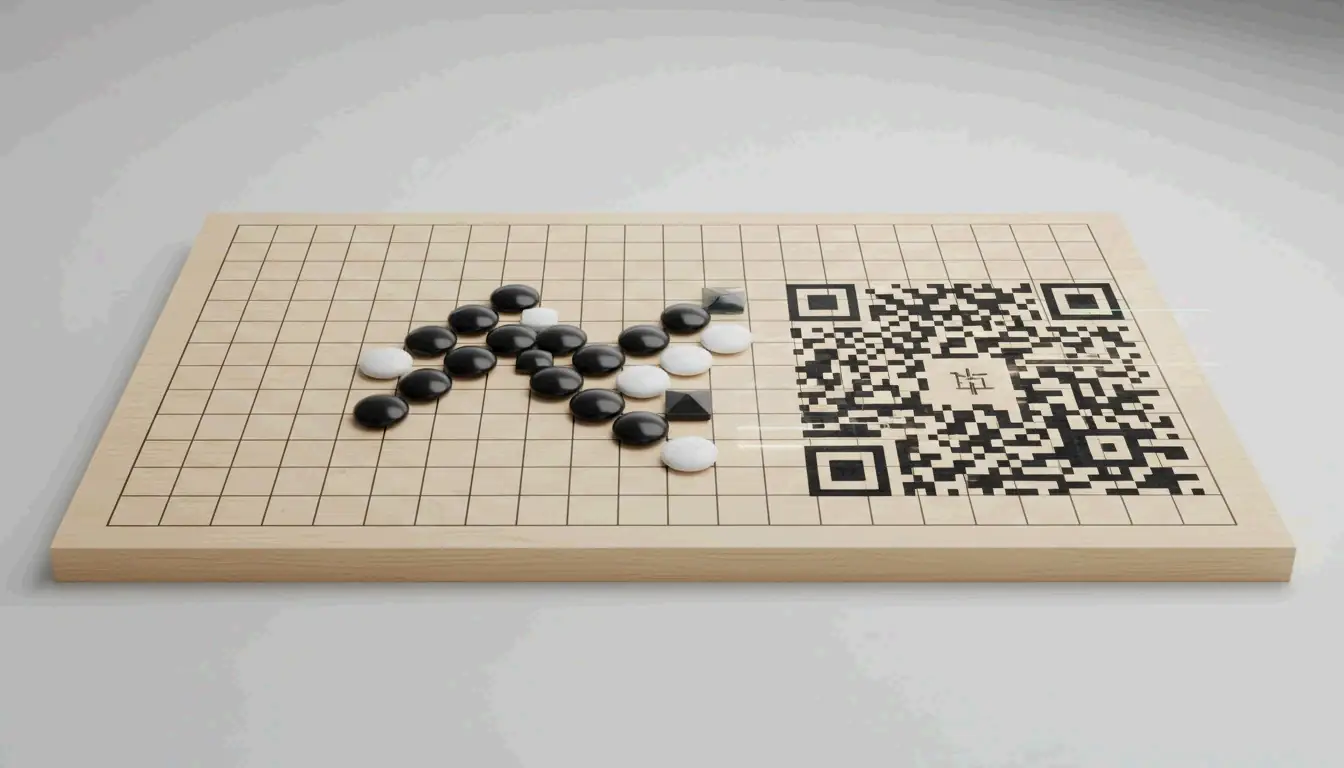
The breakthrough came during a lunch break. As BGR reports, Hara was watching a game of Go — the ancient board game with black and white stones on a grid. He realized the grid pattern could carry complex data in a compact square.
The 1:1:3:1:1 Ratio: Engineering Instant Detection
To make scanners find the code instantly, Hara’s team designed the three position-detection markers (the large squares in the corners) with a precise 1:1:3:1:1 width ratio. Denso Wave explains that the team exhaustively researched printed materials to find a geometric pattern that would never appear by accident in a factory environment. This prevented scanners from confusing other shapes with the QR code.
Denso Wave made the QR code patent-free and open in 1994 — a strategic decision that enabled global standardization and universal adoption.
Reed-Solomon Error Correction: Why QR Codes Survive Damage
A QR code can still be scanned even if 30% of its surface is damaged, thanks to Reed-Solomon Error Correction. This mathematical algorithm reconstructs missing data from redundant information encoded alongside the primary payload.
| Level | Recovery Capacity | Typical Use Case |
|---|---|---|
| L (Low) | 7% | Marketing — maximizes data capacity |
| M (Medium) | 15% | General-purpose URLs and links |
| Q (Quartile) | 25% | Industrial environments |
| H (High) | 30% | Factory floors with grease, scratches, and dirt |
Factories use Level H. Marketers use Level L or M to keep the squares large enough for long URLs. The ISO/IEC 18004:2024 update refines these rules for faster scanning in dense digital environments.
The Global Explosion: iOS 11, COVID-19, and the Super Bowl
For years, QR codes were a niche tool in the West because scanning required a separate app. Three events changed everything:
- 2017 — iOS 11: Apple built a QR scanner directly into the iPhone camera. Point and scan. No app needed.
- 2020–2021 — COVID-19: Contactless menus and payments went mainstream. QR Tiger reports U.S. QR interactions spiked 94% during this period. Systems like BharatQR became standard for contactless payments.
- 2022 — Coinbase Super Bowl Ad: A bouncing QR code on a black screen for 60 seconds. 20 million people scanned it in one minute, briefly crashing the site. It was the most-scanned QR code in history.
By 2026, QR Tiger shows a 211.5% jump in scans since 2024.
2026: AI Integration and ISO/IEC 18004:2024
AI has given “Quick Response” a new dimension. AI vision models now use QR codes as spatial anchors to navigate physical environments. As Webiano explains: AI is good at guessing context, but QR codes supply exact, unambiguous data.
The ISO/IEC 18004:2024 standard was designed for these machine-vision workflows. Businesses use AI to analyze scanning patterns and predict customer behavior in real time.
Sunrise 2027: The GS1 Digital Link Transition
The next chapter is Sunrise 2027 — a GS1-led initiative to replace 1D barcodes with 2D codes at every retail checkout by the end of 2027. The GS1 transition guide explains that the GS1 Digital Link enables a single code to serve three roles:
- Cashier: Scans the price, just like a regular barcode.
- Customer: Links to nutrition facts, sustainability data, or loyalty programs.
- Warehouse: Tracks expiration dates and batch numbers for faster safety recalls.
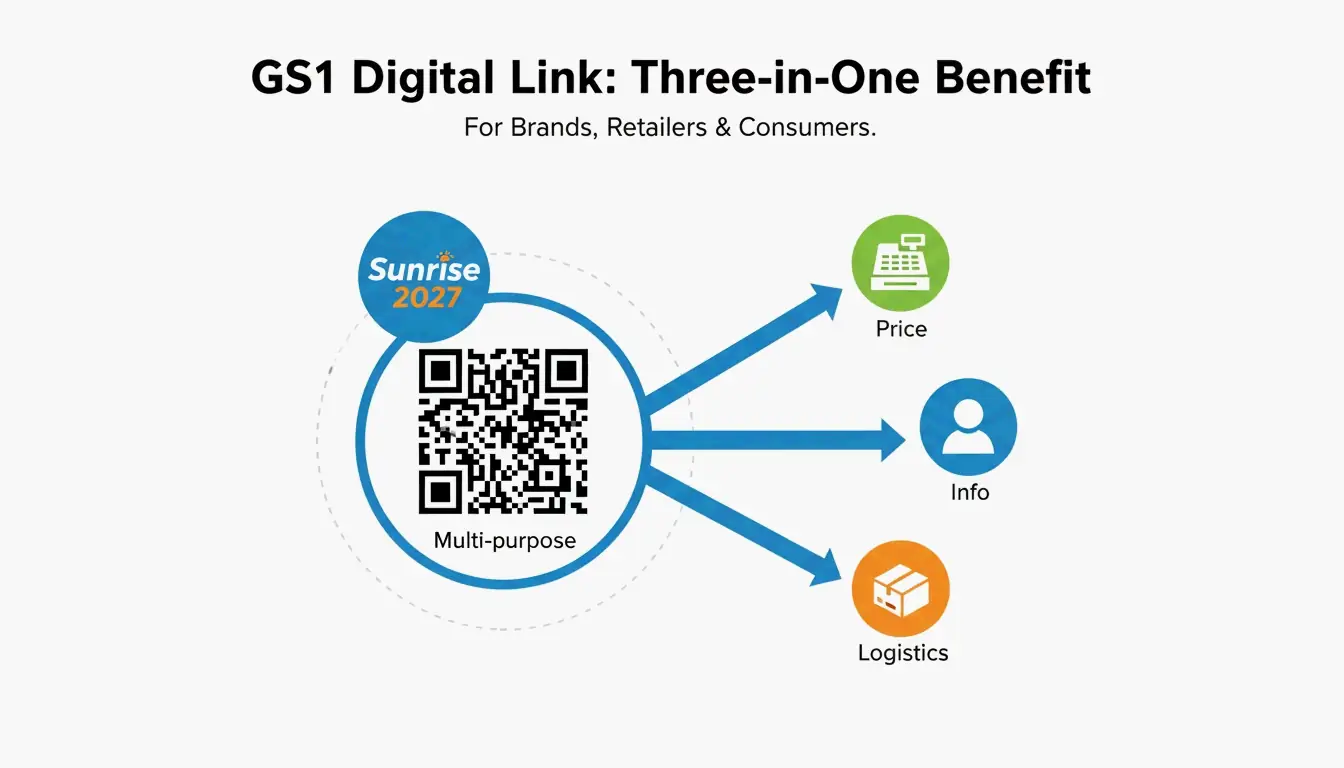
Retailers are currently auditing their hardware to meet this 2027 deadline.
Conclusion
From a Go-board sketch in 1994 to a $13 billion global industry in 2026, the QR code has evolved from an industrial tracking tool into the backbone of the touchless economy. With AI integration, ISO/IEC 18004:2024 standards, and the Sunrise 2027 transition to GS1 Digital Link, QR codes are becoming the universal bridge between physical products and digital data.
For businesses: Audit your scanning hardware and packaging now. The 2027 deadline means every point-of-sale system must read 2D codes — and every product will carry a richer digital story.
FAQ
Who invented the QR code and why?
Masahiro Hara and his team at Denso Wave (a Toyota subsidiary) invented the QR code in 1994. The goal was to overcome the storage limits of 1D barcodes, which could not hold enough data to track the thousands of automotive parts in Toyota’s manufacturing process.
Why are QR codes free to use if they were patented?
Denso Wave holds the patent but made a strategic decision in 1994 to keep the QR code open and royalty-free. By not enforcing patent rights, they encouraged global standardization and universal adoption across industries and consumers.
What is the Sunrise 2027 mandate?
Sunrise 2027 is a global GS1 initiative requiring all retail point-of-sale systems to read 2D barcodes (like QR codes) by the end of 2027. A single GS1 Digital Link code will handle price scanning, consumer engagement (nutrition, sustainability), and supply chain tracking (batch numbers, expiration dates).
Frequently Asked Questions
Who invented the QR code and why?
Masahiro Hara and his team at Denso Wave (a Toyota subsidiary) invented the QR code in 1994. The goal was to overcome the storage limits of 1D barcodes, which could not hold enough data to track the thousands of automotive parts in Toyota’s manufacturing process.
Why are QR codes free to use if they were patented?
Denso Wave holds the patent but made a strategic decision in 1994 to keep the QR code open and royalty-free. By not enforcing patent rights, they encouraged global standardization and universal adoption across industries and consumers.
What is the Sunrise 2027 mandate?
Sunrise 2027 is a global GS1 initiative requiring all retail point-of-sale systems to read 2D barcodes (like QR codes) by the end of 2027. A single GS1 Digital Link code will handle price scanning, consumer engagement (nutrition, sustainability), and supply chain tracking (batch numbers, expiration dates).
Related Posts
Font Generator: The Complete Map of Styled Text in 2026
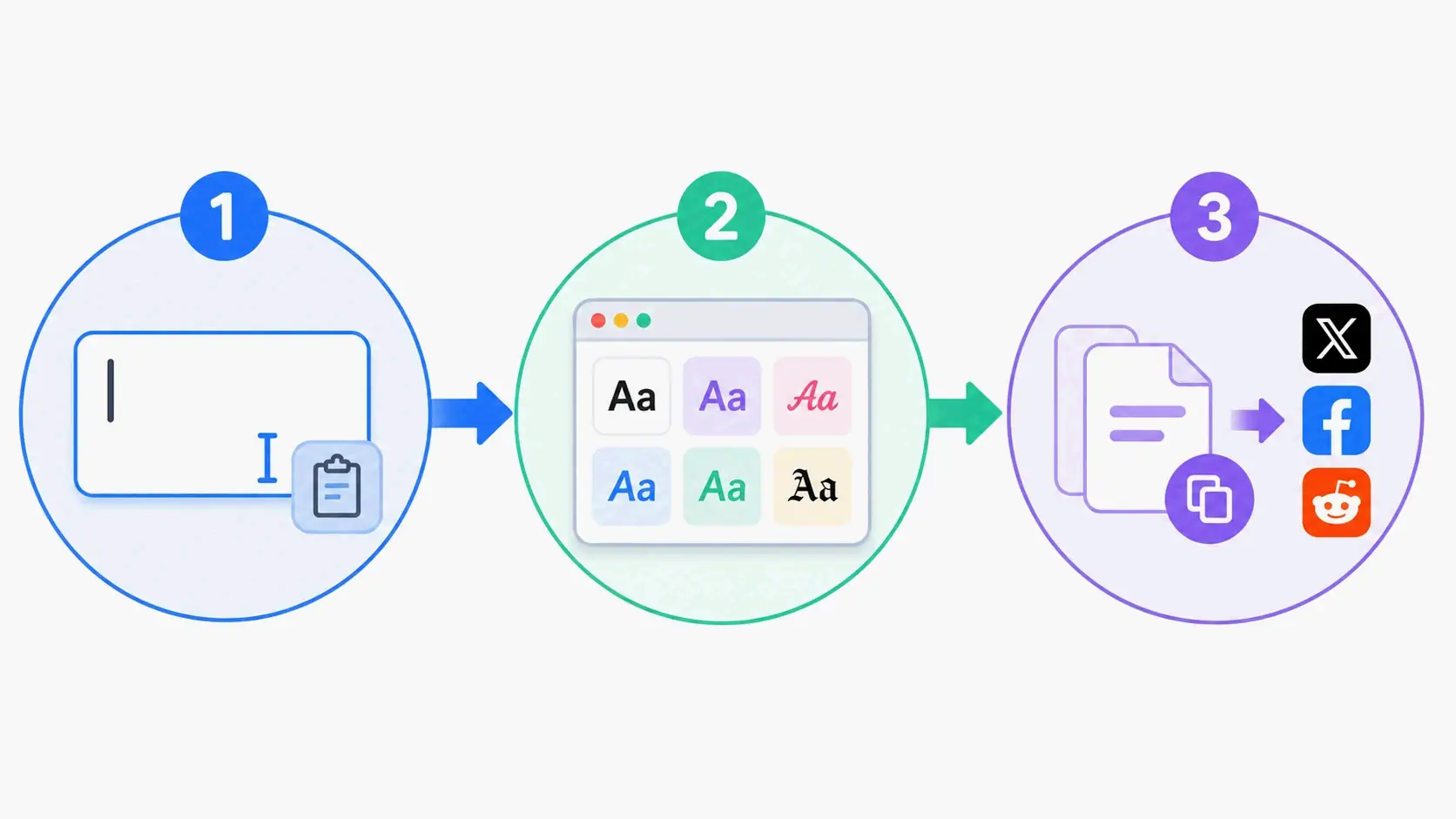
Aesthetic Font Generator: The Ultimate Guide to Stylish Unicode Text

Calligraphy Font Generator: Free Online Tool for Elegant Text Styles