Guía del código de barras VIN: cómo localizar, escanear y generar códigos de barras de vehículos
Resumen rápido
- Cada vehículo tiene una huella única: un de 17 caracteres
- Cada vehículo tiene una huella única: un Número de Identificación del Vehículo (VIN) de 17 caracteres que codifica su fabricante, modelo, tipo de motor y secuencia de producción.
- Localización del VIN: dónde buscar
Proceso editorial
Revisado por SectoJoy y publicado el 13 de junio de 2026. Actualizamos este artículo cuando cambian los detalles del producto, los ejemplos o la guía de la herramienta. Última actualización: 13 de junio de 2026.
SectoJoy
Soy un desarrollador independiente que crea aplicaciones iOS y web, enfocado en productos SaaS prácticos. Me especializo en SEO con IA, explorando constantemente cómo las tecnologías inteligentes pueden impulsar el crecimiento sostenible y la eficiencia.
Cada vehículo tiene una huella única: un Número de Identificación del Vehículo (VIN) de 17 caracteres que codifica su fabricante, modelo, tipo de motor y secuencia de producción. Ya sea que esté buscando repuestos, realizando una verificación de historial o procesando la recepción de vehículos en un concesionario, el VIN es la clave que lo abre todo.
Esta guía cubre dónde encontrar el código de barras VIN, cómo escanearlo con herramientas OCR modernas (99,8 % de precisión), cómo generar códigos de barras conformes y qué está cambiando con el Pasaporte Digital de Producto de la UE 2026.
Localización del VIN: dónde buscar
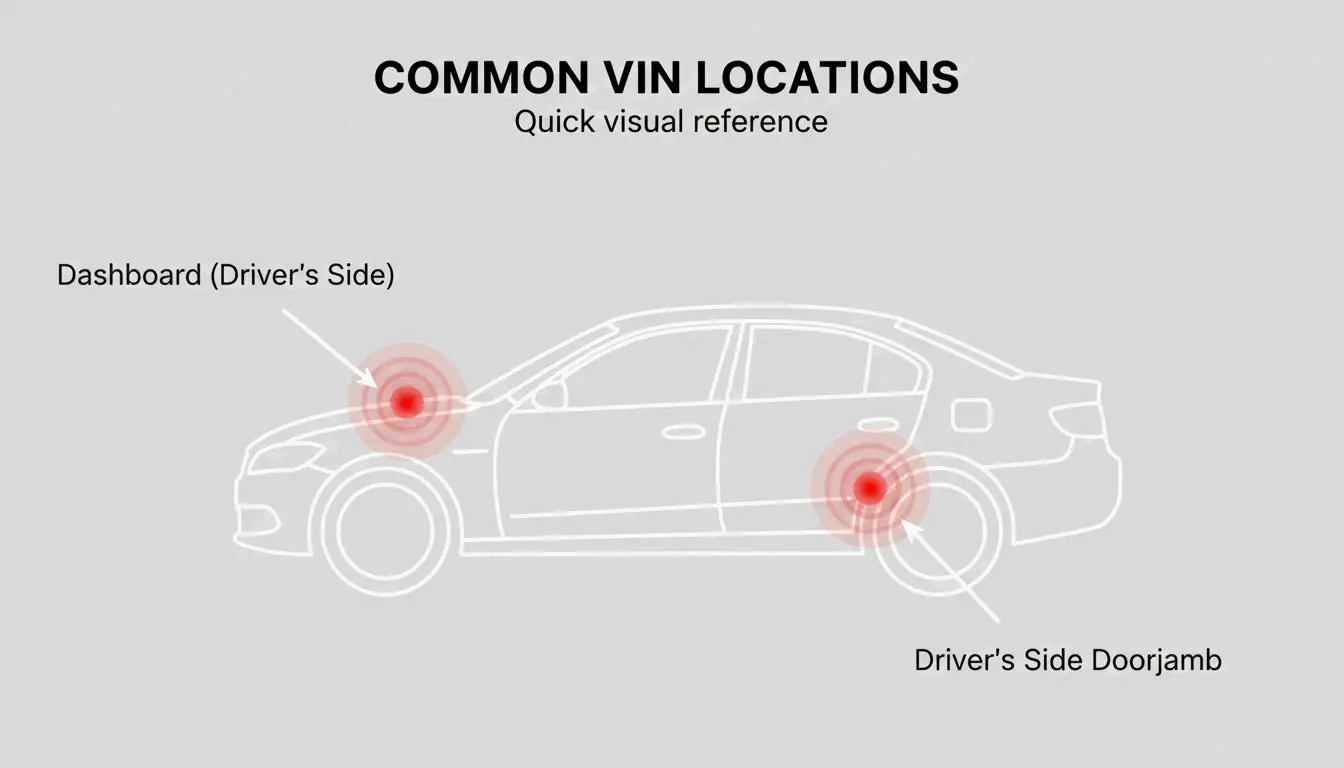
Desde 1981, cada vehículo vendido en EE. UU. lleva un VIN estandarizado de 17 caracteres. Normalmente encontrará el código de barras o la placa estampada en dos ubicaciones principales:
| Ubicación | Cómo encontrarlo |
|---|---|
| Tablero (lado del conductor) | Párese fuera del auto, mire por la esquina inferior del parabrisas hacia la placa de metal donde el tablero se encuentra con el capó |
| Montante de puerta (pilar B) | Abra la puerta del conductor, revise el poste en busca de una etiqueta de cumplimiento que liste el VIN, la presión de los neumáticos y la fecha de fabricación |
Para vehículos donde estos no son accesibles:
| Tipo de vehículo | Ubicación alternativa |
|---|---|
| Camionetas / SUVs | Riel de bastidor delantero derecho |
| Motocicletas | Tubo de dirección |
| Remolques | Lengüeta (área del enganche delantero) |
Si las etiquetas físicas faltan o están dañadas, la NHTSA sugiere revisar el bloque del motor, el pozo de la llanta de repuesto, o su tarjeta de registro estatal, póliza de seguro o título del vehículo.
Solución de problemas: etiquetas descoloridas o faltantes
Para bastidores oxidados o placas dañadas, FatBoysOffroad recomienda usar un cepillo de alambre para limpiar la suciedad y el óxido del estampado del chasis. Si las etiquetas físicas desaparecen por completo, su tarjeta de registro, póliza de seguro o título del vehículo tendrán el VIN.
Tecnología de escaneo: OCR con 99,8 % de precisión
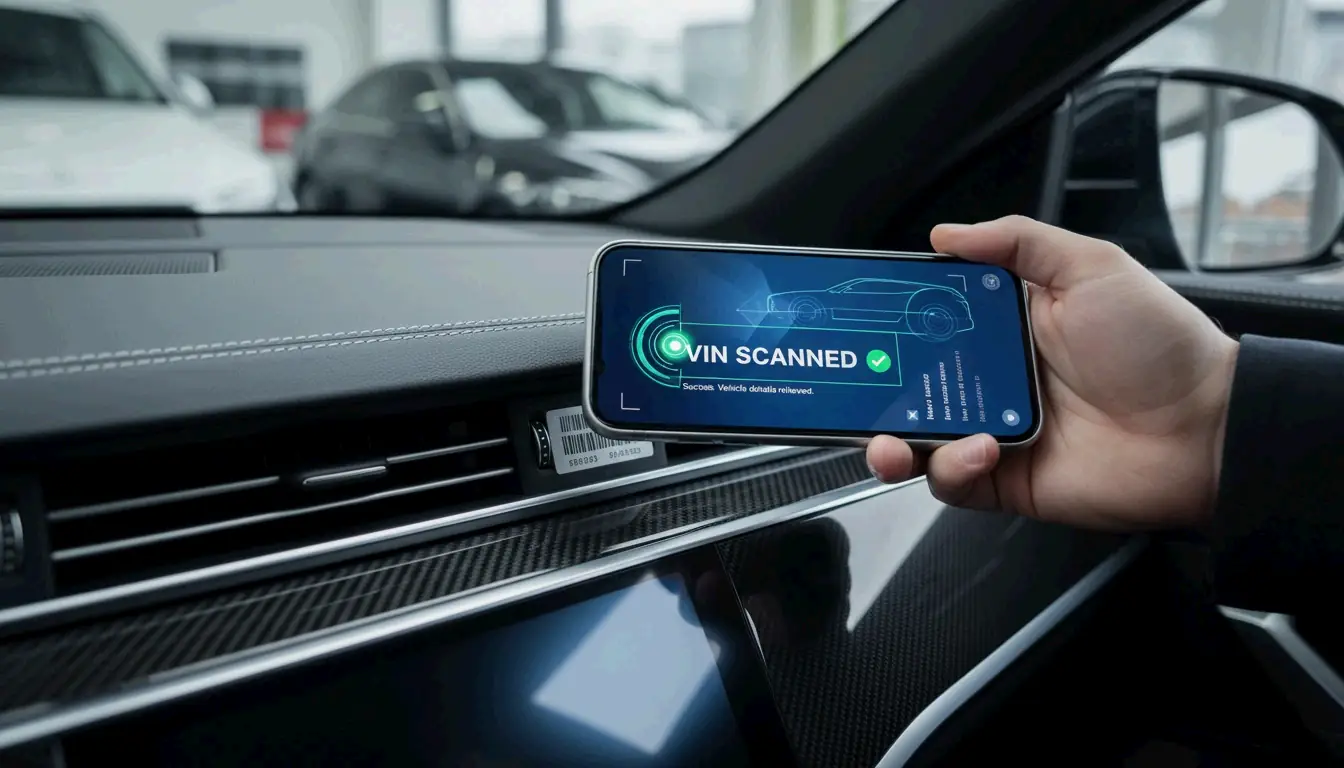
Escribir códigos de 17 caracteres a mano es propenso a errores y lento. El escaneo moderno usa Reconocimiento Óptico de Caracteres (OCR) para convertir una foto en texto digital. Según Vincario, los escáneres profesionales en 2026 alcanzan una tasa de precisión del 99,8 % — eliminando los errores tipográficos que llevan a pedidos de repuestos incorrectos o valoraciones erróneas.
Las mejores herramientas para 2026
| Herramienta | Tipo | Fortaleza |
|---|---|---|
| Vincario | Plataforma de negocios | Decodifica VINs y muestra valores de mercado |
| GroupDocs | Escáner en línea | Subir fotos o usar cámara web |
| Carketa | API para concesionarios | Integrada con Dealer Management Systems |
El ahorro de tiempo es significativo. Vincario informa que los concesionarios reducen el tiempo de procesamiento manual en ~48 % usando escáneres integrados durante la recepción de vehículos y subastas.
Consejos para escanear códigos de barras dañados
Escanear a través de un parabrisas o leer un código descolorido puede ser difícil. GroupDocs usa algoritmos de IA para reconstruir patrones parciales. Para mejores resultados:
- Asegure buena iluminación pero sin reflejo directo en la superficie
- Si el código de barras no escanea, cambie al modo “texto” para leer los caracteres alfanuméricos impresos junto a las líneas del código de barras
- Pruebe un filtro de alto contraste dentro de la app
Cómo generar códigos de barras VIN conformes con ISO 3779
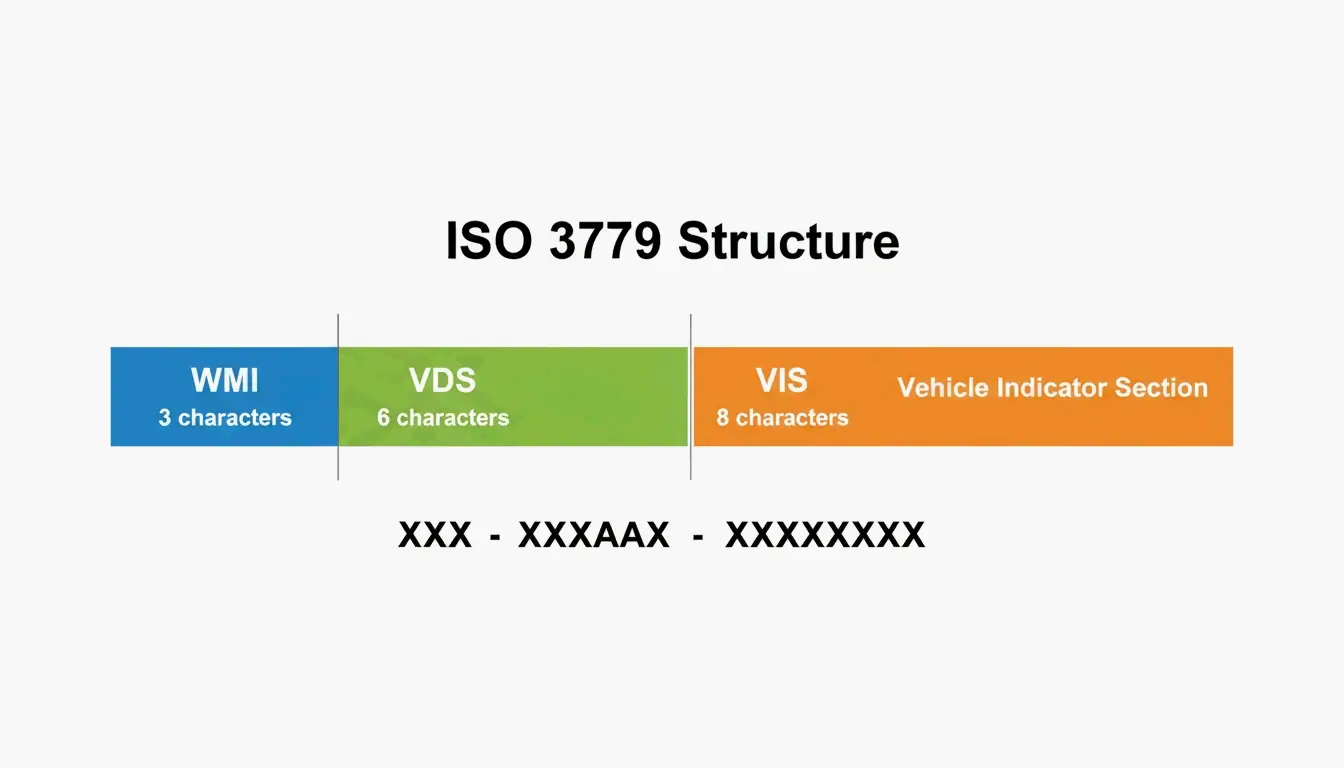
Generar un código de barras VIN para uso industrial u oficial requiere seguir estándares internacionales. ISO 3779 define la estructura de 17 caracteres:
| Segmento | Caracteres | Lo que codifica |
|---|---|---|
| WMI (Identificador Mundial del Fabricante) | 1–3 | País y fabricante |
| VDS (Sección de Descriptor del Vehículo) | 4–9 | Modelo, tipo de motor, estilo de carrocería |
| VIS (Sección de Identificador del Vehículo) | 10–17 | Año del modelo, planta de ensamblaje, número de producción |
Regla crítica: Sin I, O ni Q
ISO 3779 prohíbe las letras I, O y Q para evitar confusión con los números 1 y 0. Esto aplica ya sea que esté escribiendo, imprimiendo o escaneando.
Opciones de formato de código de barras
| Formato | Mejor para | Notas |
|---|---|---|
| Code 39 | DMV, seguro, trabajo gubernamental | Estándar de la industria para documentos oficiales |
| Code 128 | Etiquetas pequeñas, necesidades de alta densidad | Más compacto que Code 39 |
Herramientas como Abundera pueden generar estos códigos, aunque las herramientas basadas en web típicamente lo limitan a 500 códigos por sesión.
El dígito de verificación (carácter 9)
El 9.º carácter de un VIN norteamericano es un Dígito de Verificación — un número (0–9) o la letra “X” calculado a partir de los demás caracteres para verificar la precisión. El equipo de EAN Check señala que los mercados de EE. UU. y China requieren este dígito de verificación para prevenir el engaño, mientras que los fabricantes europeos y japoneses lo siguen con menos consistencia.
Actualización WMI 2024 de la NHTSA
En una actualización de 2024, la NHTSA aclaró que los fabricantes de automóviles pueden usar WMIs emitidos por EE. UU. para vehículos construidos fuera del país bajo ciertas condiciones. Algunos Fords construidos en el extranjero, por ejemplo, aún llevan un WMI de EE. UU. (que comienza con 1, 4 o 5). Para determinar dónde se ensambló realmente un auto, revise el dígito 11, que identifica la planta de ensamblaje específica.
Aplicaciones industriales: marcado y pasaportes digitales
Marcar permanentemente un VIN en un chasis requiere técnicas especializadas:
| Método | Cómo funciona | Mejor para |
|---|---|---|
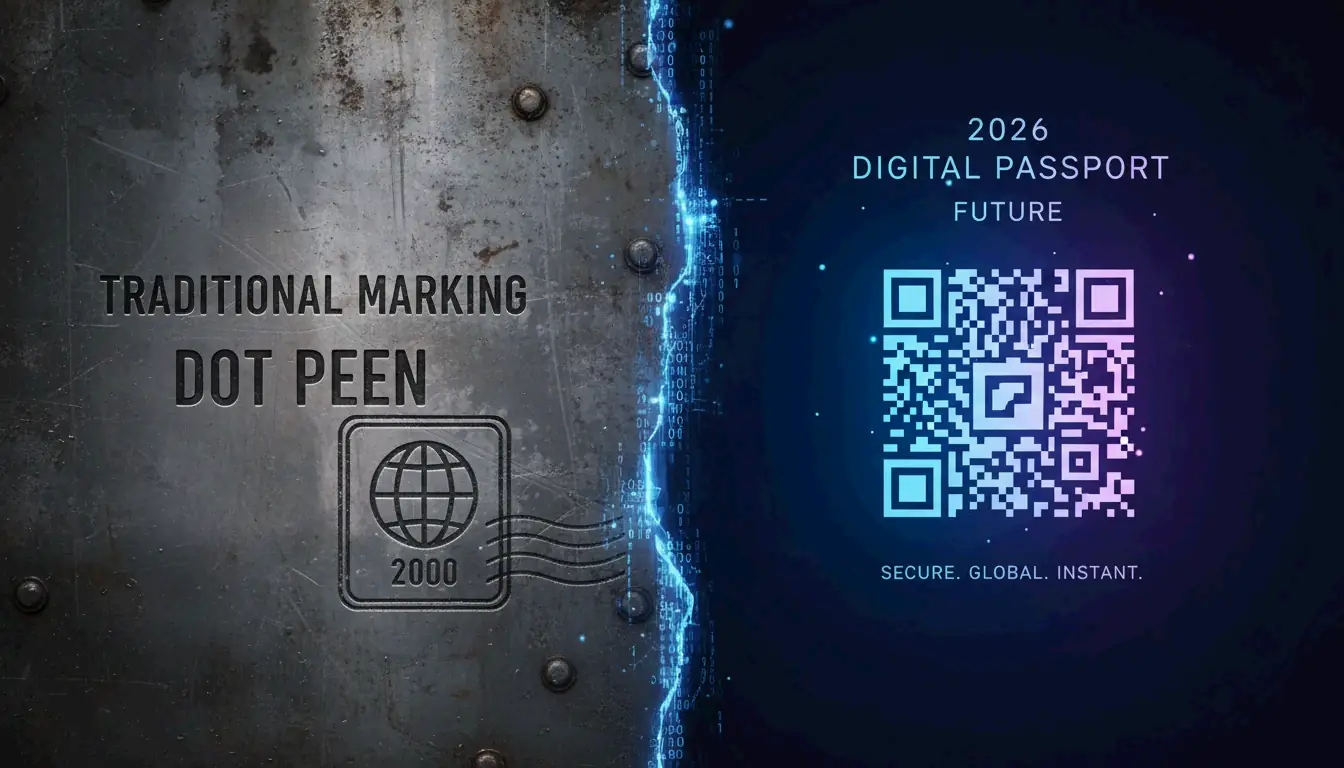
| Marcado por punteado | Un pasador de metal marca el código en el metal | Chasis — sobrevive a la pintura y al recubrimiento en polvo (HeatSign) |
| Grabado láser | Graba el código en la superficie | Placas del tablero, partes del motor — acabado limpio y de alto contraste |
El Pasaporte Digital de Producto de la UE (2026)
A partir del 19 de julio de 2026, el Pasaporte Digital de Producto de la UE (DPP) está transformando los estándares globales. Bajo el Reglamento (UE) 2024/1781, las piezas de automóvil vendidas en la UE deben llevar un código QR o Data Matrix escaneable que enlace a datos del producto digital. La industria se está moviendo hacia un “Pasaporte Digital” para cada vehículo.
Etiquetas de papel vs. marcado metálico
| Característica | Etiquetas de papel/vinilo | Marcado metálico por punteado/Grabado |
|---|---|---|
| Durabilidad | Baja — puede desprenderse o descolorirse | Permanente — forjado en metal |
| Ubicación | Montantes de puerta, ventanas | Chasis, bloque del motor, bastidor |
| Caso de uso | Información al consumidor, especificaciones de neumáticos | Protección contra toma no autorizada, identificación legal |
| Tendencia 2026 | Moviéndose hacia QR/DPP | Estándar para uso industrial pesado |
Para desarrolladores, crear VINs aleatorios para pruebas es legal y común. Herramientas como el Generador Aleatorio de VIN producen cadenas conformes con ISO 3779 sin usar datos de vehículos reales.
Conclusión
Desde el momento en que se genera un VIN bajo las reglas ISO hasta el día en que lo escanea un mecánico o concesionario, es el dato individual más importante vinculado a un vehículo. En 2026:
- Uso personal — Una buena app de escáner OCR con 99,8 % de precisión es su mejor herramienta
- Uso comercial — Asegúrese de que sus herramientas cumplan con las resoluciones de la NHTSA 2024 y los estándares del Pasaporte Digital de Producto de la UE 2026
- Generación — Siga ISO 3779 estrictamente (sin I/O/Q, valide dígitos de verificación), elija Code 39 para uso oficial o Code 128 para etiquetas compactas
Preguntas frecuentes
¿Dónde está el código de barras VIN en una motocicleta o remolque?
Motocicletas: Tubo de dirección o chasis cerca de la montura del motor. Remolques: Lengüeta (área del enganche delantero) o riel de bastidor delantero izquierdo. Si falta la etiqueta, busque un estampado físico en el chasis de metal.
¿Por qué las letras I, O y Q nunca se usan en un VIN?
Están excluidas por ISO 3779 para evitar confusión con los números 1 y 0. Eliminar estos caracteres visualmente similares mejora significativamente la precisión tanto en la entrada manual como en el escaneo OCR automatizado.
¿Puedo escanear un código de barras VIN dañado con un smartphone?
Sí — las apps OCR mejoradas con IA de 2026 pueden reconstruir patrones parciales. Asegure buena iluminación sin reflejos y pruebe filtros de alto contraste. Si el código de barras es ilegible, la mayoría de las apps pueden usar OCR en los caracteres alfanuméricos impresos junto al código.
Preguntas frecuentes
¿Dónde está el código de barras VIN en una motocicleta o remolque?
Motocicletas: Tubo de dirección o chasis cerca de la montura del motor. Remolques: Lengüeta (área del enganche delantero) o riel de bastidor delantero izquierdo. Si falta la etiqueta, busque un estampado físico en el chasis de metal.
¿Por qué las letras I, O y Q nunca se usan en un VIN?
Están excluidas por ISO 3779 para evitar confusión con los números 1 y 0. Eliminar estos caracteres visualmente similares mejora significativamente la precisión tanto en la entrada manual como en el escaneo OCR automatizado.
¿Puedo escanear un código de barras VIN dañado con un smartphone?
Sí — las apps OCR mejoradas con IA de 2026 pueden reconstruir patrones parciales. Asegure buena iluminación sin reflejos y pruebe filtros de alto contraste. Si el código de barras es ilegible, la mayoría de las apps pueden usar OCR en los caracteres alfanuméricos impresos junto al código.
Artículos Relacionados

Generador de números de teléfono aleatorios: pruebas, verificación por SMS e integración DevOps
Gestión de inventario para pymes: crea un sistema de códigos de barras de activos fijos de bajo coste en 2026
Cómo se generan los números verdaderamente aleatorios: TRNG, PRNG y CSPRNG explicados