
How to Pick a Raffle Winner Fairly: The Ultimate Guide to Random Legal Draws
Resumo rápido
- Running a fair raffle involves two equally important si
- Running a fair raffle involves two equally important sides: the technical (using a genuinely random selection method) and the legal (meeting IRS reporting requirements, state registration rules, and nonprofit.
- The Technical Gold Standard: CSPRNG for Unbiased Selection
Processo editorial
Revisado por SectoJoy e publicado em 7 de maio de 2026. Atualizamos este artigo quando os detalhes do produto, exemplos ou guia da ferramenta mudam. Última atualização: 15 de maio de 2026.
SectoJoy
Sou um desenvolvedor independente que cria aplicativos iOS e web, focado em produtos SaaS práticos. Tenho especialização em SEO com IA, explorando constantemente como tecnologias inteligentes podem impulsionar crescimento sustentável e eficiência.
Running a fair raffle involves two equally important sides: the technical (using a genuinely random selection method) and the legal (meeting IRS reporting requirements, state registration rules, and nonprofit eligibility criteria). Miss either one and your raffle could be challenged — or worse, deemed illegal.
This guide covers both. You’ll learn how to set up a provably fair digital draw using CSPRNG, navigate 2026 tax thresholds, and follow state-specific rules from California to Ohio.
The Technical Gold Standard: CSPRNG for Unbiased Selection
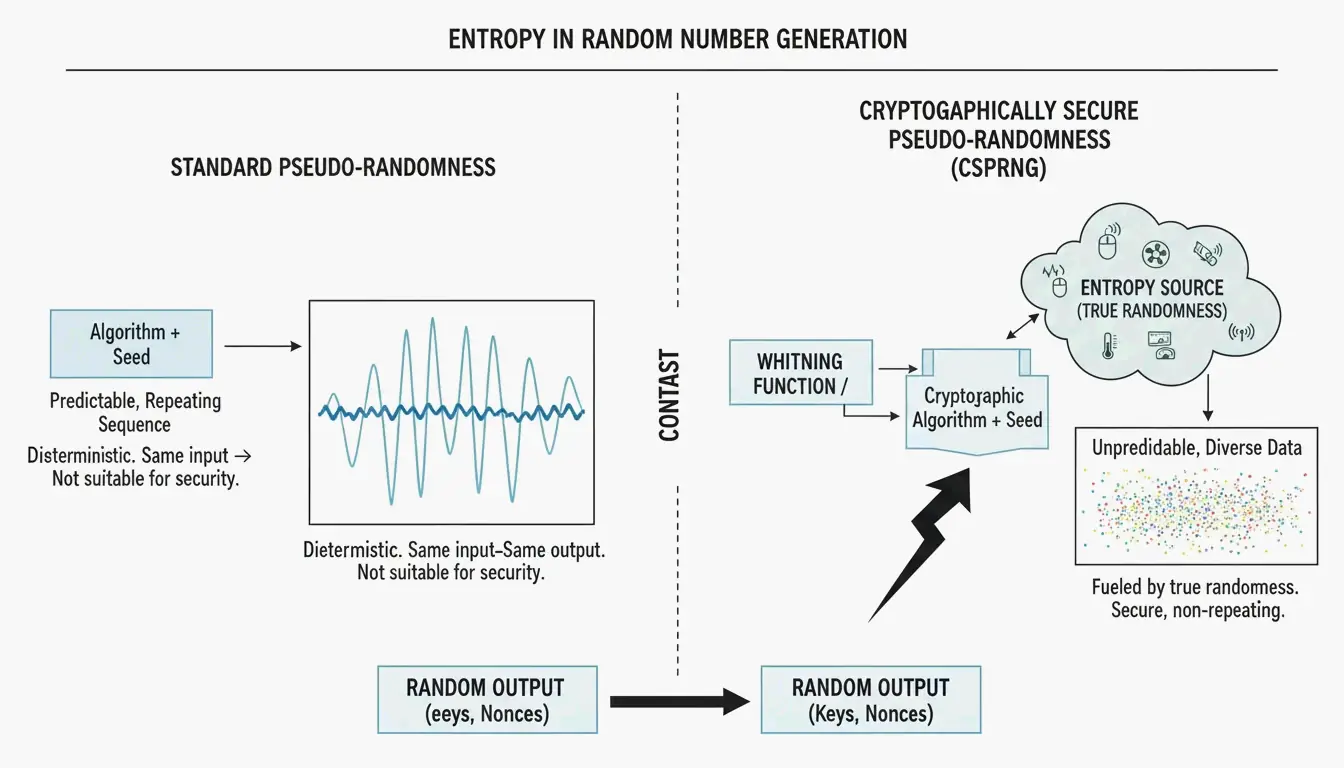
“Fairness” in a digital draw means the outcome is impossible to predict or rig. Many simple apps use Math.random() — a pseudo-random generator that follows a predictable pattern over time. Fine for casual games, but not secure enough for a legal raffle.
The industry standard is CSPRNG (Cryptographically Secure Pseudo-Random Number Generator). Unlike basic generators, a CSPRNG taps into high-entropy sources — hardware timings, mouse movements, keyboard delays — to produce truly unpredictable results.
As Wheel of Names explains, using crypto.getRandomValues() ensures that past results have no influence on future ones. Every draw is an independent event.
Setting Up a Verifiable Draw
- Clean your data — Remove duplicate entries and empty lines. Every participant needs exactly the same chance.
- Use a verified tool — Choose a platform that provides a public record. RandomPicker notes that a screenshot isn’t enough to defend your results — you need a permanent, timestamped URL.
- Run a randomness audit — For major events, simulate 10,000 draws to prove winners are distributed evenly.
When Physical Draws Are Legally Required
Some laws still mandate old-school methods. Zeffy notes that in Ohio, you can sell tickets online, but the winner must be drawn from a physical receptacle (drum, box). Until modernization laws pass, fully digital drawings remain illegal in certain jurisdictions.
2026 Legal Compliance: Tax Thresholds and Reporting
The IRS treats raffle prizes as gambling winnings, which triggers specific reporting and withholding obligations.
| Threshold | Requirement |
|---|---|
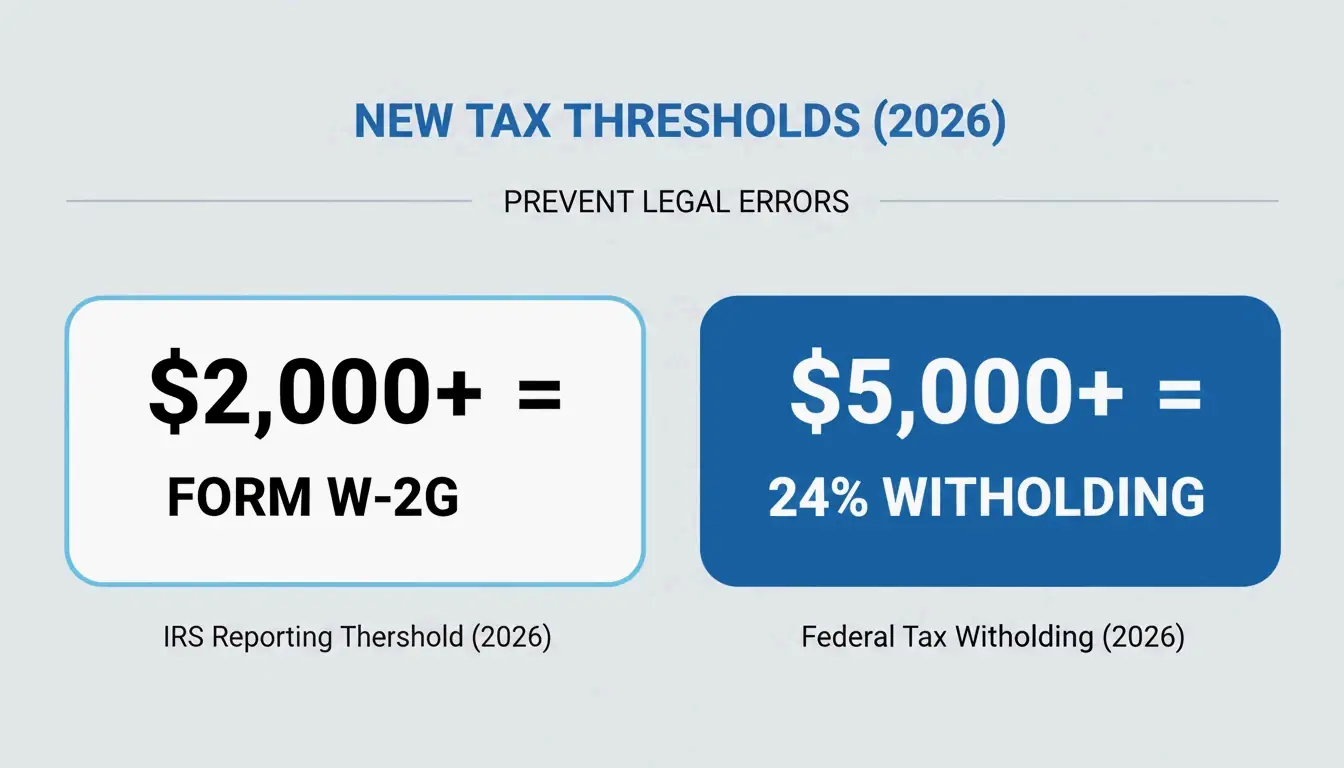
| Prize ≥ $2,000 (and ≥ 300× ticket price) | File IRS Form W-2G to report the winnings |
| Prize > $5,000 (minus ticket cost) | Withhold 24% federal income tax before awarding the prize |
| Non-cash prizes (cars, etc.) | Winner may need to pay the 24% in cash to the organization before taking ownership |
The $2,000 reporting threshold (up from $600) reflects 2026 inflation adjustments reported by LegalClarity. The 24% withholding rate applies per Zeffy.
The 90% Rule (California and Others)
In California, at least 90% of gross ticket revenue must go to the charitable cause — only 10% can cover prizes and overhead.
Nonprofit Eligibility: Who Can Run a Raffle?
In 47 U.S. states, raffles are restricted to 501(c)(3) organizations or similar nonprofits (501(c)(4), 501(c)(19)). For-profit businesses and individuals are generally banned from running raffles, even if proceeds go to charity.
UBIT Risk
Raffles are normally exempt from Unrelated Business Income Tax (UBIT) under IRC Section 513(f) — but only if:
– The raffle isn’t “regularly carried on” like a business
– It’s run by volunteers, not paid staff
Hiring an outside company to manage the raffle could make the income taxable.
Case Study: $19,500 Raised with a Reverse Raffle
The Clinton Wrestling Club capped tickets at 200 and used an elimination-style draw where the last ticket remaining wins the grand prize. This format creates suspense and shows that scarcity can drive more revenue per ticket than a standard drawing.
State-Specific Rules: California, Ohio, and 2026 Legislation
| State | Key Restriction | Source |
|---|---|---|
| California | Online ticket sales prohibited — can advertise online, but transactions must be in person | Zeffy |
| Ohio | Physical drum required for draws; House Bill 476 pending to allow online raffles | ORC Section 2915.092 |
| Most states | 501(c)(3) registration required; must file post-raffle reports | State AG offices |
Violating state rules can result in misdemeanor charges, fines, or permanent loss of raffle privileges.
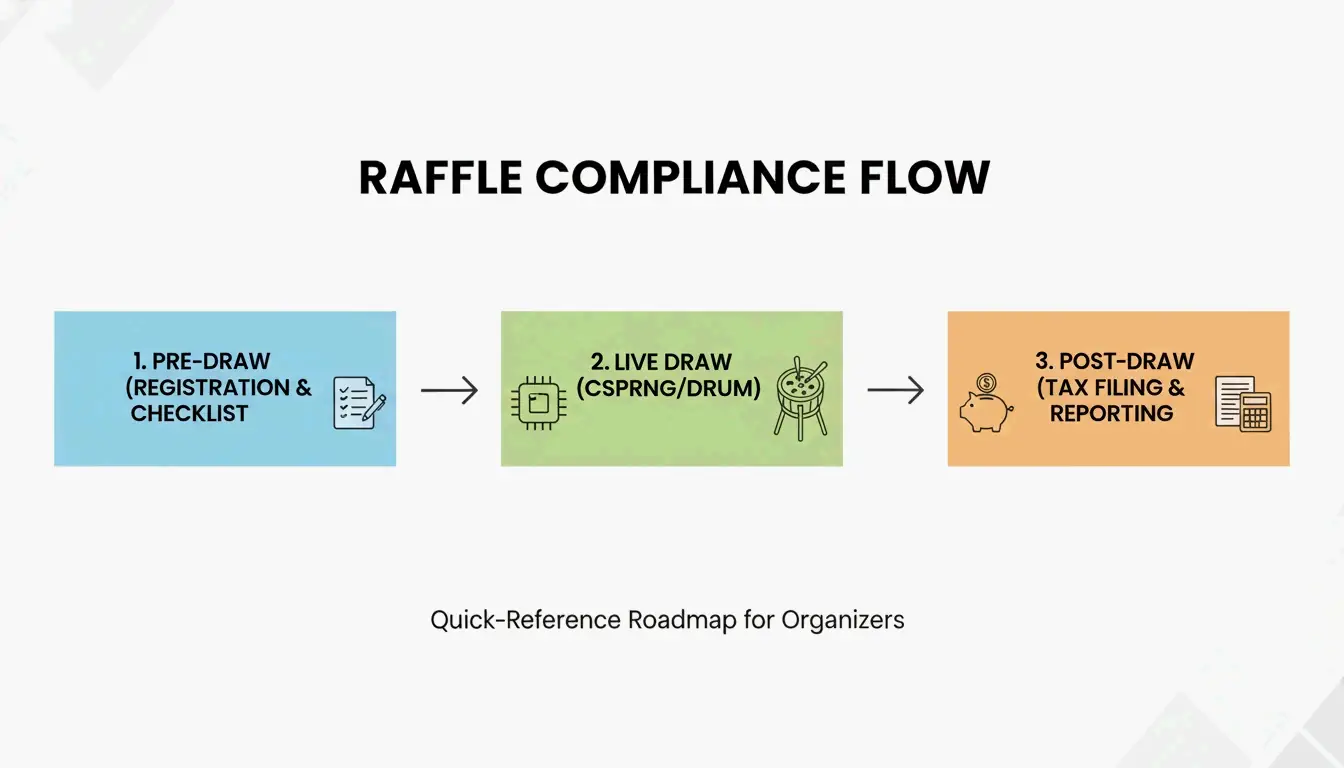
Three-Phase Framework for a Fair & Legal Draw
Phase 1: Pre-Draw Compliance
- Confirm 501(c)(3) status and register with your state’s Attorney General or local Sheriff
- Ensure tickets list: organization name, drawing date, prize fair market value
- Verify state-specific rules (physical draw requirements, online sales restrictions)
Phase 2: Live Draw Execution
- Use a CSPRNG-based tool or physical container with thorough mixing
- Record your screen during digital draws for audit trail
- For physical draws, use a clear container and mix tickets thoroughly
Phase 3: Post-Draw Obligations
- Send Form W-2G for prizes ≥ $2,000
- Collect 24% withholding for prizes > $5,000
- File post-raffle reports (e.g., California’s Form CT-NRP-2 by February 1 deadline)
Creating a Permanent Audit Trail
RandomPicker creates a public record page with a unique URL showing the entry list, winner, and timestamp — proving the result was locked in and wasn’t tampered with.
Conclusion
Running a fair raffle means combining technical rigor (CSPRNG) with strict legal compliance (IRS thresholds, state registration, nonprofit eligibility). The 2026 landscape has updated tax thresholds ($2,000 W-2G, 24% withholding over $5,000) and pending legislation that could reshape digital draws in states like Ohio.
Before your next raffle: Verify your drawing software is CSPRNG-compliant, confirm your nonprofit status for your operating state, and budget for the 24% withholding on prizes over $5,000.
FAQ
Is it legal to sell raffle tickets online in California in 2026?
Generally no. California Penal Code 320.5 prohibits online ticket sales, trades, or redemptions. You can advertise on social media, but the transaction and drawing must happen in person. Always verify the 90/10 rule before proceeding.
What is the IRS reporting threshold for raffle winnings in 2026?
$2,000 — up from the previous $600 due to inflation adjustments. File IRS Form W-2G if the prize hits this value and is at least 300 times the ticket cost.
Can a for-profit business host a raffle for charity?
In most states, no. Only 501(c)(3) nonprofits can hold raffles. A for-profit business can sponsor a raffle where the nonprofit holds the license, or run a Sweepstakes (no purchase required to enter), which falls under different legal rules.
Perguntas frequentes
Nonprofit Eligibility: Who Can Run a Raffle?
In 47 U.S. states, raffles are restricted to 501(c)(3) organizations or similar nonprofits (501(c)(4), 501(c)(19)). For-profit businesses and individuals are generally banned from running raffles, even if proceeds go to charity.
Is it legal to sell raffle tickets online in California in 2026?
Generally no. California Penal Code 320.5 prohibits online ticket sales, trades, or redemptions. You can advertise on social media, but the transaction and drawing must happen in person. Always verify the 90/10 rule before proceeding.
What is the IRS reporting threshold for raffle winnings in 2026?
$2,000 — up from the previous $600 due to inflation adjustments. File IRS Form W-2G if the prize hits this value and is at least 300 times the ticket cost.
Can a for-profit business host a raffle for charity?
In most states, no. Only 501(c)(3) nonprofits can hold raffles. A for-profit business can sponsor a raffle where the nonprofit holds the license, or run a Sweepstakes (no purchase required to enter), which falls under different legal rules.