How to Pick a Raffle Winner Fairly: The Ultimate Guide to Random & Legal Draws
To how to pick a raffle winner fairly, use a certified […]
To how to pick a raffle winner fairly, use a certified Random Number Generator (RNG) like RafflePress or RandomPicker to ensure unbiased results. You can maintain transparency by documenting the draw via screen recordings or providing Public Verification Links to your audience. Always establish clear rules, verify entry eligibility, and strictly comply with US “No Purchase Necessary” laws to protect your organization from legal risks.
Use a Certified Random Number Generator for Unbiased Results
Picking names out of a physical hat might feel nostalgic, but it often lacks the “digital trust” today’s participants expect. People naturally worry about favoritism or the physical manipulation of paper slips. Moving to a digital Random Number Generator (RNG) removes human bias entirely. These tools use mathematical algorithms to ensure every single entry has the exact same mathematical probability of being chosen.
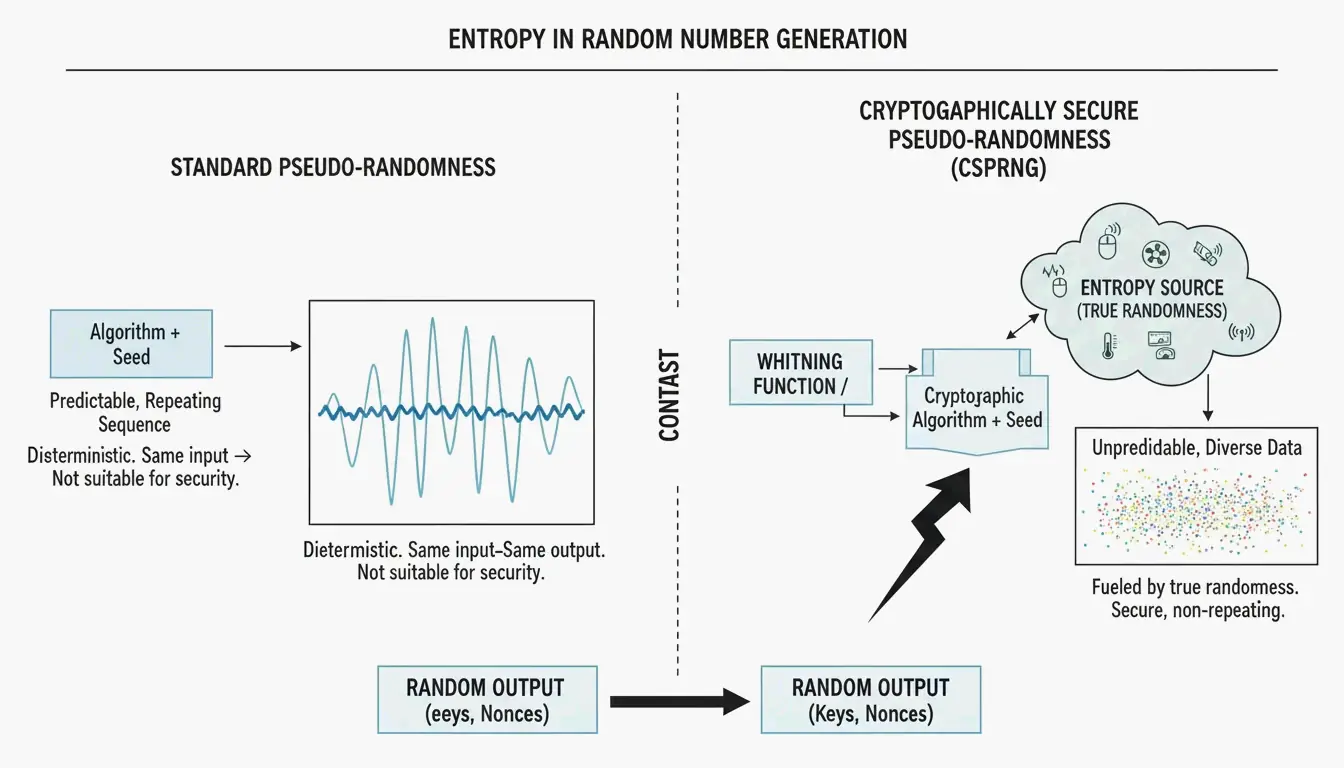
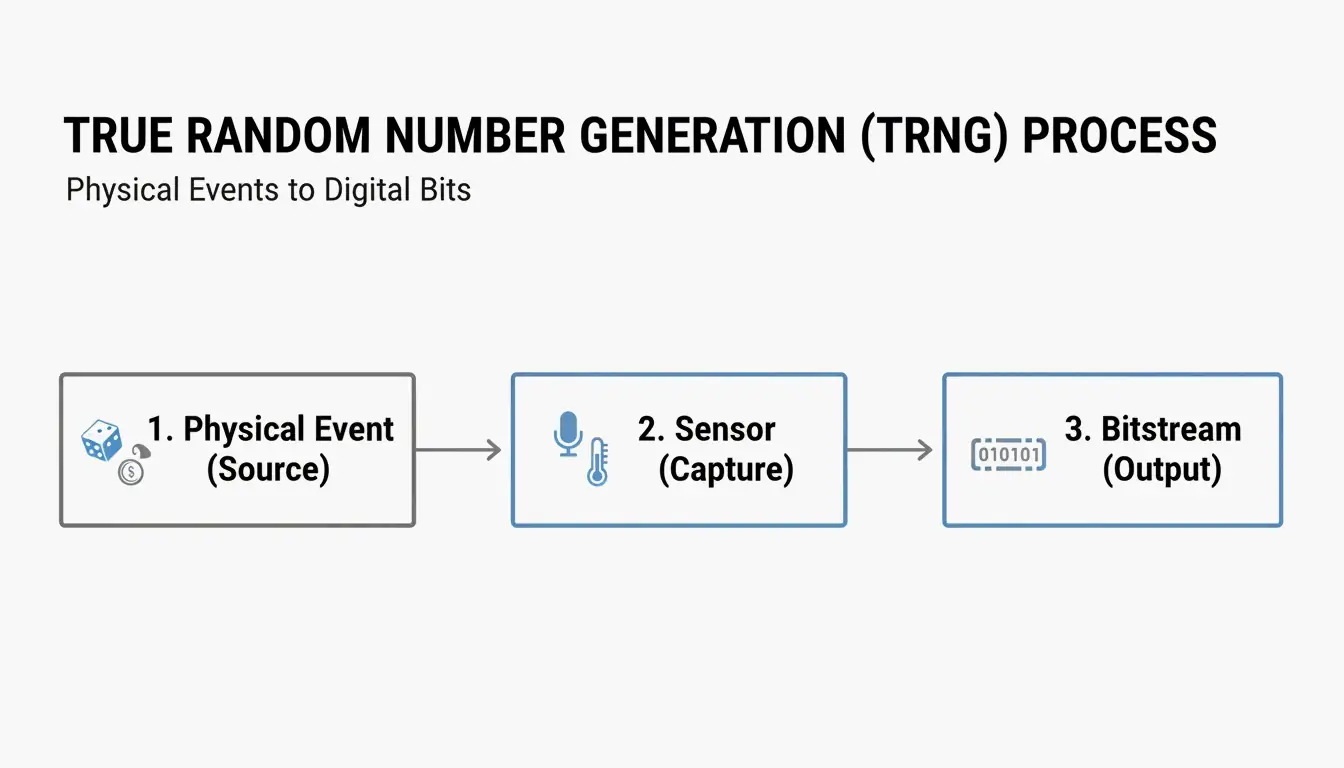
In the digital world, there is a technical distinction between Pseudo-Randomness and True Randomness. For most promotional draws, server-side pseudo-randomness—like the logic found in Python’s random module—is incredibly secure. Because the code runs on a protected server rather than a user’s local browser, it is virtually impossible to rig. Data from RandomPicker shows that over 100,000 organizers worldwide use these certified generators to keep their credibility intact.
If you are using a spreadsheet to manage entries, here is the most straightforward way to use an RNG:
- Assign a unique number to every row in your sheet.
- Note the total number of valid entries.
- Plug that range (e.g., 1 to 5,000) into a tool like Google’s Random Number Generator.
- Hit “Generate” and match the result to the corresponding row.

Handling Large-Scale Draws via CSV Import
When you are dealing with thousands of participants, manual numbering becomes a headache. Professional tools allow for CSV / Spreadsheet Import, letting you upload your entire list of names or emails at once. These servers are built for speed; MiniWebtool reports that processing 100,000 names takes approximately 5 seconds on their infrastructure. This keeps things moving quickly, even if your campaign goes viral.
Legal Checklist: Raffle vs. Sweepstakes and ‘No Purchase Necessary’ Laws
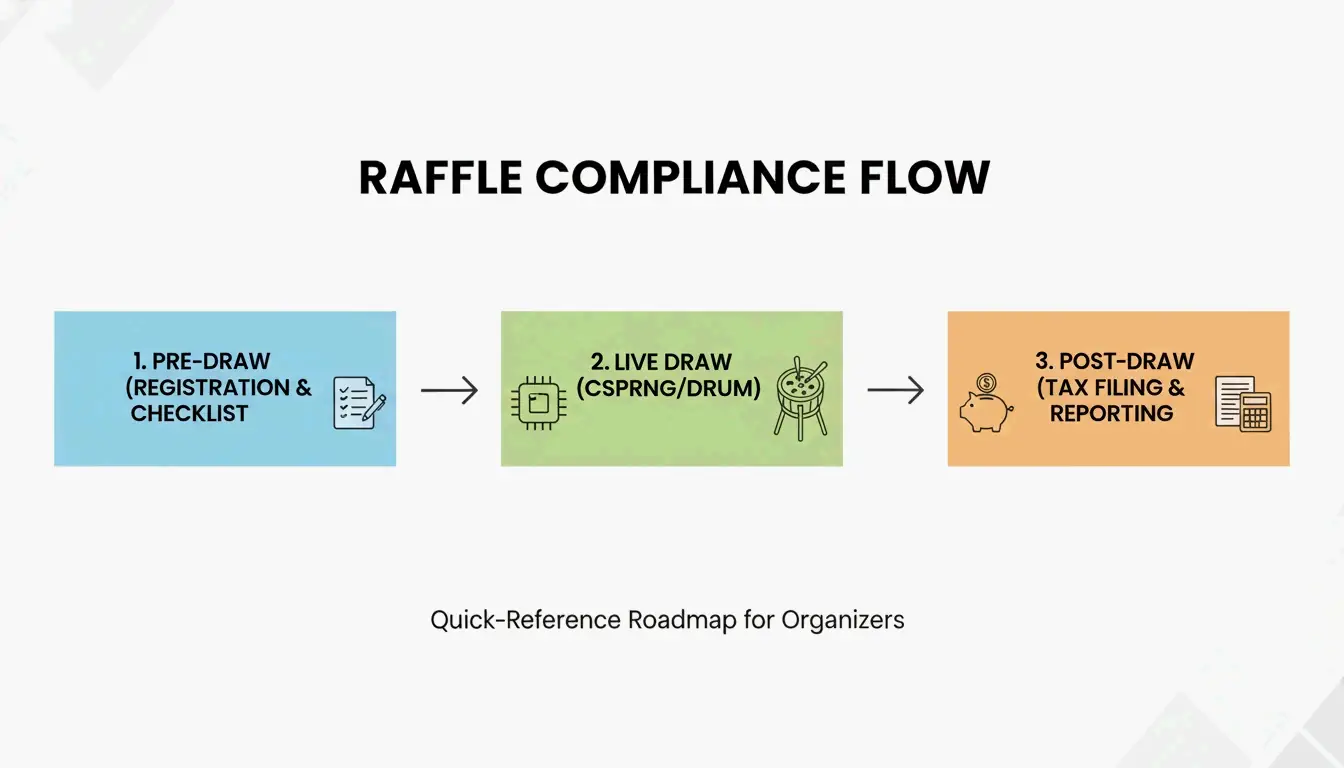
You need to understand the legal line between a “Raffle” and a “Sweepstakes” in the United States. A raffle usually involves a payment for a chance to win, which many states define as gambling. To stay on the right side of the law without a gambling license, most businesses run “Sweepstakes.” These are governed by No Purchase Necessary Laws, which mean you cannot require someone to buy something to enter a game of chance.
To stay compliant, you must offer an “Alternative Method of Entry” (AMOE). This is typically a free entry path, like mailing a postcard or filling out a simple online form. RafflePress points out that skipping this step can turn your giveaway into an illegal lottery, which can lead to heavy fines or getting banned from social platforms.

IRS Form 1099-MISC Requirements for Winners
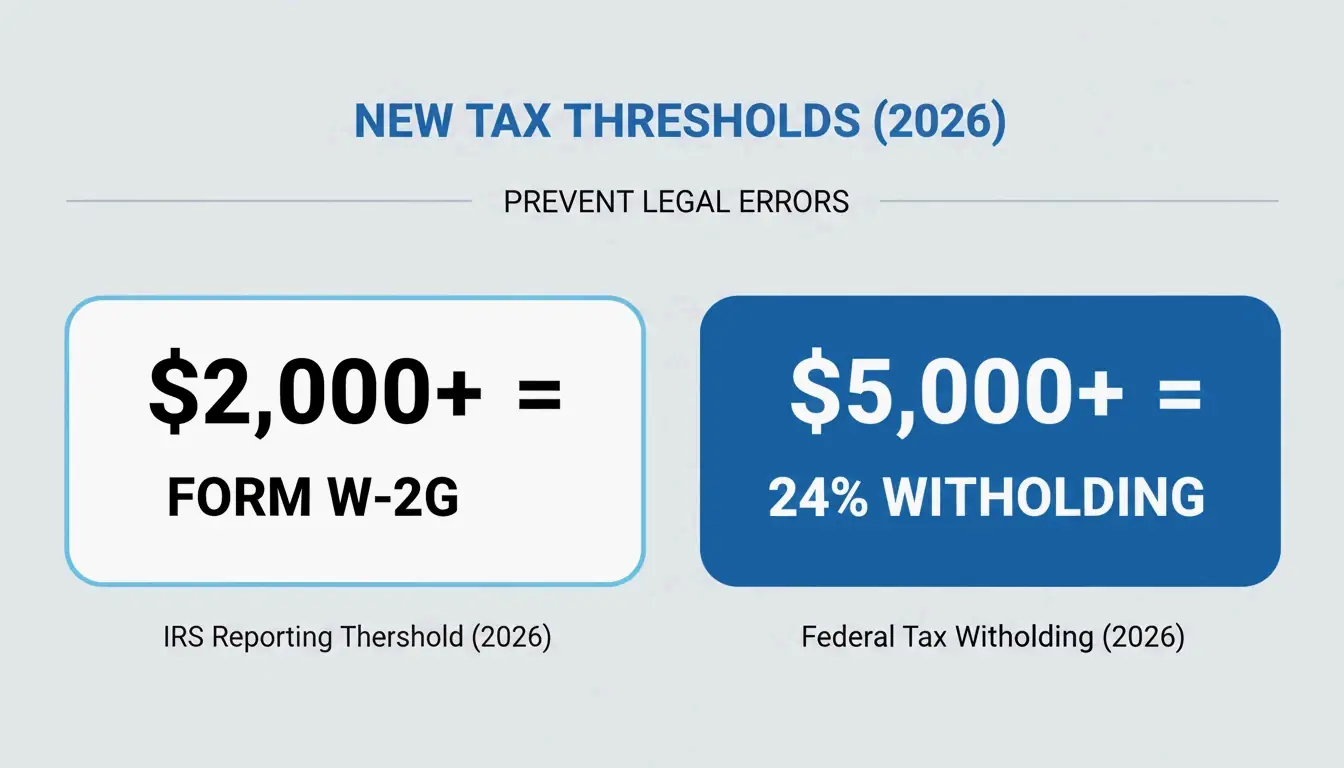
Transparency involves more than just the drawing process; it includes tax compliance. If your prize has a fair market value over $600, the IRS requires you to issue an IRS Form 1099-MISC to the winner. You will need to collect the winner’s Social Security number via Form W-9 before handing over the prize. Putting this requirement in your official rules from the start protects you during tax season and manages winner expectations.
How to Pick Winners from Instagram, Facebook, and Social Media?
Social media draws are often targets for “ghost” entries or bots. Using an automated Instagram / Facebook Comment Picker or a plugin like RafflePress helps you filter out spam and confirm that winners actually followed your rules. These tools can automatically check if a user used a specific keyword or tagged the right number of friends.
As digital marketing expert Stacey Corrin notes, “Random selection tools are my go-to for fairness and efficiency… they save countless hours by eliminating manual data entry.” Using these tools means you stop guessing who qualified and start working with a verified list.
Live Streaming the Draw for Maximum Transparency
If you want to build serious trust with your community, try live-streaming the selection. By sharing your screen while you click the “Generate” button on a tool like Woobox, you provide real-time proof that the results aren’t rigged. This visual “audit trail” is one of the best ways to build long-term loyalty with your followers.
Can You Fairly Use Weighted Entries and Chances?
Weighted Entries / Chances are a great way to reward your most active fans without making the draw unfair. In this system, one person might have 5 “tickets” in the virtual hat while another has 1. It is still mathematically fair because the RNG treats every single ticket as a unique entry.
Software like RafflePress automates this by giving “bonus entries” for actions like joining a newsletter or following another social account. Just watch out for the “Pay-to-Win” trap. Even with weighted entries, No Purchase Necessary Laws still apply in 2026; your free entry method must still offer a reasonable shot at winning to remain legal in the US.
Proving Fairness with a Public Verification Link
The gold standard for transparency is a Public Verification Link / Certification. Once a draw is done, tools like RandomPicker create a permanent, tamper-proof URL. This page shows the drawing timestamp, total entry count, and the winner’s obscured details, proving the results weren’t changed after the fact.
For the more tech-savvy, these certificates often include a SHA512 Hash. Think of this as a cryptographic “fingerprint” of your participant list. If even a single character in that list is altered, the hash won’t match, which proves to your audience that the entry pool stayed exactly as it was when the button was clicked.

Crisis Management: Redraw Procedures for Disqualified Winners
Even a perfectly fair draw can hit a snag if the winner is underage, lives outside the eligible area, or just doesn’t claim the prize. Your rules should explicitly outline a “Redraw Procedure.” If someone is disqualified, run a second, documented draw using the original pool of eligible entrants. Recording this backup process is just as vital as the first one to avoid any claims of bias.
FAQ
Is it legal to host an online raffle without a permit in the United States?
In most US states, paid raffles are considered a form of gambling and are restricted to 501(c) non-profit organizations with specific permits. For-profit businesses usually avoid this by hosting “Sweepstakes,” which must comply with No Purchase Necessary laws by offering a free method of entry alongside any paid or action-based entries.
How can I prove to my participants that the drawing wasn’t rigged or biased?
The best way to prove fairness is to use a third-party tool that generates a Public Verification Link or a SHA512 Hash certificate. Additionally, you can live-stream the drawing process or provide a screen recording that shows the names being imported and the random selection button being clicked in real-time.
Can I give participants who bought more tickets a higher chance of winning?
Yes, this is legally permissible through Weighted Entries. Professional tools like RafflePress or Gleam can assign multiple entries to a single user. You must clearly state in your official rules how these chances are earned and ensure that a free method of entry is still available.
Conclusion
Picking a winner fairly comes down to using high-integrity tools like Random Number Generators and sticking to legal transparency through Public Verification Links. By moving away from manual draws and using server-side selection, you get rid of the risk of human error.