Slik trekker du en lotterivinner rettferdig: Den ultimate guiden til tilfeldige, lovlige trekninger
Hurtigsammendrag
- Å arrangere et rettferdig lotteri innebærer to like viktige si
- Å arrangere et rettferdig lotteri innebærer to like viktige sider: den tekniske (å bruke en genuint tilfeldig utvalgsmetode) og den juridiske (å oppfylle IRS rapporteringskrav, statlige registreringsregler og.
- Den tekniske gullstandarden: CSPRNG for fordomsfri utvelgelse
Redaksjonell prosess
Gjennomgått av SectoJoy og publisert 13. juni 2026. Denne artikkelen oppdateres når produktdetaljer, eksempler eller verktøyveiledning endres. Sist oppdatert 13. juni 2026.
SectoJoy
Jeg er en indie hacker som bygger iOS- og webapplikasjoner, med fokus på å skape praktiske SaaS-produkter. Jeg spesialiserer meg på AI SEO, og utforsker kontinuerlig hvordan intelligente teknologier kan drive bærekraftig vekst og effektivitet.
Å arrangere et rettferdig lotteri innebærer to like viktige sider: den tekniske (å bruke en genuint tilfeldig utvalgsmetode) og den juridiske (å oppfylle IRS rapporteringskrav, statlige registreringsregler og kriterier for veldedig berettigelse). Bommer du på en av dem, kan lotteriet ditt utfordres — eller verre, bli ansett som ulovlig.
Denne veiledningen dekker begge deler. Du vil lære hvordan du setter opp en beviselig rettferdig digital trekning ved hjelp av CSPRNG, navigerer 2026 skateterskler og følger delstatsspesifikke regler fra California til Ohio.
Den tekniske gullstandarden: CSPRNG for fordomsfri utvelgelse
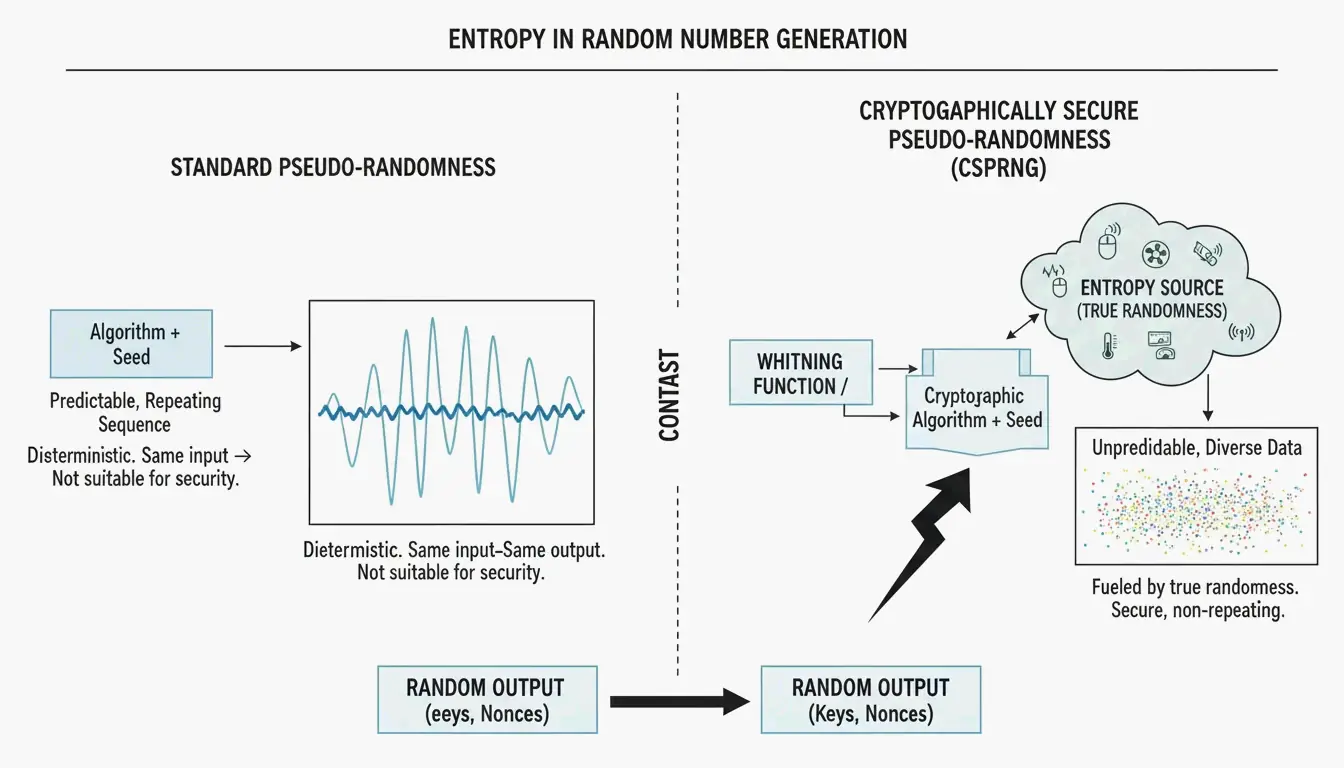
“Rettferdighet” i en digital trekning betyr at utfallet er umulig å forutsi eller manipulere. Mange enkle apper bruker Math.random() — en pseudotilfeldig generator som følger et forutsigbart mønster over tid. Greit for avslappede spill, men ikke sikkert nok for et lovlig lotteri.
Bransjestandarden er CSPRNG (Cryptographically Secure Pseudo-Random Number Generator). I motsetning til enkle generatorer, trekker en CSPRNG på høy-entropi kilder — maskinvare-timings, musebevegelser, tastaturforsinkelser — for å produsere virkelig uforutsigbare resultater.
Som Wheel of Names forklarer, sikrer bruk av crypto.getRandomValues() at tidligere resultater ikke har innflytelse på fremtidige. Hver trekning er en uavhengig hendelse.
Sette opp en verifiserbar trekning
- Rensk dataene dine — Fjern duplikate oppføringer og tomme linjer. Hver deltaker trenger nøyaktig samme sjanse.
- Bruk et verifisert verktøy — Velg en plattform som gir en offentlig protokoll. RandomPicker bemerker at et skjermbilde ikke er nok til å forsvare resultatene dine — du trenger en permanent, tidsstemplet URL.
- Gjennomfør en tilfeldighetsrevisjon — For større arrangementer, simuler 10 000 trekninger for å bevise at vinnere fordeles jevnt.
Når fysiske trekninger er juridisk påkrevd
Noen lover pålegger fortsatt gammeldagse metoder. Zeffy bemerker at i Ohio kan du selge billetter på nett, men vinneren må trekkes fra en fysisk beholder (tromme, boks). Frem til moderniseringslover vedtas, forblir helt digitale trekninger ulovlige i visse jurisdiksjoner.
Juridisk samsvar for 2026: Skateterskler og rapportering
IRS behandler lotteripremier som spillgevinster, noe som utløser spesifikke rapporterings- og skattetrekkplikter.
| Erskerskling | Krav |
|---|---|
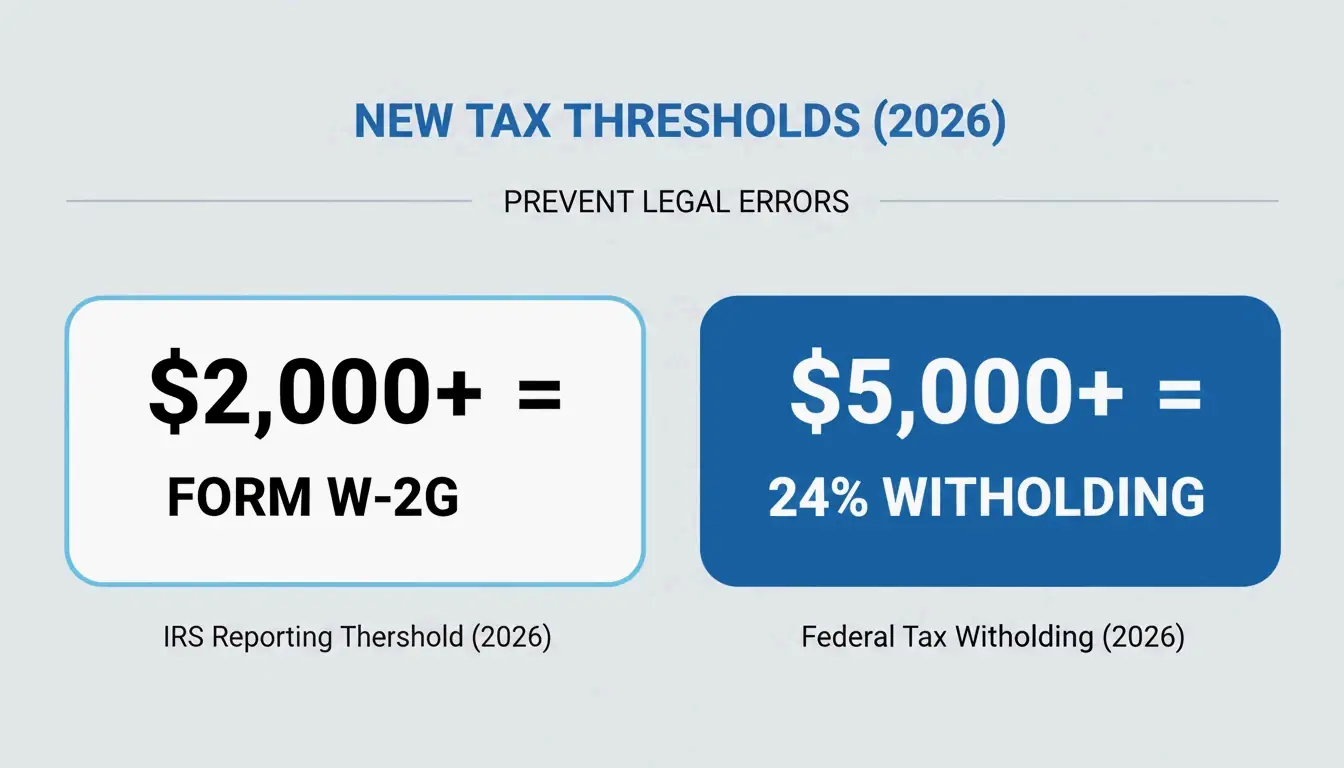
| Premie ≥ $2 000 (og ≥ 300× billettpris) | Send inn IRS Form W-2G for å rapportere gevinsten |
| Premie > $5 000 (minus billettkostnad) | Hold tilbake 24% føderal inntektsskatt før prisen overrekkes |
| Ikke-kontante premier (biler osv.) | Vinneren kan måtte betale de 24% i kontanter til organisasjonen før overtakelse |
$2 000 rapporteringsterskelen (opp fra $600) gjenspeiler 2026 inflasjonsjusteringer rapportert av LegalClarity. 24% tilbakeholdelsessats gjelder ifølge Zeffy.
90%-regelen (California og andre)
I California må minst 90% av brutto billettinntekt gå til det veldedige formålet — bare 10% kan dekke premier og administrasjonsomkostninger.
Berettigelse for veldedige organisasjoner: Hvem kan arrangere et lotteri?
I 47 amerikanske delstater er lotterier begrenset til 501(c)(3)-organisasjoner eller lignende veldedige organisasjoner (501(c)(4), 501(c)(19)). Overskuddsorienterte bedrifter og enkeltpersoner er generelt forbudt fra å arrangere lotterier, selv om overskuddet går til veldedighet.
UBIT-risiko
Lotterier er normalt fritatt fra skatt på urelatert næringsinntekt (UBIT) under IRC Section 513(f) — men bare hvis:
– Lotteriet ikke “drives regelmessig” som en bedrift
– Det drives av frivillige, ikke betalt personale
Å ansette et eksternt selskap for å administrere lotteriet kan gjøre inntekten skattepliktig.
Case-studie: $19 500 innsamlet med et omvendt lotteri
Clinton Wrestling Club begrenset billetter til 200 og brukte en elimineringsbasert trekning der den siste gjenværende billetten vinner hovedpremien. Dette formatet skaper spenning og viser at knapphet kan generere mer inntekt per billett enn en standard trekning.
Delstatsspesifikke regler: California, Ohio og lovgivning for 2026
| Delstat | Nøkkelbegrensning | Kilde |
|---|---|---|
| California | Billettsalg på nett forbudt — kan annonse på nett, men transaksjoner må skje personlig | Zeffy |
| Ohio | Fysisk tromme kreves for trekninger; House Bill 476 ventende for å tillate nettlotterier | ORC Section 2915.092 |
| Flesteparten av delstatene | 501(c)(3)-registrering kreves; må sende inn rapporter etter lotteriet | State AG offices |
Brudd på delstatsregler kan føre til mistanke om forseelse, bøter eller permanent tap av lotterirettigheter.
Trefase-rammeverk for en rettferdig & lovlig trekning
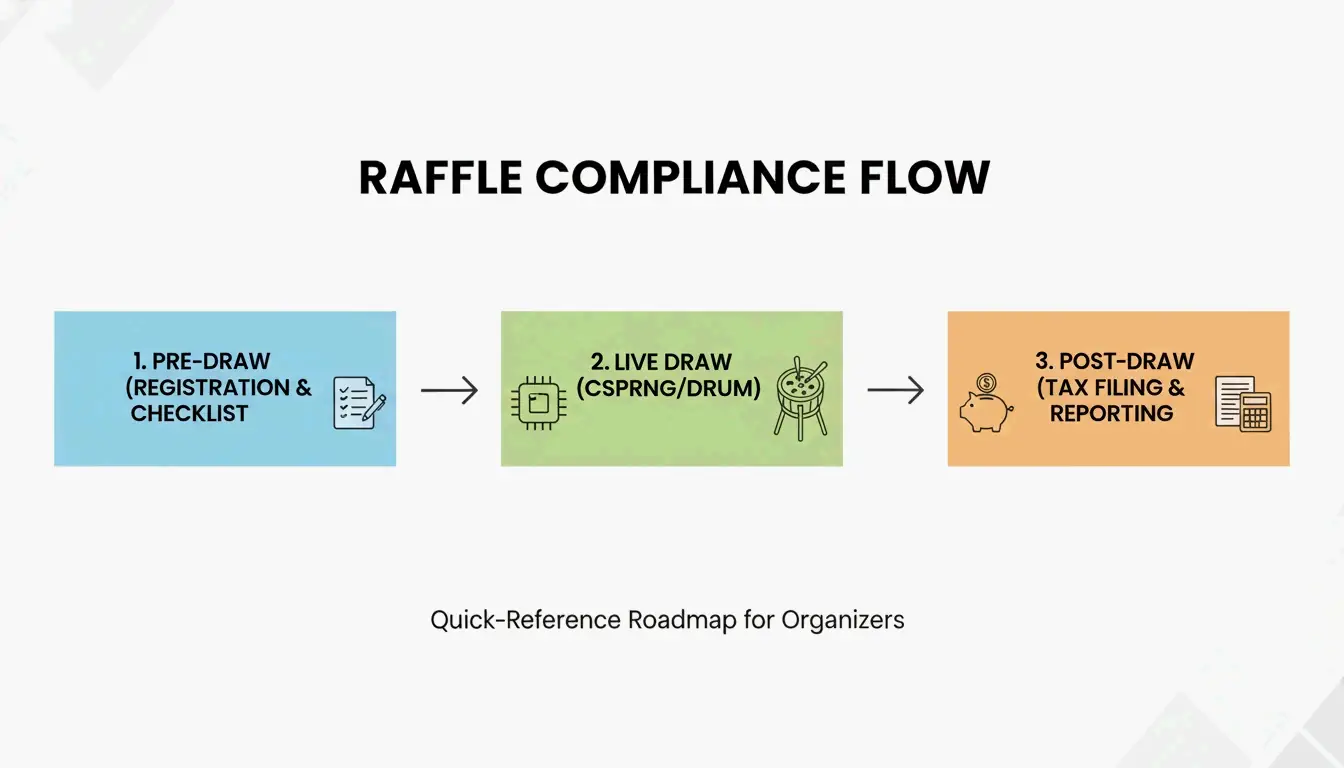
Fase 1: Samsvarkontroll før trekning
- Bekreft 501(c)(3)-status og registrer deg hos delstatens justisminister eller lokale sheriff
- Sikre at billetter oppgir: organisasjonens navn, treknedato, prismarkedets verdifaste verdi for premien
- Verifiser delstatsspesifikke regler (krav om fysisk trekning, begrensninger på nett-salg)
Fase 2: Gjennomføring av direkte trekning
- Bruk et CSPRNG-basert verktøy eller en fysisk beholder med grundig blanding
- Ta opp skjermen under digitale trekninger for revisjonsspor
- For fysiske trekninger, bruk en gjennomsiktig beholder og bland billetter grundig
Fase 3: Forpliktelser etter trekning
- Send Form W-2G for premier ≥ $2 000
- Innkrev 24% tilbakeholdelse for premier > $5 000
- Send inn rapporter etter lotteriet (f.eks. Form CT-NRP-2 i California innen fristen 1. februar)
Opprette et permanent revisjonsspor
RandomPicker oppretter en offentlig protokollside med en unik URL som viser deltakerlisten, vinneren og tidsstempelet — noe som beviser at resultatet var låst og ikke hadde blitt manipulert.
Konklusjon
Å arrangere et rettferdig lotteri betyr å kombinere teknisk grundighet (CSPRNG) med strengt juridisk samsvar (IRS-terskler, delstatsregistrering, veldedig berettigelse). 2026-landskapet har oppdaterte skateterskler ($2 000 W-2G, 24% tilbakeholdelse over $5 000) og ventende lovgivning som kan endre digitale trekninger i delstater som Ohio.
Før ditt neste lotteri: Verifiser at trekkeprogramvaren din er CSPRNG-kompatibel, bekreft din veldedige status for delstaten du opererer i, og budsjetter for 24% tilbakeholdelse på premier over $5 000.
FAQ
Er det lovlig å selge lotteribilletter på nett i California i 2026?
Generelt nei. California Penal Code 320.5 forbyr salg, bytte eller innløsning av billetter på nett. Du kan annonsere på sosiale medier, men transaksjonen og trekningen må skje personlig. Verifiser alltid 90/10-regelen før du går videre.
Hva er IRS rapporteringsterskel for lotterigevinster i 2026?
$2 000 — opp fra de forrige $600 på grunn av inflasjonsjusteringer. Send inn IRS Form W-2G hvis premien når denne verdien og er minst 300 ganger billettprisen.
Kan en overskuddsorientert bedrift arrangere et lotteri for veldedighet?
I de fleste delstater, nei. Bare 501(c)(3)-organisasjoner kan avholde lotterier. En overskuddsorientert bedrift kan sponse et lotteri der organisasjonen har lisensen, eller drive et Sweepstakes (kjøp kreves ikke for å delta), som er underlagt andre juridiske regler.
Ofte stilte spørsmål
Berettigelse for veldedige organisasjoner: Hvem kan arrangere et lotteri?
I 47 amerikanske delstater er lotterier begrenset til 501(c)(3)-organisasjoner eller lignende veldedige organisasjoner (501(c)(4), 501(c)(19)). Overskuddsorienterte bedrifter og enkeltpersoner er generelt forbudt fra å arrangere lotterier, selv om overskuddet går til veldedighet.
Er det lovlig å selge lotteribilletter på nett i California i 2026?
Generelt nei. California Penal Code 320.5 forbyr salg, bytte eller innløsning av billetter på nett. Du kan annonsere på sosiale medier, men transaksjonen og trekningen må skje personlig. Verifiser alltid 90/10-regelen før du går videre.
Hva er IRS rapporteringsterskel for lotterigevinster i 2026?
$2 000 — opp fra de forrige $600 på grunn av inflasjonsjusteringer. Send inn IRS Form W-2G hvis premien når denne verdien og er minst 300 ganger billettprisen.
Kan en overskuddsorientert bedrift arrangere et lotteri for veldedighet?
I de fleste delstater, nei. Bare 501(c)(3)-organisasjoner kan avholde lotterier. En overskuddsorientert bedrift kan sponse et lotteri der organisasjonen har lisensen, eller drive et Sweepstakes (kjøp kreves ikke for å delta), som er underlagt andre juridiske regler.
Relaterte innlegg
Tilfeldig telefonnummergenerator: Testing, SMS-verifisering og DevOps-integrasjon
Varelager for SMB: Bygg et billig strekkodesystem for anleggsmidler i 2026
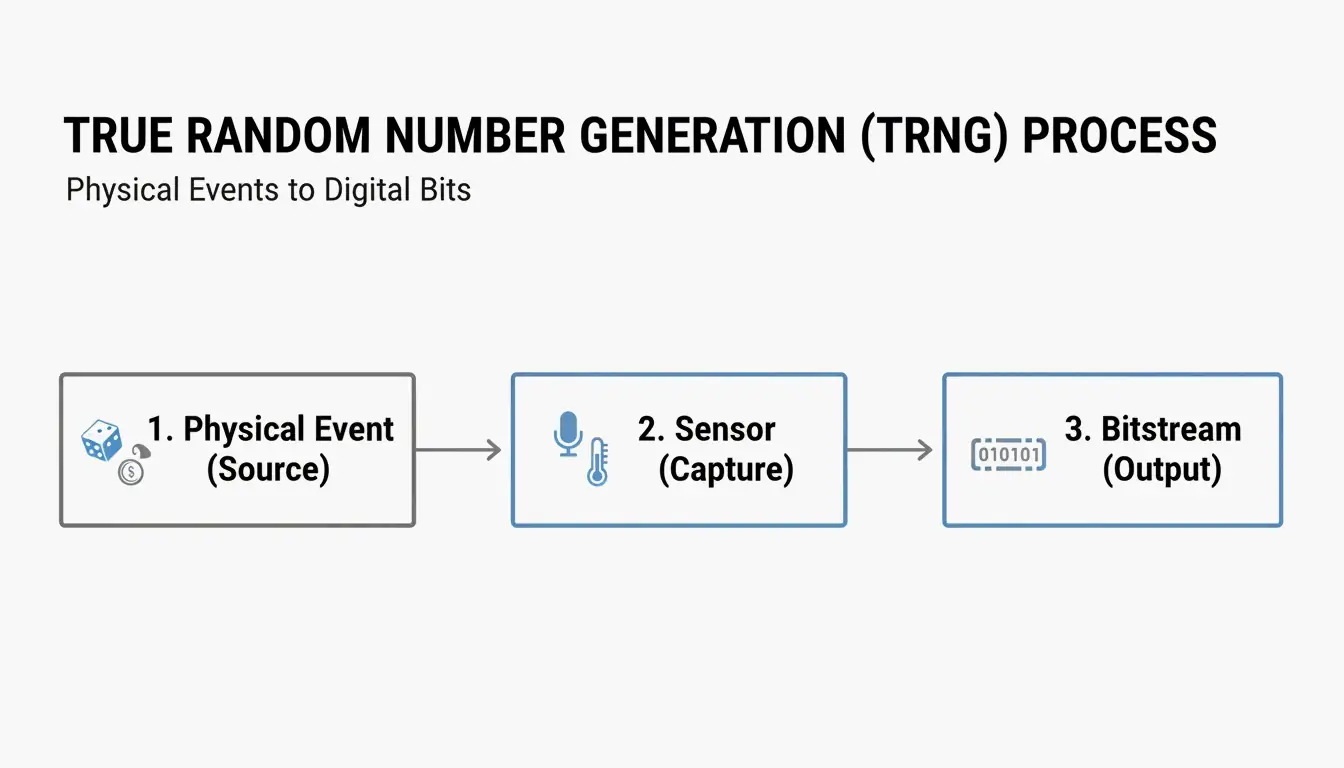
Sann tilfeldighet: Slik lages ekte tilfeldige tall – TRNG, PRNG og CSPRNG forklart