O Que É um Código Data Matrix? Definição, Especificações e Usos Industriais
Resumo rápido
- Um Data Matrix é um código de barras 2D de alta densidade — uma grade de células pretas e brancas — capaz de armazenar milhares de caracteres em um espaço menor que uma unha.
- Um Data Matrix é um código de barras 2D de alta densidade — uma grade de células pretas e brancas dispostas em um quadrado ou retângulo — definido pela ISO/IEC 16022.
- Definição Técnica: O Que É um Código de Barras Data Matrix?
Processo editorial
Revisado por SectoJoy e publicado em 21 de junho de 2026. Atualizamos este artigo quando os detalhes do produto, exemplos ou guia da ferramenta mudam. Última atualização: 21 de junho de 2026.
SectoJoy
Sou um desenvolvedor independente que cria aplicativos iOS e web, focado em produtos SaaS práticos. Tenho especialização em SEO com IA, explorando constantemente como tecnologias inteligentes podem impulsionar crescimento sustentável e eficiência.
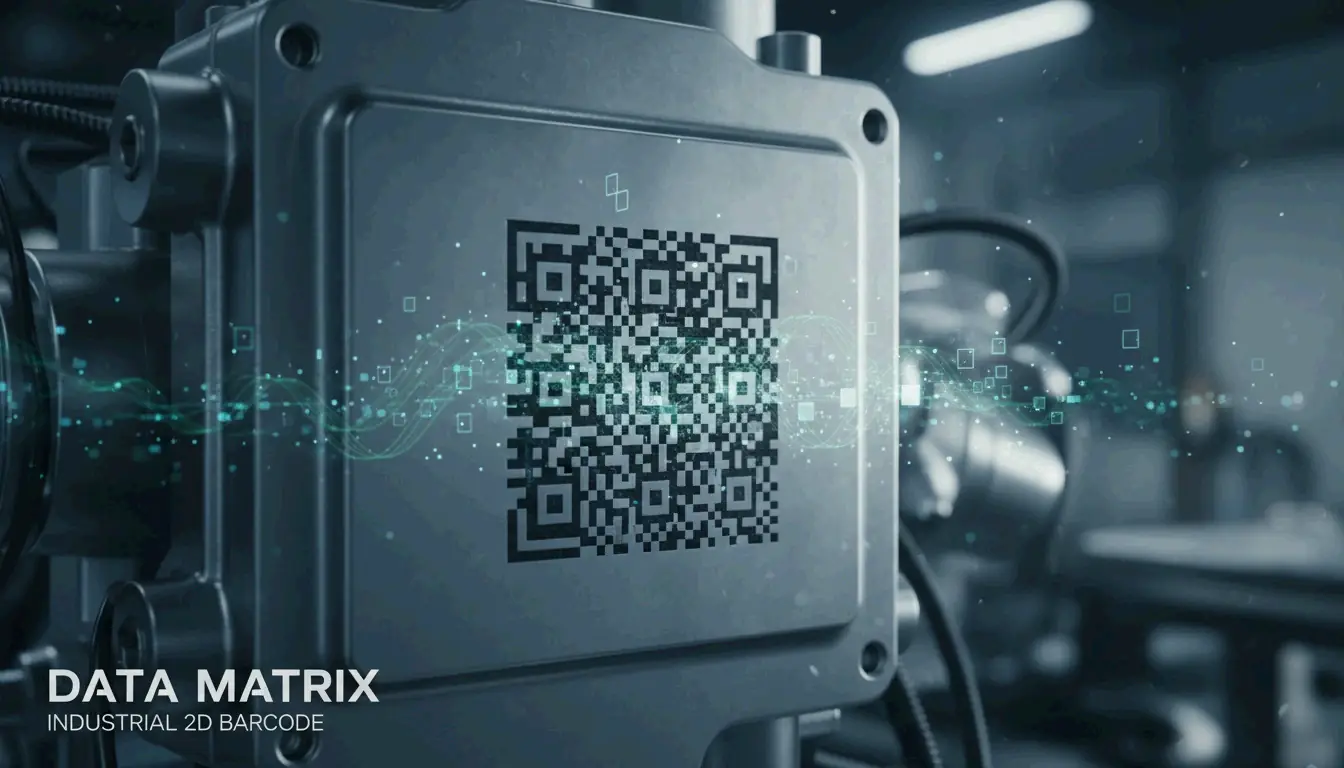
Um Data Matrix é um código de barras 2D de alta densidade — uma grade de células pretas e brancas dispostas em um quadrado ou retângulo — definido pela ISO/IEC 16022. Ele utiliza correção de erros ECC200 (Reed-Solomon) para permanecer legível mesmo quando danificado, e pode armazenar até 2.335 caracteres alfanuméricos em um espaço menor que uma unha. A partir de 2026, é o padrão global para a marcação de pequenos componentes industriais e itens farmacêuticos regulamentados.
Este guia aborda o que é um Data Matrix, como ele funciona tecnicamente, onde é usado no mundo real e como escolher entre ele e um QR code.
Definição Técnica: O Que É um Código de Barras Data Matrix?
Diferente dos códigos de barras 1D tradicionais, que codificam dados na largura e no espaçamento de linhas paralelas, um Data Matrix codifica informações em ambas as dimensões — horizontal e verticalmente. Essa abordagem 2D permite que ele armazene significativamente mais dados em uma área física muito menor.
Cada Data Matrix possui um Padrão de Busca (Finder Pattern) em formato de L — duas bordas sólidas que dizem ao scanner exatamente onde o símbolo está e como está orientado, mesmo que o código esteja de cabeça para baixo ou inclinado. De acordo com a Wikipedia, as regras atuais são definidas pela ISO/IEC 16022:2024 (Edição 3). O padrão é de domínio público, então qualquer pessoa pode usá-lo sem pagar royalties.
Anatomia: Células, Módulos e Zona de Silêncio
| Componente | Função |
|---|---|
| Padrão de Busca (Finder Pattern — “L”) | Duas bordas sólidas que ajudam o scanner a localizar o código e determinar a orientação |
| Padrão de Sincronização (Timing Pattern) | Células escuras/claras alternadas opostas ao “L” — informam ao leitor as dimensões da grade |
| Região de Dados (Data Region) | A área interna onde as informações reais são codificadas (cresce conforme os dados aumentam) |
| Zona de Silêncio (Quiet Zone) | Uma margem em branco obrigatória fora do padrão que evita que textos/gráficos próximos confundam o scanner |
A tecnologia é notavelmente escalável. A Wikipedia observa que você encontrará códigos Data Matrix tão pequenos quanto 300 micrômetros gravados em chips de silício, e tão grandes quanto quadrados de um metro pintados nos tetos de vagões de trem.
Por Que a Correção de Erros ECC200 e Reed-Solomon São Importantes
A confiabilidade moderna do Data Matrix vem do ECC200, que utiliza o algoritmo Reed-Solomon para adicionar dados redundantes de “backup” a cada símbolo. Isso significa que o código ainda funciona mesmo quando parte dele está arranhada, suja ou rasgada.
A Wikipedia relata que o ECC200 pode reconstruir a cadeia de dados completa mesmo com até 30% de dano — contanto que o padrão de busca em formato de L permaneça visível. Isso o torna a principal escolha para ambientes agressivos, onde as peças enfrentam produtos químicos, atrito intenso ou calor extremo.
| Recurso | ECC200 (Padrão Atual) | ECC 000–140 (Legado) |
|---|---|---|
| Correção de erros | Reed-Solomon | Métodos mais antigos |
| Tolerância a danos | Até 30% | Menor |
| Uso hoje | Padrão global | Apenas em sistemas fechados |
| Capacidade de dados | Até 3.116 dígitos | Menor |
As taxas de erro são incrivelmente baixas. A Wikipedia observa que os scanners tipicamente reportam apenas um erro a cada 15.000 a 36 trilhões de caracteres, dependendo da qualidade do código.
Especificações Principais: Capacidade, Tamanho e Densidade de Dados
A maior vantagem do Data Matrix é a densidade de dados — ele armazena uma quantidade enorme de informações em relação ao seu tamanho físico.
| Tipo de Dado | Capacidade Máxima |
|---|---|
| Caracteres alfanuméricos | 2.335 |
| Dígitos numéricos | 3.116 |
| Dados binários / byte | 1.556 bytes |
Os tamanhos de grade para o ECC200 variam de 10×10 até 144×144 módulos. A principal medida para calibração é o X-dimension — o tamanho de um único módulo (ponto ou quadrado). A maioria dos scanners industriais é calibrada para um X-dimension de pelo menos 10 mil (0,254 mm) para garantir leituras confiáveis.
Como a Peak Technologies explica, o comprimento físico do código se ajusta com base no conteúdo dos dados, e um dígito verificador (checksum) é sempre obrigatório. Essa flexibilidade permite que os fabricantes comprimam números de série, códigos de lote e datas de validade em algo tão pequeno quanto a cabeça de um parafuso.
Usos Industriais: Da Aeroespacial à Conformidade em Saúde
Os códigos de barras Data Matrix são o motor oculto por trás das cadeias de suprimentos globais. Veja onde eles aparecem no mundo real.
Farmacêuticos: Conformidade com a FDA
Nos EUA, o GS1 DataMatrix é o padrão oficial para a Drug Supply Chain Security Act (DSCSA) da FDA. As empresas farmacêuticas devem marcar cada unidade com um identificador exclusivo para evitar que medicamentos falsificados entrem no mercado.
Direct Part Marking (DPM) em Automotivo e Eletrônica
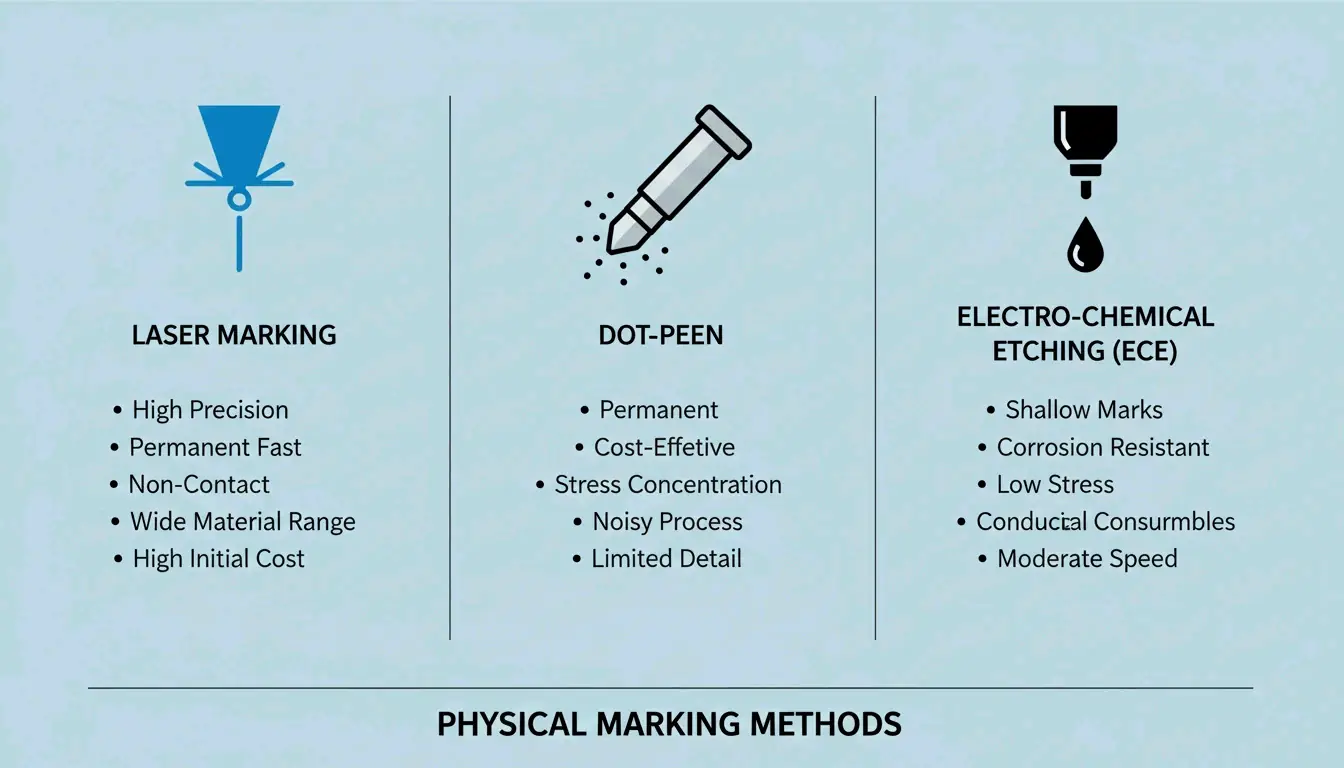
Para identificação permanente de peças, o Direct Part Marking (DPM) grava o código diretamente no material, em vez de aplicar um rótulo:
| Método | Como Funciona | Ideal Para |
|---|---|---|
| Marcação a laser (Laser marking) | Grava o código em metal ou plástico com lasers de alta precisão | Peças metálicas, plásticos |
| Marcação por ponta de diamante (Dot-peen marking) | Uma ponteira de metal perfura uma grade de pontos redondos na superfície | Metais duros, ambientes agressivos |
| Gravação Eletrolítica Química (Electrolytic Chemical Etching — ECE) | Processo químico cria uma marca permanente no metal | Metais condutores |
Rótulos vs. Marcação Direta: Como Escolher
Ao configurar um sistema de marcação, a escolha depende da aplicação:
- Rótulos de poliamida — A Cleverence chama estes de “padrão ouro” para placas de circuito (PCBs), porque sobrevivem a fornos de refluxo e lavagens químicas.
- Gravação a laser — A escolha ideal para peças aeroespaciais, onde rótulos podem se soltar, ou para minúsculos chips de silício sem espaço para um adesivo.
- Requisitos de contraste — Independentemente do método, a Elmed enfatiza que é necessário um contraste nítido entre células claras e escuras para que os scanners baseados em câmera leiam o código de forma confiável.
Data Matrix vs. QR Code: Qual Escolher?
Ambos são códigos de barras 2D, mas foram projetados para finalidades diferentes:
| Recurso | Data Matrix | QR Code |
|---|---|---|
| Tamanho físico (mesmos dados) | Menor | Maior |
| Aprovado pela GS1 para saúde | Sim (único código 2D aprovado) | Não |
| Leitura por smartphone | Requer aplicativo especializado | Nativo na maioria dos telefones |
| Ideal para | Rastreamento industrial, peças pequenas, farmacêuticos | Marketing ao consumidor, URLs, cardápios |
| Durabilidade | Excelente (compatível com DPM) | Menor (geralmente rótulos impressos) |
Para rastreamento industrial — onde o espaço é limitado e os ambientes são agressivos — o Data Matrix vence devido à sua menor área física, maior durabilidade e compatibilidade com DPM. Para aplicações voltadas ao consumidor, os QR codes são a escolha prática porque qualquer pessoa com um smartphone pode lê-los.
Conclusão
O código de barras Data Matrix permanece como o padrão ouro para rastreamento industrial de alta densidade em 2026, respaldado pelos padrões atualizados ISO/IEC 16022:2024. Sua capacidade de codificar milhares de caracteres em uma área microscópica — e sobreviver a 30% de dano por meio da correção de erros ECC200 — o torna indispensável, desde o chão de fábrica até as cadeias de suprimentos farmacêuticas.
Ao implementar um sistema:
– Sempre use ECC200 para compatibilidade global
– Escolha DPM (laser/dot-peen) para peças sujeitas a condições agressivas
– Use rótulos de poliamida para PCBs e aplicações de alta temperatura
– Garanta forte contraste entre células claras e escuras para leitura confiável
FAQ
Qual é a capacidade máxima de dados de um código de barras Data Matrix?
Sob a ISO/IEC 16022, um Data Matrix pode armazenar até 2.335 caracteres alfanuméricos ou 3.116 dígitos numéricos. O tamanho físico do código depende do X-dimension (tamanho do módulo) escolhido para a aplicação e das capacidades do scanner.
Um código de barras Data Matrix pode ser lido se estiver parcialmente danificado?
Sim — desde que use o padrão ECC200. O algoritmo de correção de erros Reed-Solomon permite que o símbolo permaneça totalmente legível mesmo quando até 30% da área superficial está danificada ou obscurecida. Isso o torna ideal para peças expostas a produtos químicos, abrasão ou calor intenso.
Preciso de uma licença para usar códigos de barras Data Matrix?
Não. A simbologia Data Matrix está em domínio público. As patentes originais (detidas pela International Data Matrix, Inc.) expiraram. As especificações são agora governadas por normas ISO/IEC, e qualquer organização pode gerar e usar códigos de barras Data Matrix livremente, sem pagar royalties.
Perguntas frequentes
Definição Técnica: O Que É um Código de Barras Data Matrix?
Diferente dos códigos de barras 1D tradicionais, que codificam dados na largura e no espaçamento de linhas paralelas, um Data Matrix codifica informações em ambas as dimensões — horizontal e verticalmente. Essa abordagem 2D permite que ele armazene significativamente mais dados em uma área física muito menor. Cada Data Matrix possui um Padrão de Busca (Finder Pattern) em formato de L — duas bordas sólidas que dizem ao scanner exatamente onde o símbolo está e como está orientado, mesmo que o código esteja de cabeça para baixo ou inclinado. De acordo com a Wikipedia, as regras atuais são definidas pela ISO/IEC 16022:2024 (Edição 3). O padrão é de domínio público, então qualquer pessoa pode usá-lo sem pagar royalties.
Data Matrix vs. QR Code: Qual Escolher?
Ambos são códigos de barras 2D, mas foram projetados para finalidades diferentes: Recurso Data Matrix QR Code Tamanho físico (mesmos dados) Menor Maior Aprovado pela GS1 para saúde Sim (único código 2D aprovado) Não Leitura por smartphone Requer aplicativo especializado Nativo na maioria dos telefones Ideal para Rastreamento industrial, peças pequenas, farmacêuticos Marketing ao consumidor, URLs, cardápios Durabilidade Excelente (compatível com DPM) Menor (geralmente rótulos impressos)
Qual é a capacidade máxima de dados de um código de barras Data Matrix?
Sob a ISO/IEC 16022, um Data Matrix pode armazenar até 2.335 caracteres alfanuméricos ou 3.116 dígitos numéricos. O tamanho físico do código depende do X-dimension (tamanho do módulo) escolhido para a aplicação e das capacidades do scanner.
Um código de barras Data Matrix pode ser lido se estiver parcialmente danificado?
Sim — desde que use o padrão ECC200. O algoritmo de correção de erros Reed-Solomon permite que o símbolo permaneça totalmente legível mesmo quando até 30% da área superficial está danificada ou obscurecida. Isso o torna ideal para peças expostas a produtos químicos, abrasão ou calor intenso.
Preciso de uma licença para usar códigos de barras Data Matrix?
Não. A simbologia Data Matrix está em domínio público. As patentes originais (detidas pela International Data Matrix, Inc.) expiraram. As especificações são agora governadas por normas ISO/IEC, e qualquer organização pode gerar e usar códigos de barras Data Matrix livremente, sem pagar royalties.
Artigos Relacionados
Gerador de Fontes: O Mapa Completo de Textos Estilizados em 2026
Gerador de Fontes Estéticas: O Guia Definitivo para Textos Unicode Estilosos
Gerador de Fontes de Caligrafia: Ferramenta Online Gratuita para Estilos de Texto Elegantes