História do código de barras: do código Morse na areia ao GS1 Sunrise 2027
Resumo rápido
- O código de barras começou em 1948, quando Norman Joseph Woodland desenhou linhas inspiradas no código Morse na areia da Flórida
- O código de barras começou em 1948, quando Norman Joseph Woodland desenhou linhas inspiradas no código Morse na areia da Flórida, foi patenteado em 1952 e tornou-se o padrão varejista mundial quando o UPC da I.
- O Sunrise 2027: por que os varejistas estão mudando para códigos 2D agora
Processo editorial
Revisado por SectoJoy e publicado em 15 de junho de 2026. Atualizamos este artigo quando os detalhes do produto, exemplos ou guia da ferramenta mudam. Última atualização: 15 de junho de 2026.
SectoJoy
Sou um desenvolvedor independente que cria aplicativos iOS e web, focado em produtos SaaS práticos. Tenho especialização em SEO com IA, explorando constantemente como tecnologias inteligentes podem impulsionar crescimento sustentável e eficiência.
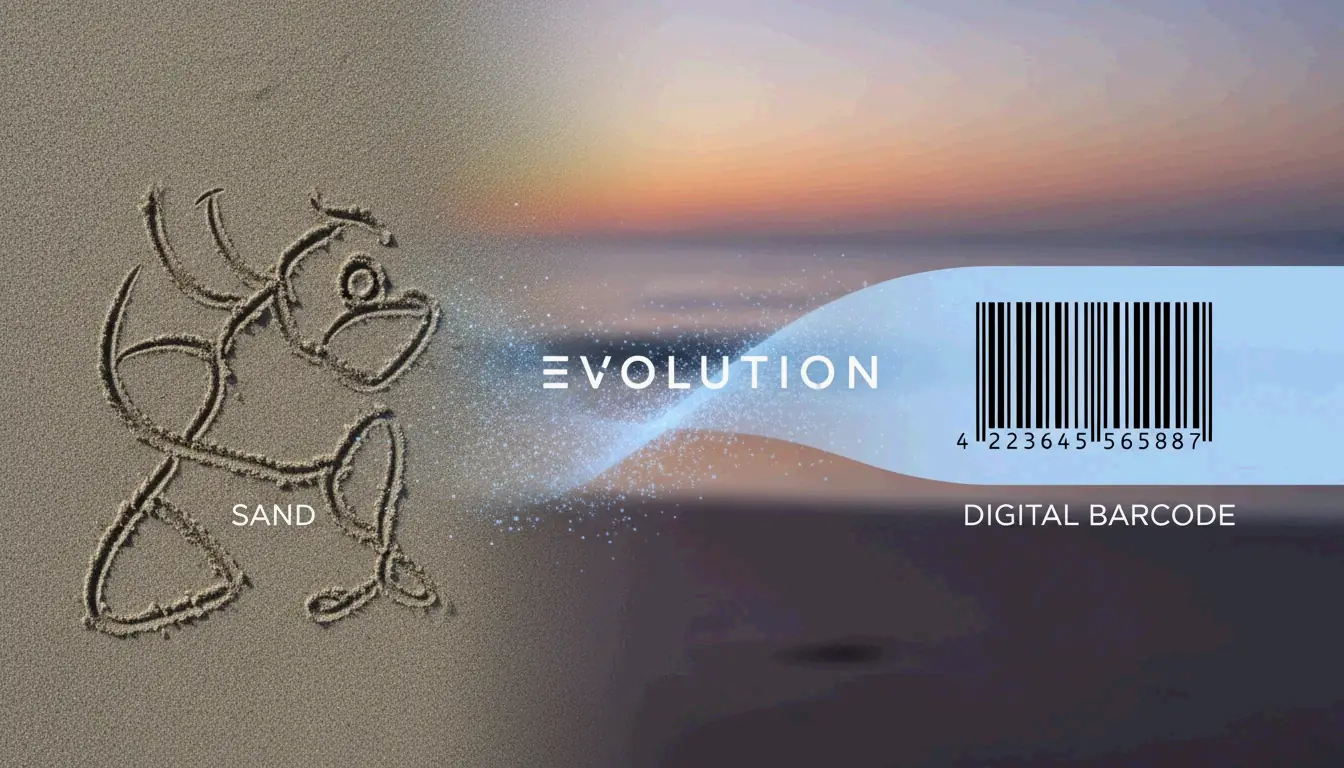
O código de barras começou em 1948, quando Norman Joseph Woodland desenhou linhas inspiradas no código Morse na areia da Flórida, foi patenteado em 1952 e tornou-se o padrão varejista mundial quando o UPC da IBM foi lançado em 1973. Hoje, com mais de 10 bilhões de leituras por dia em todo o mundo, a indústria corre para o GS1 Sunrise 2027 — uma transição completa dos códigos de barras 1D para os códigos QR 2D.
Aqui está a história completa, daquela praia em Miami aos scanners da Tesco.
O Sunrise 2027: por que os varejistas estão mudando para códigos 2D agora
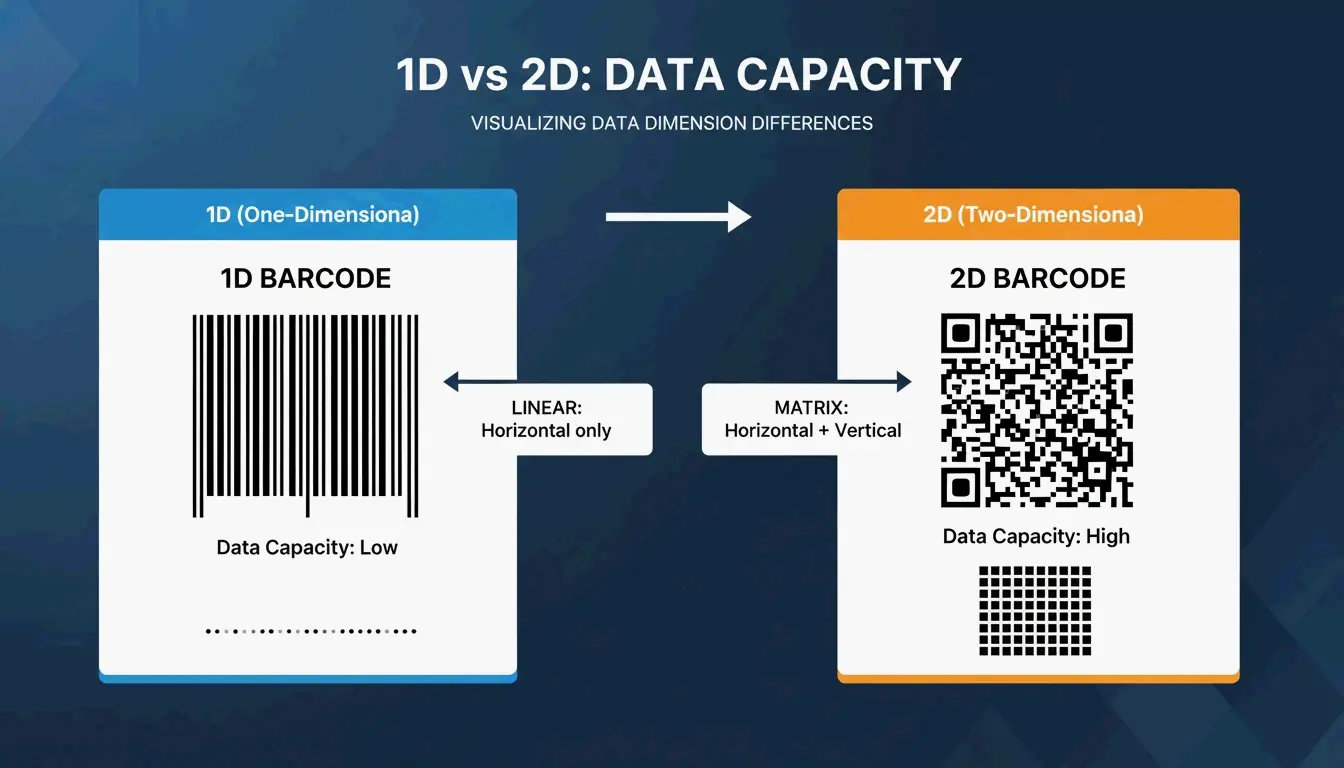
A maior mudança desde a década de 1970 está em curso. Os códigos de barras 1D clássicos identificam um produto e seu fabricante. Os códigos QR 2D modernos podem armazenar datas de validade, números de lote, informações sobre alérgenos e links da web — tudo em uma única leitura.
| Característica | Código de barras 1D (UPC) | Código QR 2D |
|---|---|---|
| Capacidade de dados | 20–80 caracteres numéricos | Até 4.000 caracteres |
| Tipos de conteúdo | ID do produto + fabricante | URLs, números de lote, datas, imagens |
| Correção de erros | Mínima | Até 30 % de tolerância a danos |
| Escaneável por smartphone | Limitado | Suporte nativo em todos os telefones modernos |
A Tesco tornou-se o primeiro supermercado britânico a fazer a mudança. Em abril de 2026, começou a substituir códigos de barras por códigos QR em salsichas de marca própria e produtos frescos. Os compradores podem escanear um pacote com o telefone para conferir alérgenos ou encontrar receitas. A loja obtém um melhor rastreamento das datas de validade para reduzir o desperdício de alimentos.
A origem: código Morse na areia (1948)
A história começa no Drexel Institute of Technology, na Filadélfia. Um executivo de mercearia pediu a um decano que automatizasse o checkout. Bernard Silver ouviu a conversa por acaso e contou ao amigo Norman Joseph Woodland. Woodland tornou-se obcecado por resolvê-lo.
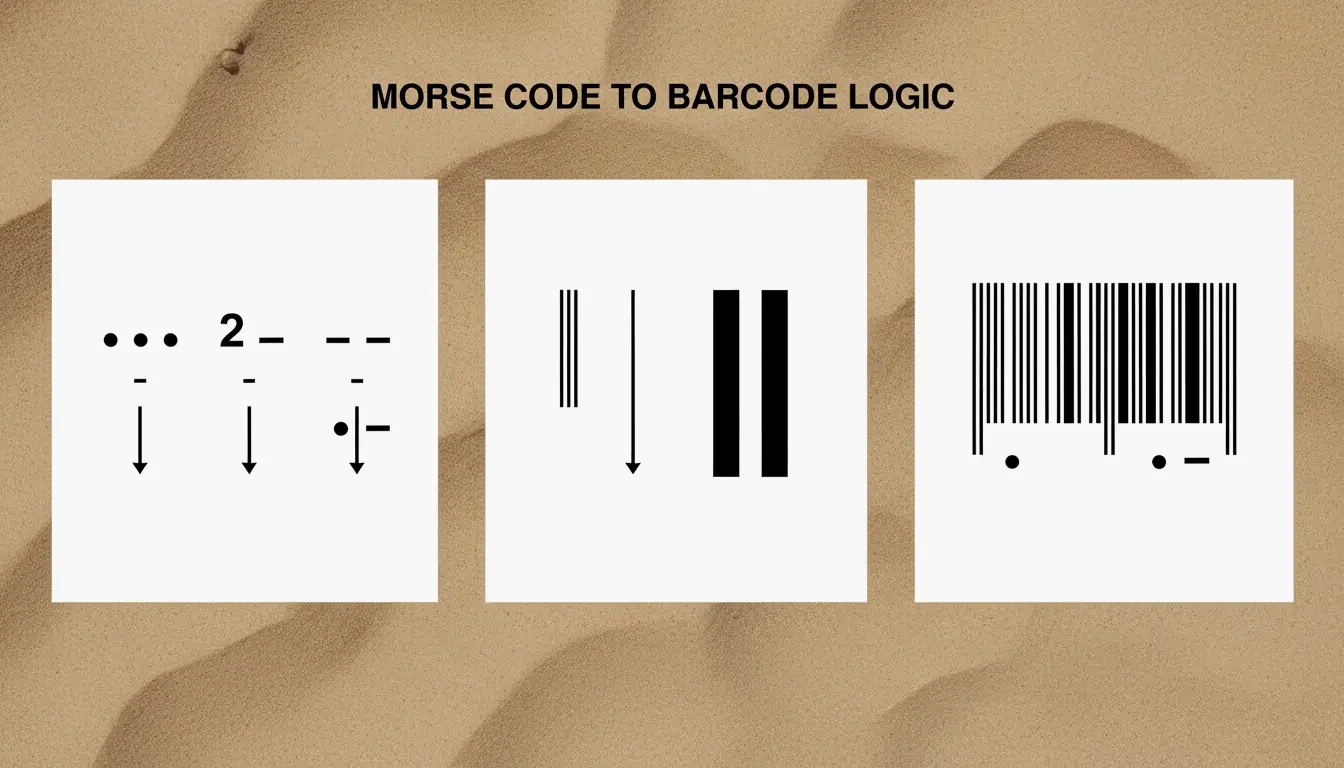
O avanço veio numa praia de Miami. Woodland, um ex-escoteiro, pensava no código Morse. Ele pressionou os dedos na areia, desenhou pontos e traços e depois os puxou para baixo para criar linhas verticais de larguras diferentes.
«Eu apenas estendi os pontos e traços para baixo e fiz linhas estreitas e largas com eles.» — Norman Joseph Woodland, citado pela Wikipédia
O design de alvo (patente de 1952)
A patente de 1952 de Woodland e Silver (patente dos EUA 2.612.994) usava um “alvo” — círculos concêntricos que podiam ser escaneados de qualquer ângulo. O problema: impressoras de alta velocidade borravam a tinta. Um círculo borrado tornava-se ilegível. Uma linha borrada apenas ficava mais alta, mas sua largura portadora de dados permanecia a mesma. Os designs lineares venceram.
IBM, George Laurer e o padrão UPC (1973)
Mesmo com a patente, a tecnologia de código de barras acumulou poeira por duas décadas. As luzes e computadores necessários para ler os códigos eram muito caros para a maioria das lojas.
No início dos anos 1970, a indústria de mercearia formou um comitê para escolher um padrão. A RCA pressionava pelo Alvo. A IBM tinha uma ideia diferente — George Laurer, trabalhando ao lado de Woodland na IBM, refinou o conceito linear até o Universal Product Code (UPC).
Em 3 de abril de 1973, o comitê escolheu o design de Laurer. Era mais fácil de imprimir e mais confiável no ambiente bagunçado e acelerado de um supermercado real.
A primeira leitura: 26 de junho de 1974, 8h01
No supermercado Marsh em Troy, Ohio, a caixa Sharon Buchanan escaneou um pacote de 10 gomas de mascar Wrigley’s Juicy Fruit. Custava 69 centavos. Aquele único “bipe” provou que o sistema conseguia lidar com itens pequenos e cotidianos — e mudou o varejo para sempre. Aquele pacote de goma agora está na Smithsonian Institution.
1D vs. 2D: capacidade de dados e impacto no mundo real
A lacuna entre os códigos 1D e 2D não é sutil.
- Os códigos de barras 1D (como o UPC) são lineares. Eles armazenam 20–80 caracteres numéricos — o suficiente para um ID de produto.
- Os códigos QR 2D, inventados pela Denso Wave em 1994 para a cadeia de suprimentos da Toyota, usam um padrão de grade. Eles armazenam até 4.000 caracteres, incluindo URLs e dados estruturados.
O uso de códigos QR nos EUA alcançou 89 milhões de pessoas até 2022 e continua a subir. Como explica Peter Draper, da Tesco: «Mudar para os códigos QR nos ajudará a reduzir o desperdício de alimentos, melhorar o controle de estoque e desbloquear novos benefícios digitais para os nossos clientes.»
GS1 e padrões globais em 2026
A GS1 gerencia os Global Trade Item Numbers (GTINs) — garantindo que um código de barras escaneado em Londres signifique o mesmo em Nova York. De acordo com dados da GS1, essa padronização ajudou o mercado de rastreamento de armazéns a crescer para cerca de US$ 4,5 bilhões até 2033.
Em 2026, esses padrões também resolvem problemas ambientais. Como os códigos 2D incluem datas de validade, os supermercados podem automaticamente dar desconto em alimentos prestes a vencer, reduzindo o desperdício. Ao conectar códigos de barras com a Internet das Coisas (IoT), essa invenção de 75 anos continua sendo a espinha dorsal do comércio global.
Conclusão
O código de barras viajou de um esboço de código Morse na areia da Flórida até um sistema que lida com 10 bilhões de leituras por dia. Da patente original de alvo de Woodland e Silver, passando pela padronização UPC de Laurer, até a transição para o código QR impulsionada pelo GS1 Sunrise 2027 — a tecnologia continua a se adaptar.
As empresas devem auditar seus scanners e embalagens agora. O prazo de 2027 significa que todos os sistemas de checkout precisarão ler códigos 2D, e todos os produtos carregarão uma história digital mais rica.
Perguntas frequentes
Quem escaneou o primeiro código de barras da história?
Sharon Buchanan, uma caixa do supermercado Marsh em Troy, Ohio. O evento ocorreu em 26 de junho de 1974, às 8h01. Ela escaneou um pacote de 10 gomas de mascar Wrigley’s Juicy Fruit (preço de 69 centavos), hoje exibido na Smithsonian Institution.
Por que a indústria varejista está mudando de códigos de barras 1D para códigos QR até 2027?
A iniciativa GS1 Sunrise 2027 exige que todos os sistemas de checkout leiam códigos de barras 2D. Os códigos QR contêm muito mais dados do que os códigos 1D — datas de validade, números de lote, informações de sustentabilidade — o que melhora a segurança dos alimentos, reduz o desperdício e permite o engajamento do consumidor por smartphone.
Como o código Morse influenciou o design original do código de barras?
Norman Joseph Woodland, um escoteiro proficiente em código Morse, estava sentado numa praia de Miami em 1948, contemplando como representar dados visualmente. Ele desenhou pontos e traços na areia e depois os puxou para baixo para criar linhas verticais de larguras variadas. Essa tradução visual do código Morse tornou-se a lógica fundamental de todos os códigos de barras lineares.
Perguntas frequentes
Quem escaneou o primeiro código de barras da história?
Sharon Buchanan, uma caixa do supermercado Marsh em Troy, Ohio. O evento ocorreu em 26 de junho de 1974, às 8h01. Ela escaneou um pacote de 10 gomas de mascar Wrigley’s Juicy Fruit (preço de 69 centavos), hoje exibido na Smithsonian Institution.
Por que a indústria varejista está mudando de códigos de barras 1D para códigos QR até 2027?
A iniciativa GS1 Sunrise 2027 exige que todos os sistemas de checkout leiam códigos de barras 2D. Os códigos QR contêm muito mais dados do que os códigos 1D — datas de validade, números de lote, informações de sustentabilidade — o que melhora a segurança dos alimentos, reduz o desperdício e permite o engajamento do consumidor por smartphone.
Como o código Morse influenciou o design original do código de barras?
Norman Joseph Woodland, um escoteiro proficiente em código Morse, estava sentado numa praia de Miami em 1948, contemplando como representar dados visualmente. Ele desenhou pontos e traços na areia e depois os puxou para baixo para criar linhas verticais de larguras variadas. Essa tradução visual do código Morse tornou-se a lógica fundamental de todos os códigos de barras lineares.
Artigos Relacionados
Gerador de Fontes: O Mapa Completo de Textos Estilizados em 2026
Gerador de Fontes Estéticas: O Guia Definitivo para Textos Unicode Estilosos
Gerador de Fontes de Caligrafia: Ferramenta Online Gratuita para Estilos de Texto Elegantes