ISBN 10 vs 13: Key Differences, Conversion Guide, and the 979 Prefix Explained
Quick Summary
- Every book published today carries a 13-digit ISBN — th
- Every book published today carries a 13-digit ISBN — the universal identifier that makes it scannable at any checkout counter worldwide.
- ISBN-10 vs ISBN-13: Core Differences
Editorial Process
Reviewed by SectoJoy and published on 7 May 2026. This article is refreshed when product details, examples, or tool guidance change. Last updated 15 May 2026.
SectoJoy
I'm an indie hacker building iOS and web applications, with a focus on creating practical SaaS products. I specialise in AI SEO, constantly exploring how intelligent technologies can drive sustainable growth and efficiency.
Every book published today carries a 13-digit ISBN — the universal identifier that makes it scannable at any checkout counter worldwide. But if you’ve been around books long enough, you’ve probably seen the older 10-digit format too. Understanding the difference between them, how to convert between the two, and why the newer “979” prefix changes everything is essential knowledge for publishers, librarians, and anyone working with book metadata in 2026.
This guide covers the structural differences, walks through the conversion math, explains why 979-prefixed ISBNs can’t go back to 10 digits, and breaks down what you’ll pay for ISBNs today.
ISBN-10 vs ISBN-13: Core Differences
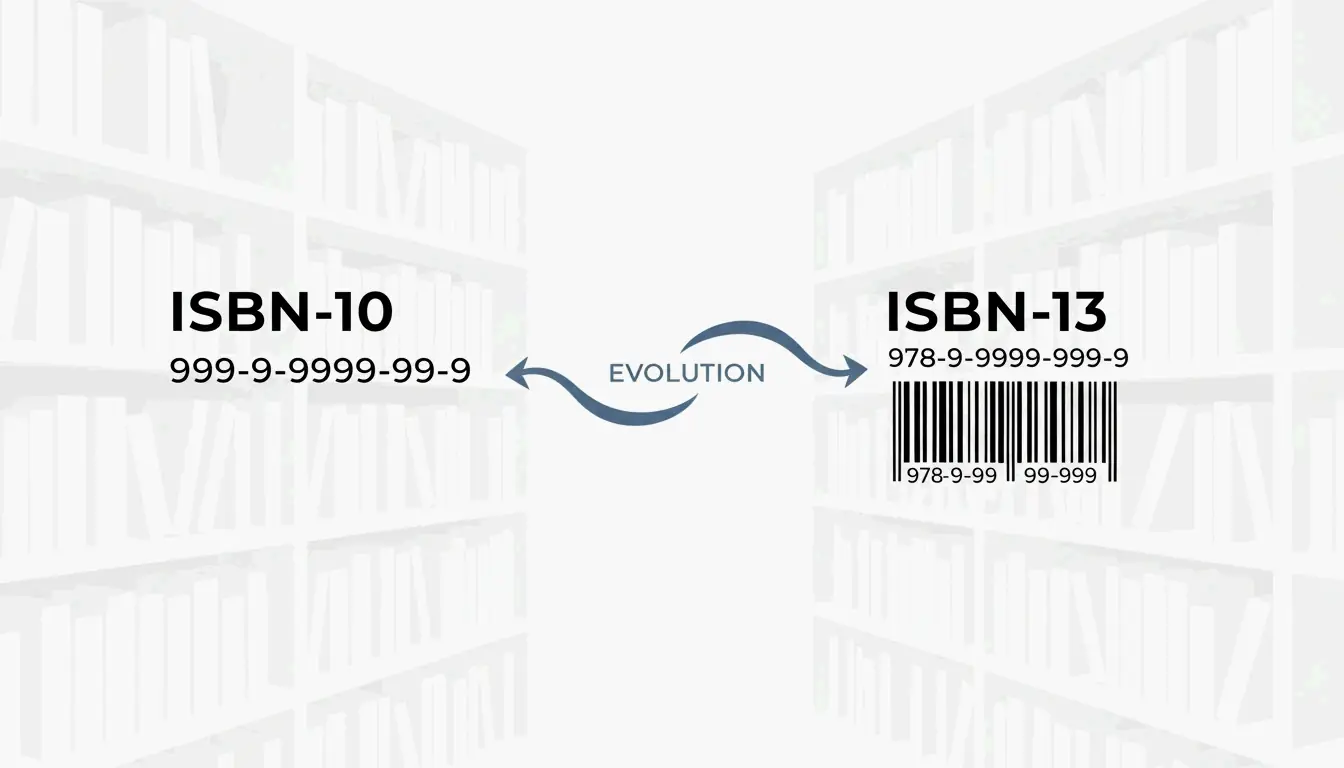
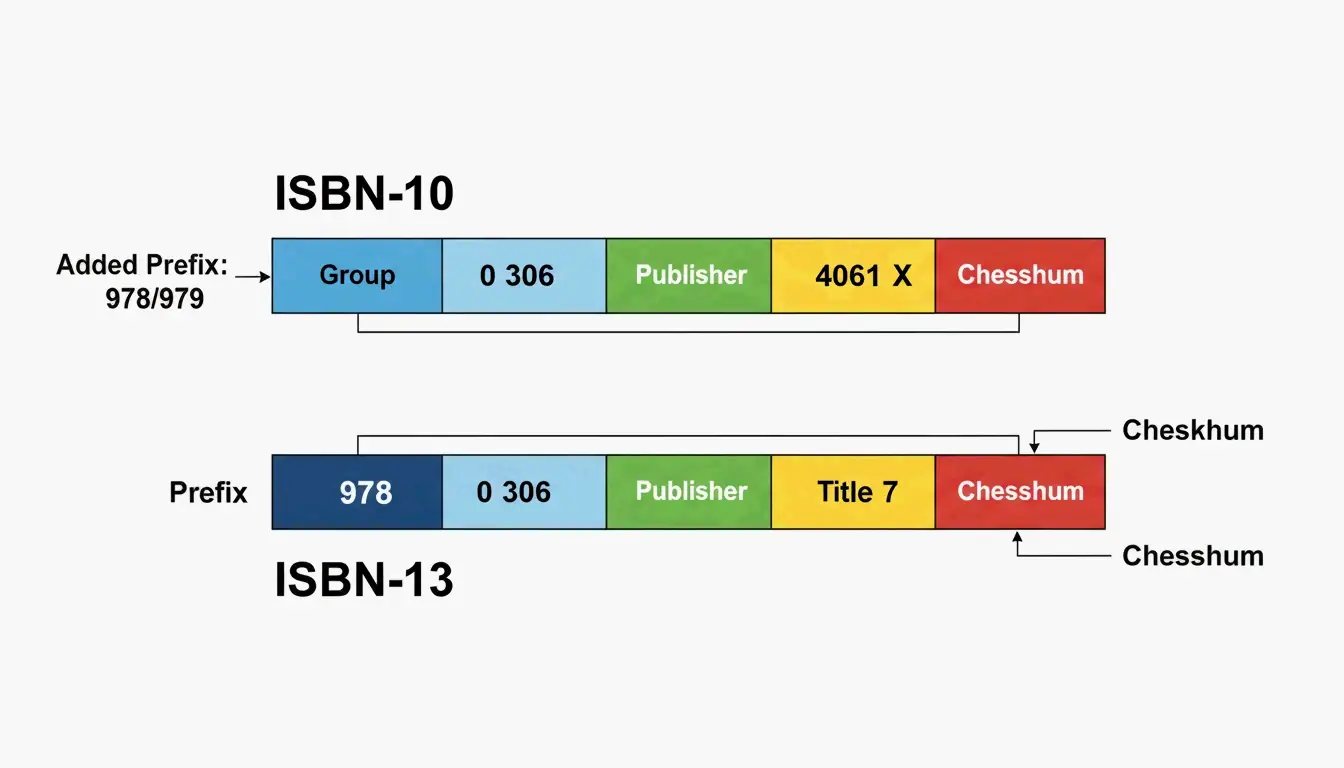
The ISBN system’s biggest transition happened on January 1, 2007, when the industry moved from 10 digits to 13. As Wikipedia documents, the change served two purposes: expanding the pool of available numbers globally and aligning books with the EAN-13 barcode system used by virtually every retailer.
Structural Breakdown
| Component | ISBN-10 | ISBN-13 |
|---|---|---|
| Total digits | 10 | 13 |
| GS1 prefix | None | 978 or 979 |
| Registration group | Language/country | Language/country |
| Registrant | Publisher | Publisher |
| Publication | Specific title/edition | Specific title/edition |
| Check digit | Modulus 11 (0–9 or X) | Modulus 10 (0–9 only) |
LiteDevTools notes that ISBN-13 is now required for modern inventory systems — it allows a book to be scanned at checkout using the same GTIN-13 data fields as any other consumer product.
When to Use Which Format
- Modern publications — Any book published after 2007 must have an ISBN-13.
- Legacy databases — ISBN-10 is still useful for tracking old backstock or organizing library catalogs.
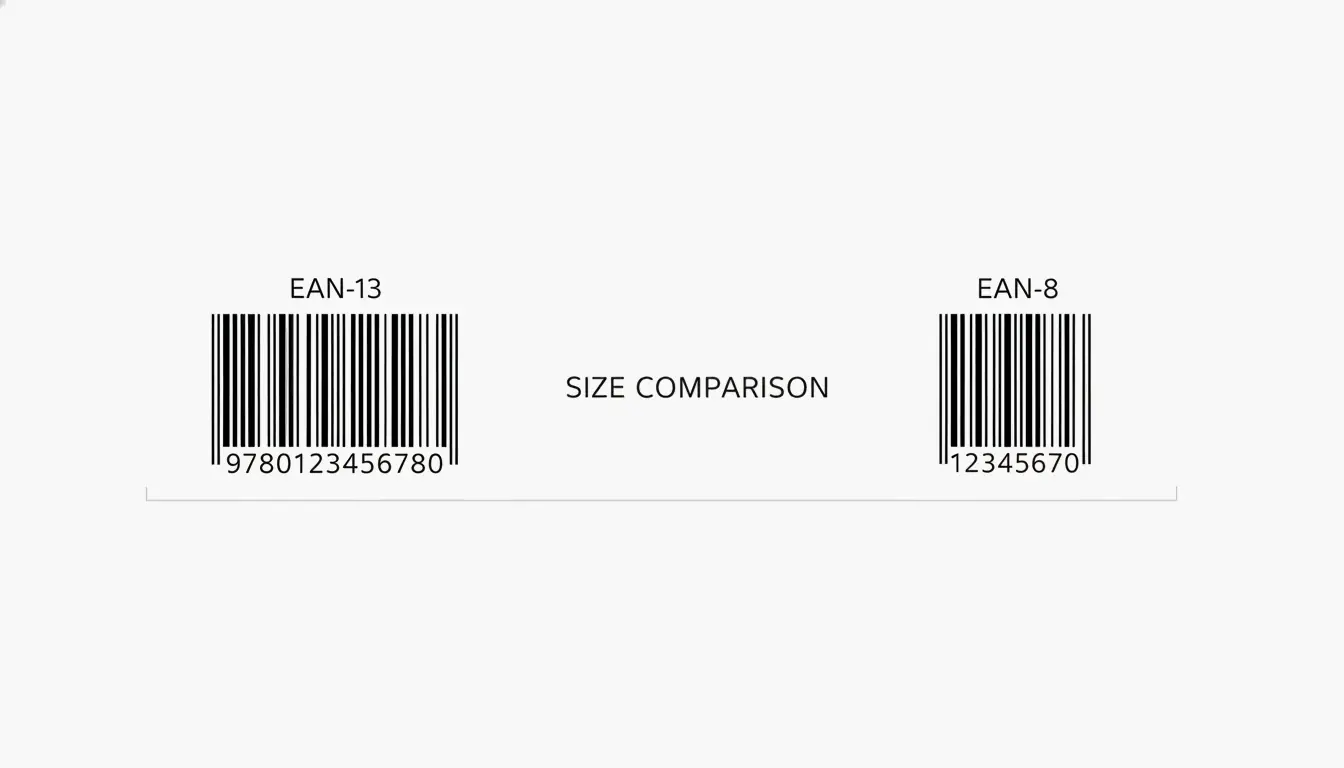
- Barcodes — The scannable EAN-13 barcode on a book’s back cover requires the 13-digit version.
The 979 Prefix: Why You Can’t Convert It Back
The “979” prefix was a turning point for the ISBN system. Originally, all 13-digit ISBNs started with “978” — essentially a bridge connecting the 10-digit world to the 13-digit one. But as the supply of 978 numbers began running out in certain regions, GS1 introduced the 979 prefix as a new namespace.
Regional 979 Assignments (2026)
According to EAN Check, specific 979 prefixes are now locked in for high-output regions:
| Prefix | Region / Use |
|---|---|
| 979-8 | United States |
| 979-10 | France |
| 979-11 | Republic of Korea |
| 979-12 | Italy |
| 979-0 | International Standard Music Numbers (ISMN) |
Why 979 Has No ISBN-10 Equivalent
This is a common source of confusion. While 978-prefixed ISBNs have a direct mathematical link to a 10-digit equivalent, 979 ISBNs have no ISBN-10 counterpart. As Wikipedia explains, these registration groups never existed in the old 10-digit system. If your book is assigned a 979-8 prefix in the US, it exists only as a 13-digit identifier — there is no way to “downgrade” it.
Step-by-Step ISBN Conversion Guide
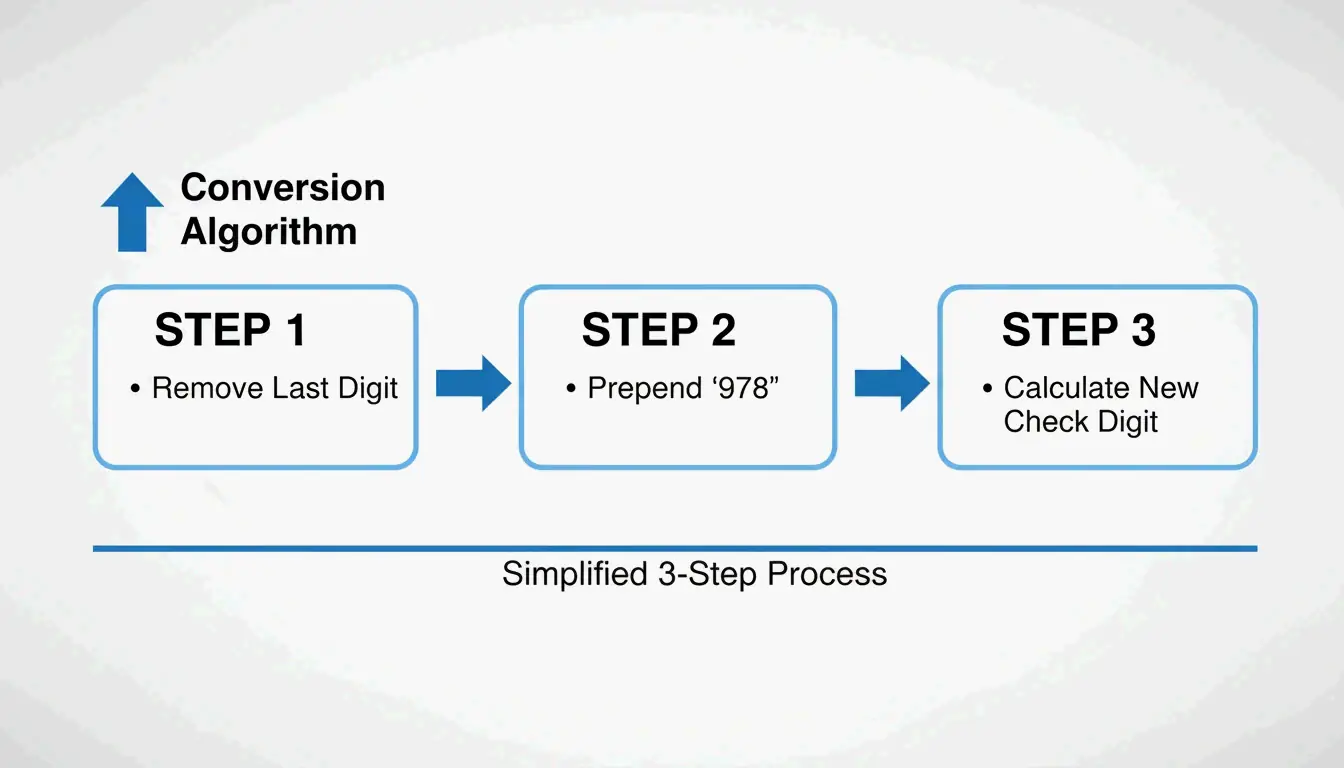
Converting an ISBN-10 to ISBN-13 isn’t just about adding “978” to the front — the final check digit must be recalculated from scratch.
How to Convert ISBN-10 to ISBN-13
- Drop the check digit — Remove the last character (the 10th digit) from your ISBN-10.
- Prepend “978” — Add it to the front of the remaining 9 digits.
- Calculate the new check digit using the GS1 Modulo-10 algorithm:
- Multiply each of the 12 digits by alternating weights of 1 and 3 (starting with 1).
- Add up all the products.
- Find the remainder when divided by 10.
- Subtract the remainder from 10. (If the result is 10, the check digit is 0.)
Worked Example
EAN Check demonstrates that ISBN-10 0-306-40615-2 converts to ISBN-13 978-0-306-40615-7. Notice the check digit changed from 2 to 7 — this happens because the weighting and modulus are different between the two systems.
Why the Check Digit Changes
ISBN-10 uses Modulus 11 (which allows the letter “X” to represent 10), while ISBN-13 uses Modulus 10 (digits 0–9 only). Because the math and weights differ, the check digit almost always changes during conversion.
2026 Publishing Standards: Costs and Requirements
In the US, Bowker is the sole authorized ISBN agency. For self-published authors, the cost structure matters.
Bowker Pricing (2026)
According to Books.by:
| Quantity | Price | Per ISBN |
|---|---|---|
| 1 ISBN | $125 | $125.00 |
| 10 ISBNs | $295 | $29.50 |
| 100 ISBNs | $575 | $5.75 |
Books.by points out that the $125 single-ISBN price is a bit of a trap — since every format of your book (paperback, hardcover, ebook, audiobook) needs its own ISBN, a 10-pack is almost always the smarter choice for indie publishers.
You Need a Separate ISBN for Each Format
| Format | ISBN Required? | Notes |
|---|---|---|
| Print (paperback/hardcover) | Yes | Required for bookstores and libraries |
| Ebook (Amazon KDP) | Optional | Amazon assigns its own ASIN |
| Ebook (other platforms) | Yes | OverDrive and library platforms require it |
| Audiobook | Yes | Required by ACX, Findaway Voices |
International Comparison
The US is unusual in charging for ISBNs. Wikipedia and Books.by report that ISBNs are free in Canada, India, and New Zealand, where the government manages the system directly.
Conclusion
The shift from ISBN-10 to ISBN-13 isn’t just a technical detail — it’s a requirement for getting your book into the modern supply chain. ISBN-10 remains useful as a historical tool for legacy databases, but the 13-digit format is the global language of the 2026 book market. The rise of the 979 prefix in the US and Europe reinforces this: the old 10-digit system has reached its limits.
For most publishers, the practical takeaway is simple: buy ISBN-13 codes in bulk (10 or 100 packs) to cover every format, use validation tools to keep your metadata clean, and don’t try to convert 979-prefixed numbers back to 10 digits — it can’t be done.
FAQ
Why did the ISBN change from 10 to 13 digits in 2007?
To prevent a shortage of available numbers as global book production grew, and to align the ISBN system with the GS1 EAN-13 barcode standard used by retailers worldwide. This allows books to be scanned using the same equipment as any other consumer product.
Can every ISBN-13 be converted to an ISBN-10?
No. Only ISBN-13 numbers beginning with “978” can be converted back to 10 digits. Numbers starting with “979” belong to a newer namespace that was never part of the 10-digit system — they have no ISBN-10 equivalent.
What is the “X” found in some ISBN-10 numbers?
The “X” represents the value 10 as a check digit. Because ISBN-10 uses Modulus 11 for error detection, there are 11 possible remainders (0–10). To keep the ISBN at exactly 10 characters, the Roman numeral “X” was adopted for a remainder of 10.
Do I need a different ISBN for my ebook and my paperback?
Yes. Every distinct format and edition — paperback, hardcover, ebook, and audiobook — requires its own unique ISBN. This allows retailers and libraries to track each product separately, even when the text content is identical.
Where should the ISBN be placed on a physical book?
According to the ISBN User’s Manual, the number must appear on the copyright page (verso of the title page) and on the lower section of the outside back cover. For print books, the ISBN is typically integrated into an EAN-13 barcode for retail scanning.
Frequently Asked Questions
Why did the ISBN change from 10 to 13 digits in 2007?
To prevent a shortage of available numbers as global book production grew, and to align the ISBN system with the GS1 EAN-13 barcode standard used by retailers worldwide. This allows books to be scanned using the same equipment as any other consumer product.
Can every ISBN-13 be converted to an ISBN-10?
No. Only ISBN-13 numbers beginning with “978” can be converted back to 10 digits. Numbers starting with “979” belong to a newer namespace that was never part of the 10-digit system — they have no ISBN-10 equivalent.
What is the “X” found in some ISBN-10 numbers?
The “X” represents the value 10 as a check digit. Because ISBN-10 uses Modulus 11 for error detection, there are 11 possible remainders (0–10). To keep the ISBN at exactly 10 characters, the Roman numeral “X” was adopted for a remainder of 10.
Do I need a different ISBN for my ebook and my paperback?
Yes. Every distinct format and edition — paperback, hardcover, ebook, and audiobook — requires its own unique ISBN. This allows retailers and libraries to track each product separately, even when the text content is identical.
Where should the ISBN be placed on a physical book?
According to the ISBN User’s Manual, the number must appear on the copyright page (verso of the title page) and on the lower section of the outside back cover. For print books, the ISBN is typically integrated into an EAN-13 barcode for retail scanning.
Related Posts
EAN-13 vs EAN-8: Which Barcode Format Fits Your Product?